


Nine high-end disc brakes put through their paces in lab and real-world tests: Which one will come out on top?
Max Fuchs
· 09.07.2026


Conclusion from Max Fuchs, BIKE test editor
Magura, SRAM, TRP and Hope are the frontrunners in this test and all deliver more than enough braking power. Our rating system ultimately favours TRP. Fahrwerk’s debut MTB brake surprises with its immense braking power. Bringing up the rear is the Formula Cura 4. Both in the lab and in real-world testing, its braking performance falls short in a direct comparison.
E-enduros packed with suspension and weighing over 25 kilos regularly make the headlines for their excess weight. But you have to give these chunky powerhouses credit for one thing: without them, modern disc brakes would never have reached the level they’re at today. And that’s not down to the bike’s weight alone. The low centre of gravity of e-bikes and their typically wide tyres with aggressive tread patterns ensure significantly higher braking traction.
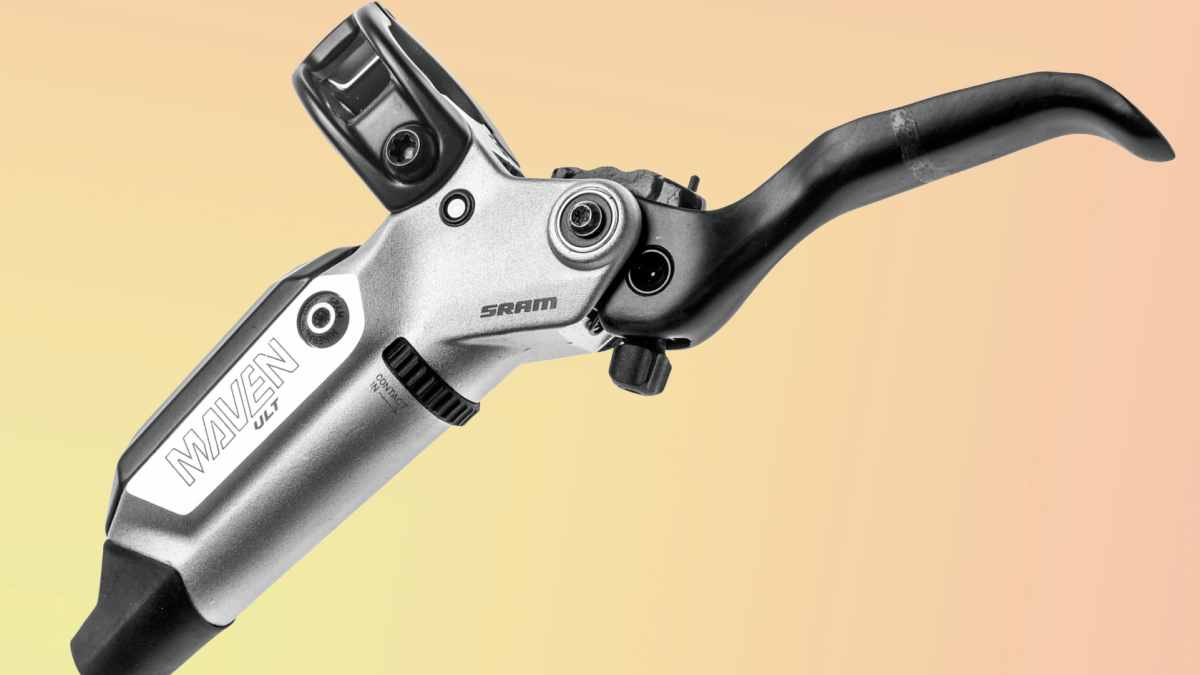
In the last two years alone, two industry giants have done away with their usual model line-ups and created two completely new heavy-duty brake systems from scratch: the SRAM Maven and the Magura Gustav Pro. More brake fluid, larger pistons, thicker pads, heavier rotors – all measures designed to provide the legions of heavy e-bikes with sufficient braking power. Lightweight construction? Weight optimisation? Not a chance. A glance at our 2021 brake test illustrates just how much the pursuit of power has shaped the current generation of brakes: back then, the test line-up – including pads and 180-mm discs – weighed in at around 415 grams. Today, the average is 485 grams – a whopping 17 per cent more than just five years ago.

SRAM, Magura and TRP – with more braking power than ever!
Just in time for our comparison test, SRAM is even unveiling a second iteration of its heavy-duty brake. The motto: same power, better control. With this promise, the new Maven, alongside the Gustav Pro, ranks among the most promising models in the race for the top spot in the test. The contenders from Hope and TRP are pursuing the same goal: they, too, launched more powerful four-piston models last year. Admittedly, the tuning measures on TRP Evo Pro and Hope Evo GR4 It’s not quite as drastic as with SRAM and Magura, but they too are trading grams for performance. However, this new direction isn’t just forcing the established players to rethink their approach; it’s also attracting new contenders – Fahrwerker, for example. The Swabian brake specialist has, until now, been particularly active in the cargo bike segment and in electric passenger and goods transport. Now the Metzingen-based firm has sensed an opportunity and intends to make its mark with the F-Vision applied their expertise in heavy-duty vehicles to e-mountain bikes.
Trickstuff, Hayes, Shimano and others are keeping their cool
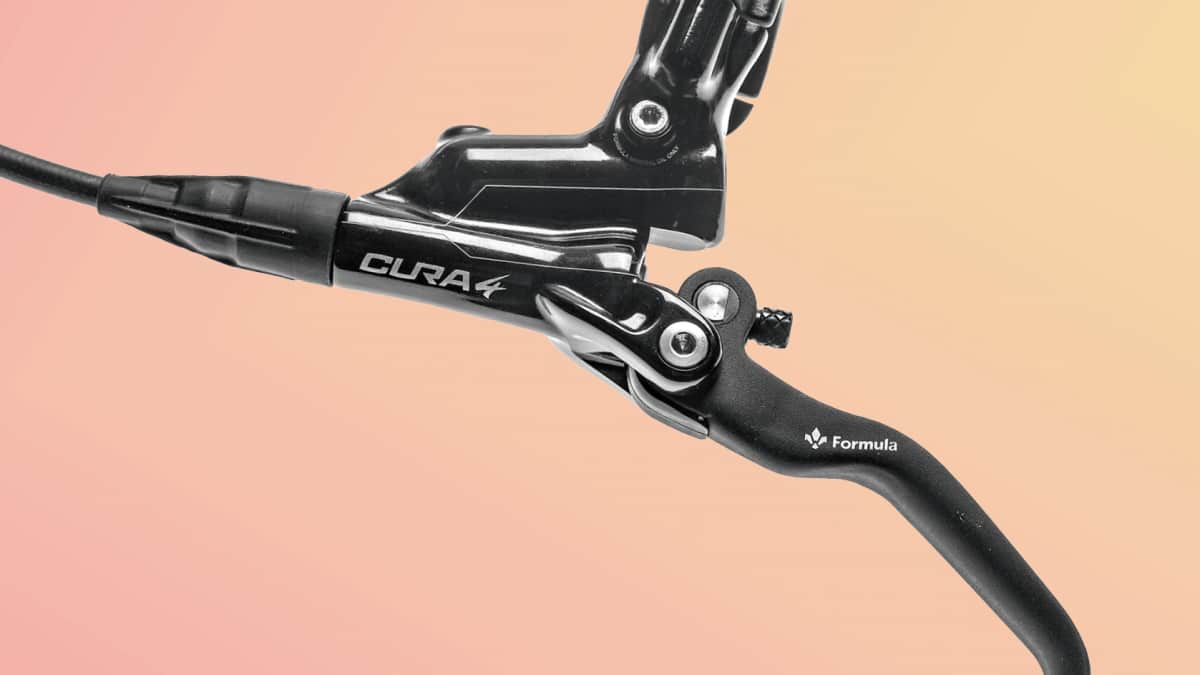
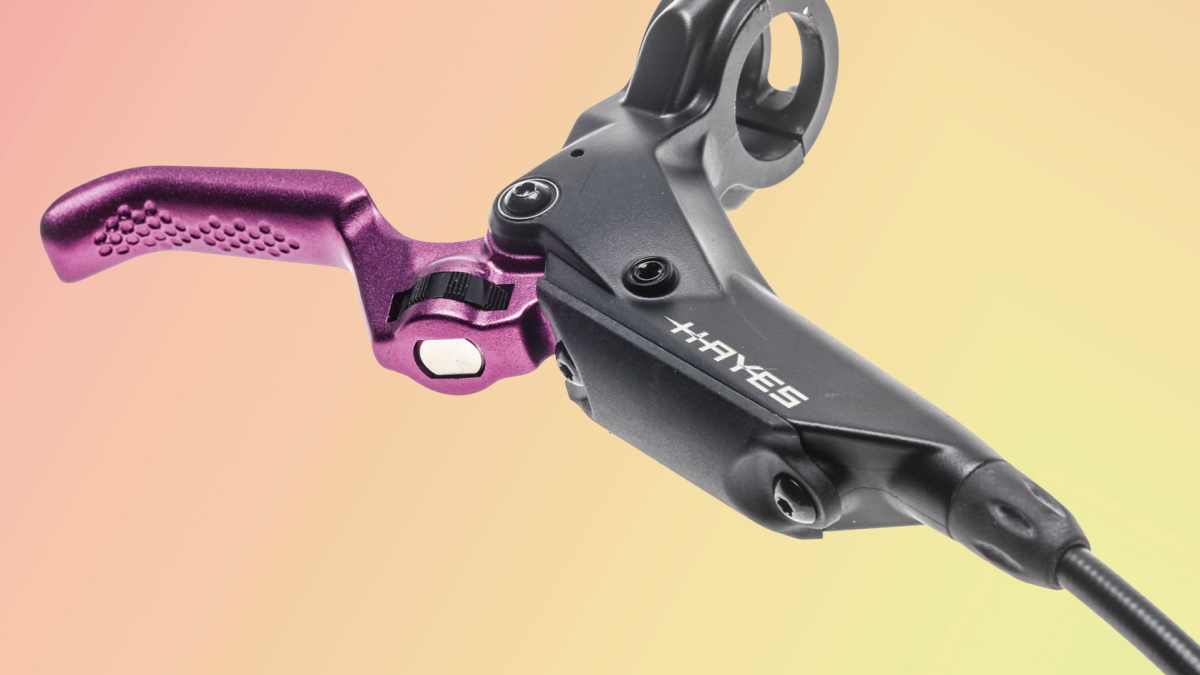
The competition from Hayes and Formula has not yet been gripped by the ‘power panic’. They are still supplying their tried-and-tested four-piston models Dominion A4 and Cura 4 into the fray. The third industry giant, Shimano, is entering the race with the four-piston version of its popular XT brake system. Although the Japanese manufacturer gave its best-selling model an update in the middle of last year, there was no mention of increased braking power. The high-end manufacturer Trickstuff also continues to have complete confidence in its product range and is submitting the 2021 test winner, the Piccola HD, for testing alongside the latest C42 brake caliper.
A matter of definition: What makes a good brake?
It must feel solid in the hand and be as ergonomically designed as possible to suit a wide range of preferences. Models with well-thought-out lever geometries and generous adjustment options score highly here. However, our test system also rewards clever features that make maintenance easier or provide added value. And then there’s modulation. After all, what’s the point of brute power if it can’t be finely controlled? Nothing at all. The tyres lock up more quickly, traction is lost – and, in the worst-case scenario, the braking distance is even extended.
On the other hand, any system that combines maximum power, precise modulation and smooth handling into a well-rounded package will rank highly in our test system. If the modulation is particularly effective, even gravity riders – without the extra weight of a motor system – will benefit from the braking boost offered by the new heavy-duty generation.
An overview of the weights of the test group
Links to all individual articles on brakes can be found at the end of this article.
| Model | Brake (including pads) + 800 mm hose, in grams | 180 mm brake disc in grams |
| Trickstuff Piccola HD | 213 | 119 |
| Formula Cura 4 | 248 | 194 |
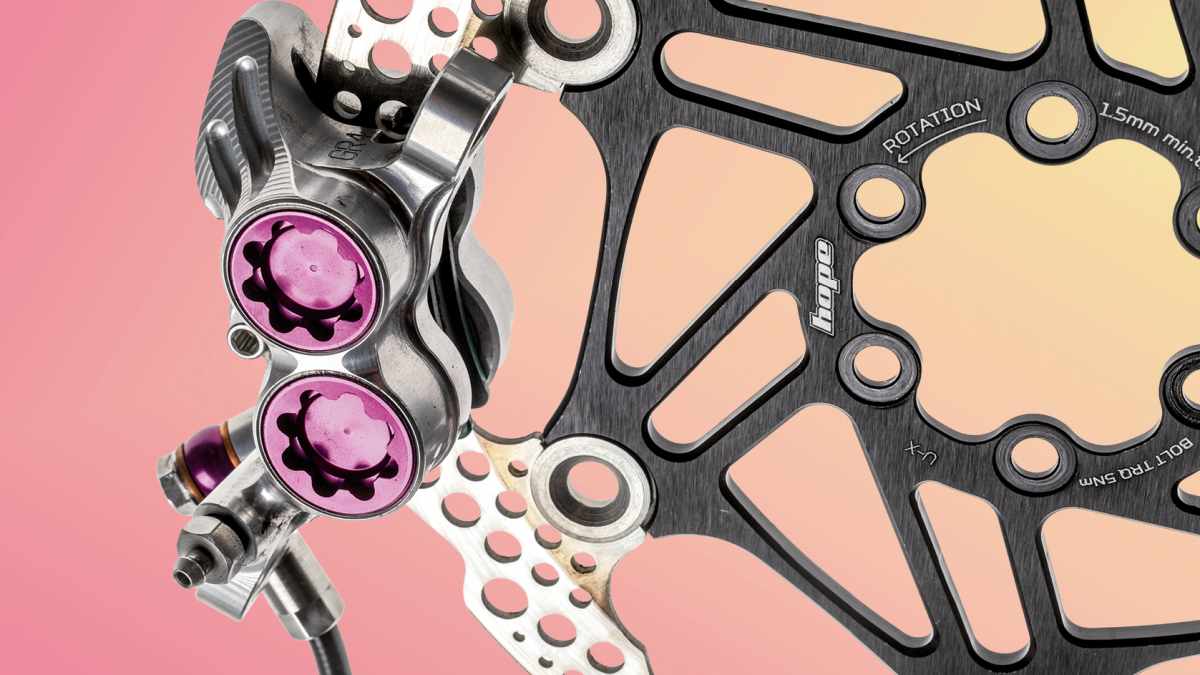
| Hope Evo GR4 | 283 | 142 |
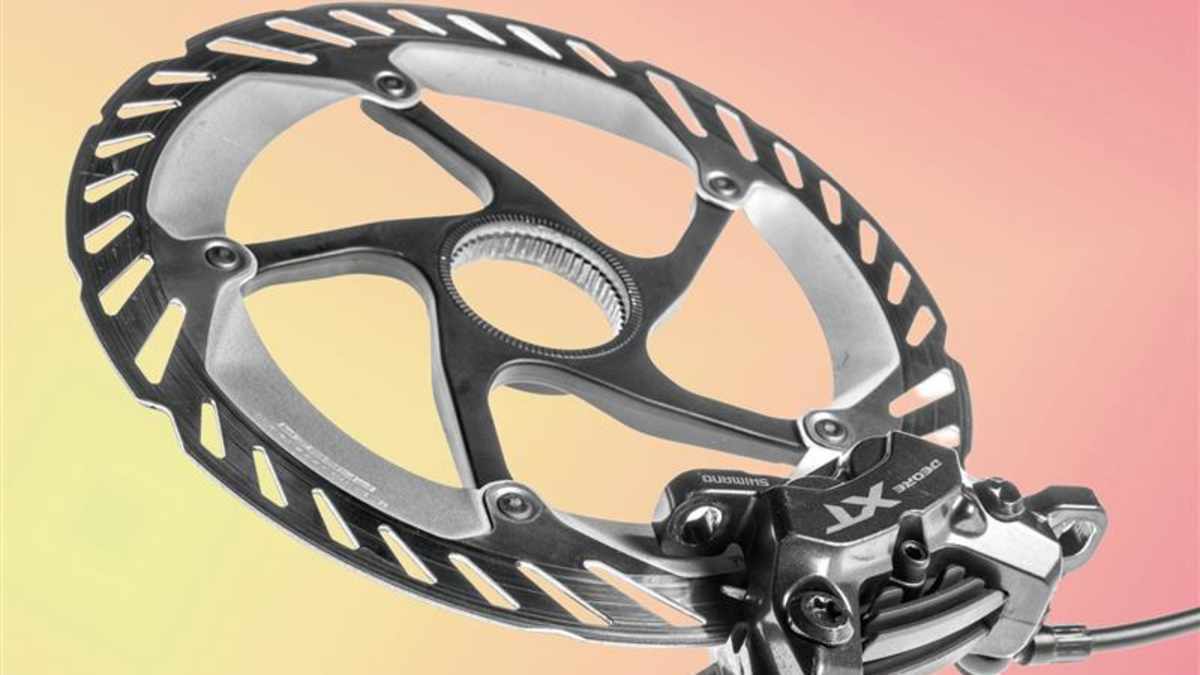
| Shimano XT | 296 | 136 |
| Hayes Dominion A4 | 308 | 150 |
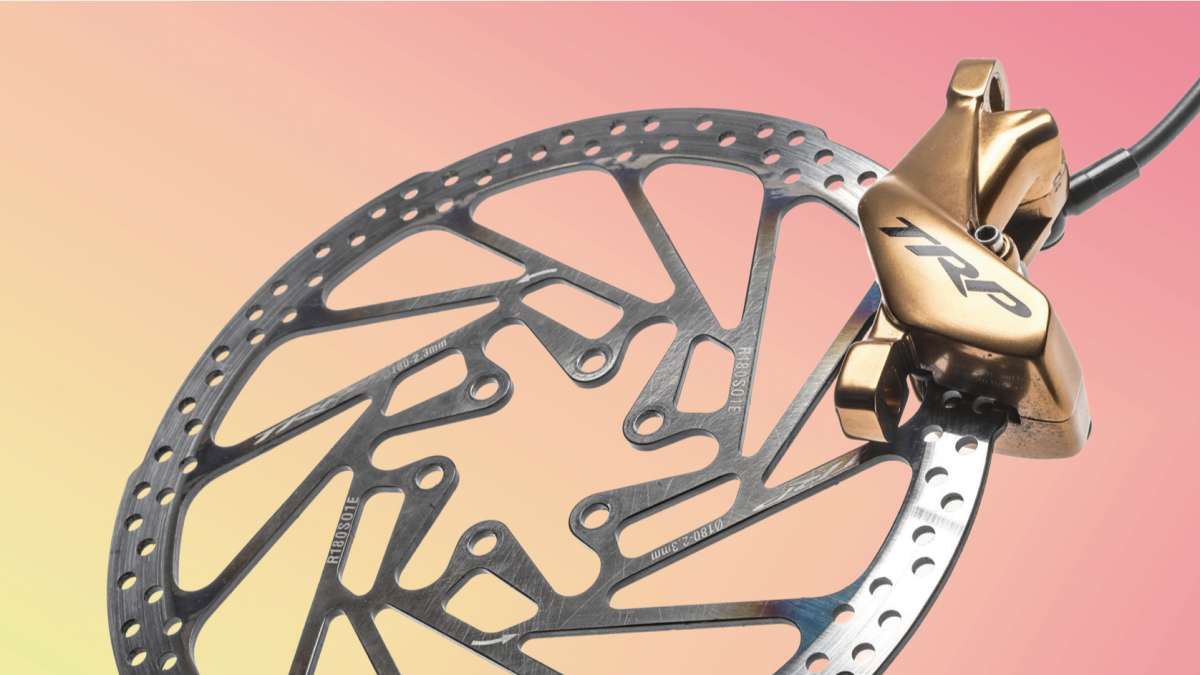
| TRP Evo Pro | 313 | 188 |
| Magura Gustav Pro | 346 | 220 |
| SRAM Maven B1 | 354 | 168 |
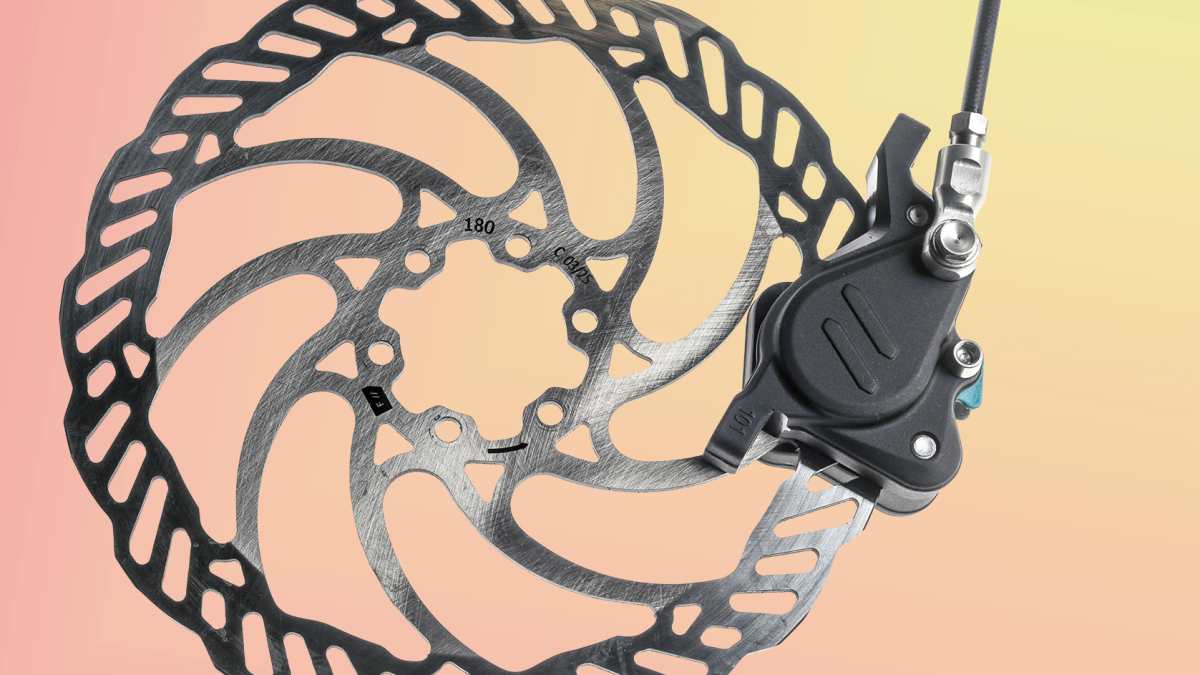
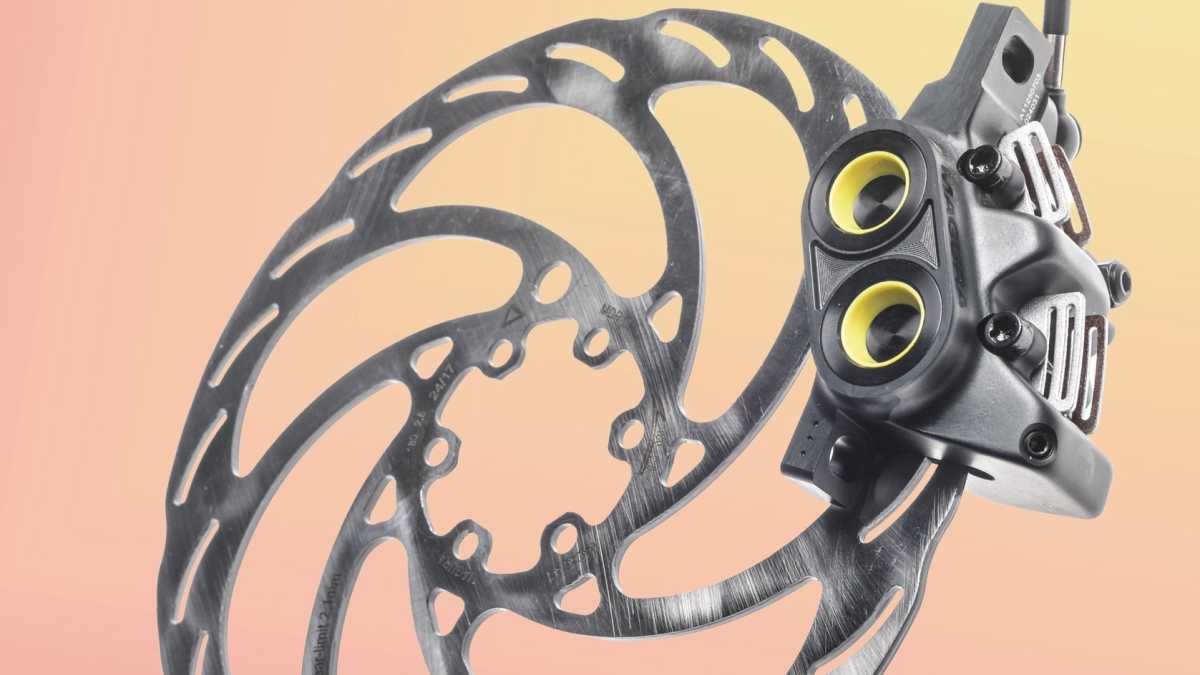
| F-Vision driver | 411 | 166 |
How BIKE conducts its tests
Our impressions of the performance, modulation and handling are based on practical tests. We determined the maximum braking power and heat resistance in accordance with the DIN standard on the roller test bench provided by the brake manufacturer Magura.
Braking force test
To ensure that the brakes can deliver their maximum performance on the test bench, the test standard stipulates a defined braking procedure. During this process, all models must maintain a constant braking force of 200 newtons over 20 braking cycles in order to reach operating temperature and rule out pad fade during the braking force test. Only then does the actual performance test begin. It consists of three braking manoeuvres per application of force to the lever. It starts at 40 newtons of hand force. The test rig increases the force on the lever in 20-newton increments until the brake reaches its maximum lever travel. Each brake undergoes this procedure twice: once in dry conditions and once in wet conditions. During the wet test, the disc is continuously wetted throughout the entire measurement. To ensure an optimal comparison, all models are fitted with 180-mm discs. The pad compounds always correspond to the standard specification. Where manufacturers had several options in their own range, they were permitted to select the discs themselves in order to maximise braking performance. To ensure consistent comparative results, we carry out both the braking force test and the thermal endurance test using a fresh pair of pads and a new brake disc in each case.
Heat resistance
The second hurdle in the laboratory is that all brakes must pass a standardised thermal endurance test twice. After all, the candidates must be able to decelerate reliably even under high thermal stress. Each test run consists of three sustained braking cycles, each lasting five minutes. Shortly after each interval, an abrupt test braking manoeuvre is carried out to check whether the brake still decelerates perfectly despite the heat. Finally, the test rig applies the required minimum braking force three times. All brakes passed this test.
Practical test
How a brake performs off-road, how it responds to light hand pressure, how precisely it can be modulated and how it feels in the hand – none of this can be measured on a test bench. Experience is what counts here. And our testers have plenty of that: over 100 complete bikes go through our testing procedure every year. Our editors have therefore long since got to know most brakes inside out. In addition, two testers rode all the brakes from this test in a direct comparison on standard bikes with identical set-ups.
Interesting side notes from the laboratory test
3.5% tyre wear. The Hayes Dominion A4 is the only brake in the test to use a metallic pad compound – and this pays off in terms of durability: no other model is as gentle on its material. At the other end of the scale: the Trickstuff Piccola. Its pads wore down the fastest on the roller test rig, with 15.3 per cent wear.
A fault. Ironically, the only fault in the entire test line-up was caused by a brake disc designed to meet high-tech standards: Shimano’s Ice-Tech rotor. The three-layer sandwich construction – two layers of stainless steel with an aluminium core – warped so severely during the braking force test that the test bench had to terminate the test run prematurely.
Frying-pan heat. During the heat endurance test, the maximum brake caliper temperature for all the candidates settled between 100 and 130 degrees – hot enough to fry a crispy fried egg on the brake caliper.
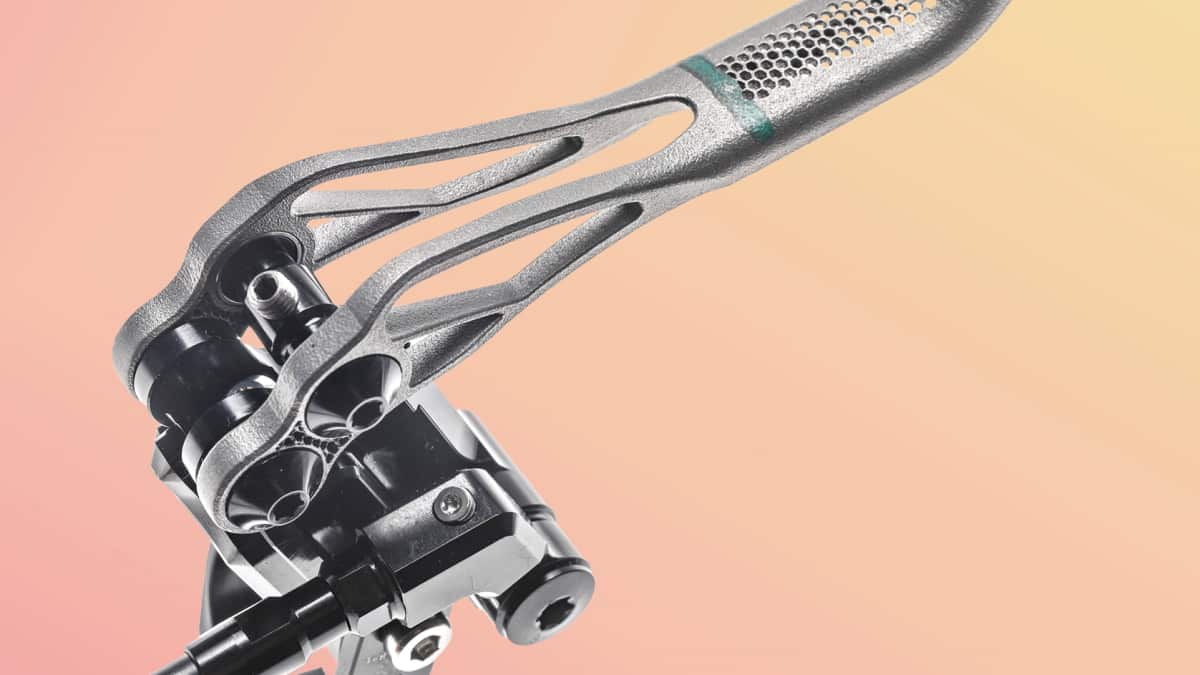
213 vs. 411 grams. The delicate Trickstuff Piccola HD, with its 3D-printed titanium lever, weighs in at just 213 grams including pads and an 800-millimetre hose – beating the average for the test field by a whopping 31 per cent. Ironically, the only dual-piston brake in the field, the Fahrwerker F-Vision, represents the other extreme at 411 grams.
Laboratory results: Braking performance test in dry conditions
| Manual force in N | Magura | Trickstuff | Shimano | Driver | Sram | Formula | Hope | Hayes | TRP |
| 40 | 217 | 237 | 182 | 255 | 236 | 127 | 251 | 210 | 256 |
| 60 | 414 | 388 | 301 | 409 | 401 | 258 | 435 | 339 | 422 |
| 80* | 584 | 500 | 427 | 577 | 534 | 383 | 590 | 444 | 551 |
| 100 | 690 | 619 | 539 | 766 | 681 | 469 | 742 | 543 | 665 |
| 120 | 850 | 741 | 617 | 903 | 924 | 550 | 907 | 627 | 777 |
The table shows the average braking forces as a function of the hand force shown in the first column. SRAM achieves the highest value. Hope achieves the highest practical value below the 600-newton threshold*. Hayes underperforms due to the less favourable friction coefficients of its metallic pad compound. It’s a shame for Shimano: the standard stipulates that the hand force is applied 25 mm from the end of the lever. Because of its particularly short lever, the XT is therefore unable to reproduce its powerful bite on the test bench.
Laboratory results: Braking performance test in wet conditions
| Manual force in N | Magura | Trickstuff | Shimano | Driver | Sram | Formula | Hope | Hayes | TRP |
| 40 | 185 | 201 | 115 | 214 | 200 | 106 | 178 | 204 | 193 |
| 60 | 307 | 307 | 178 | 352 | 362 | 199 | 304 | 339 | 324 |
| 80* | 438 | 396 | 246 | 496 | 519 | 300 | 429 | 488 | 456 |
| 100 | 562 | 492 | 327 | 625 | 641 | 399 | 558 | 660 | 590 |
The table shows the average braking forces in wet conditions up to 100 newtons of hand force (1st column). Beyond this (cf. dry braking up to 120 N), the results can no longer be reliably compared, as the wet tyres begin to slip on the roller test bench. The most striking observation: compared with dry braking, the Shimano XT shows the greatest drop in performance. With its metallic pads, the Hayes Dominion A4 has a clear advantage over its competitors with organic pads when braking in wet conditions. The fact that it even achieves the best result illustrates just how much braking performance depends on the type of pad.
Overall ranking: The test results in points
| Model | TRP | Sram | Hope | Magura | Driver | Trickstuff | Hayes | Shimano | Formula |
| Price (excluding glass and accessories) | €330 | €325 | €300 | €300 | €750 | €550 | €287 | €235 | €211 |
| Braking power (50 %) | 1.35 | 1.25 | 1.4 | 1.7 | 0.9 | 1.9 | 2.7 | 2.7 | 3.55 |
| Wet braking (10 %) | 2 | 1.5 | 2.5 | 2.5 | 2 | 3 | 2 | 4.5 | 3.5 |
| Dry braking (40 per cent) | 1 | 1.5 | 1 | 0.5 | 0.5 | 1.5 | 2.5 | 2.5 | 3 |
| Practical work (50%) | 1.5 | 1 | 1.5 | 2.5 | 1 | 2 | 3 | 2.5 | 4 |
| Modulation (30 per cent) | 1 | 2 | 2 | 1.5 | 3 | 2 | 1.5 | 3.5 | 3 |
| Usability / Handling (10 %) | 1 | 2.5 | 3 | 2.5 | 3 | 4 | 2.5 | 4 | 4 |
| Weight* (10 %) | 3 | 2.5 | 2 | 2.5 | 4 | 1 | 2.5 | 2.5 | 1.5 |
| BIKE NOTE (100%) | 1.4 | 1.7 | 1.8 | 1.8 | 2.1 | 2.1 | 2.3 | 3.1 | 3.2 |
* Brake weight including 800 mm hose and pads. The BIKE rating is based on the test riders’ practical impressions and laboratory measurements. The rating is independent of price. The rating scale ranges from 0.5 to 6. To assess braking performance, forces measured at 80 N of hand force are used, as all models still deliver values relevant to real-world use below the 600 N threshold at this level.
The exam papers of all candidates

Max Fuchs
Editor