


The Deore groupset has been one of the key components in Shimano’s portfolio for years. It is regarded as the gateway to the world of high-performance MTBs. Its focus is on functionality, durability and a wide range of applications. Shimano has built on this with the new M7200/M6200 series: the groupset incorporates key technologies from the XT and XTR ranges, whilst deliberately retaining a mechanical design, making it easy to maintain and affordable.
What's new? Better performance, greater durability
With the new generation of Deore, Shimano is taking a clear approach: greater durability off-road combined with more precise shifting and braking performance. This includes:
- a completely revised Rear derailleur assembly
- a new chain stabilisation system with 70% more cushioning
- optimised Ergonomics of levers and gear levers
- improved Braking performance with consistent modulation
At its core, the system remains mechanical – and deliberately combines ease of use with high reliability.
Rear derailleur and drivetrain: a focus on stability
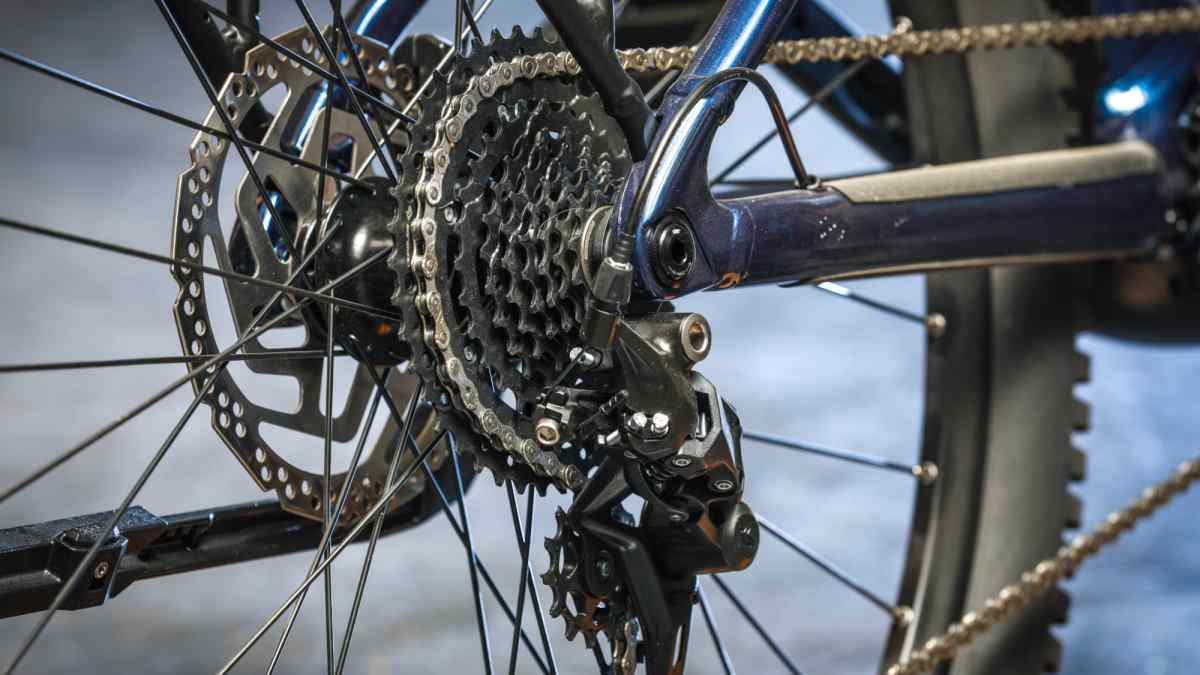
At the heart of the new groupset is the redesigned rear derailleur. Shimano is relying on the new SHADOW ES technology with a flat, wedge-shaped design, which we are already familiar with from the current Di2 mountain bike groupsets. The aim: to provide less surface area for stones and roots to catch on. Should the rear derailleur encounter an obstacle, it is designed to spring back to its original position without affecting shifting performance.

In addition, a new Dual-spring design for up to 70% greater chain tension. This improves chain guidance and reduces the risk of the chain coming off on rough terrain. Note: Shimano continues to offer two systems:
- Hyperglide+ (12-speed) for rapid gear changes under load
- Linkglide (11-speed) for maximum durability and smoother gear changes
Crank and cassette: tried-and-tested technology, reimagined
Shimano has also stepped up its game in the drivetrain. The new Deore crankset features a two-piece design with a 24 mm steel axle and is clearly designed for durability. The main new feature is the chainring with Dynamic Chain Engagement, which is designed to improve chain retention and boost efficiency – particularly on rough terrain. The cranks are available in three lengths: 165, 170 and 175 millimetres.
When it comes to cassettes, Shimano continues to offer a wide range of gear ratios and two new options within the Deore range.
- up to 10–51 teeth in the 12-step system
- CS-M7200 with a 51-tooth aluminium sprocket for reduced weight
- The CS-M6200, made entirely of steel, focuses on durability and robust performance
Ergonomics: More natural operation
One aspect that is often underestimated is the feel of the controls. Shimano has significantly redesigned the shift levers, equipping the new Deore shifters with a shorter travel, more precise feedback and an optimised shape for a more natural finger movement. The shifting motion is more closely aligned with the hand position – this is intended to provide greater control, particularly on technical trails. There will be a total of three new shifter options:
- The SL-M6200 is a 12-speed shifter for Hyperglide+ with Multi-Shift. The shifter features a 2-way release and can shift up to three gears in a single operation. It is compatible with earlier drivetrains and is available in an I-Spec version or for clamp mounting.
- The SL-M6210 is a specialised gear lever designed for use on e-MTBs and is intended to provide fast and precise gear changes. Only a single gear change is possible at a time.
- The SL-M6230 has been specially developed for the 11-speed Linkglide system and is designed to deliver smooth shifting, particularly under load. This lever also features 2-way release, but shifts a maximum of two gears per click.
New Deore brakes: Greater consistency and control
When it comes to brakes, the new Deore models benefit directly from technologies found in the XT and XTR ranges. Key changes:
- more consistent braking performance across different temperatures
- new Seals and hydraulic oil for a consistent pressure point
- Choice between 2-piston (XC) and 4-piston brakes (Trail/Enduro)
In addition, Shimano’s Servo-Wave technology which is designed to build up pressure more quickly and provide better control.
Prices:
- €114.95 / €124.95 for the twin-piston version (front/rear)
- €154.95 / €164.95 for the four-piston version (front/rear)
Shimano Deore – Key Features & Price
- New Deore M7200/M6200 groupset: 11-speed and 12-speed options
- rear derailleur: Shadow ES rear derailleur with a flatter profile
- stabiliser: Dual-spring system for improved chain stability, plus 70%
- Two versions: Hyperglide+ (performance) or Linkglide (durability)
- Cassette: 10–51T cassette for a wide gear range, optionally with a 51-tooth aluminium sprocket
- crank: New crankset with Dynamic Chain Engagement to reduce chain drop
- gear lever: Improved ergonomics, direct and more precise gear changes
- Brakes: featuring XT/XTR technology and Servo Wave; 2- or 4-piston brake options
Prices at a glance:
- Crankset: €110.95
- Cassette: from €114.95
- gear lever: €37.95
- rear derailleur: from €62.95
- chain: from €28.95
- Brake: from €114.95 (2 pistons; per piece)
In what is probably the most common configuration – crankset, CS-M6200 cassette, 116-link chain, shift levers, RD-M7200 rear derailleur – the new Deore: €379.75 in total costs. This puts it just above the new Sram S100, for 315 euros is available – provided it is fitted with the budget HG cassette with just 11–50 teeth. However, things are different with the high-quality 10–50 cassette. In that case, the Sram S100 comes in at Price: 460 euros.
Editor's conclusion
The new Deore M7200/M6200 shows the direction in which the mid-range segment is heading: greater durability and a clear focus on faster, smoother shifting.
Particularly striking is the attention to detail in the rear derailleur and the ergonomics – both aspects that make a noticeable difference in everyday use. Added to this is a braking system that is significantly closer to the higher-end groupsets than it was just a few years ago. All in all, Deore remains what it always was: a versatile, robust groupset for a wide range of uses. With the new generation, however, it is closing the gap on the top tier in terms of performance.

Stefan Frey
Editor