
Author: David Korsten
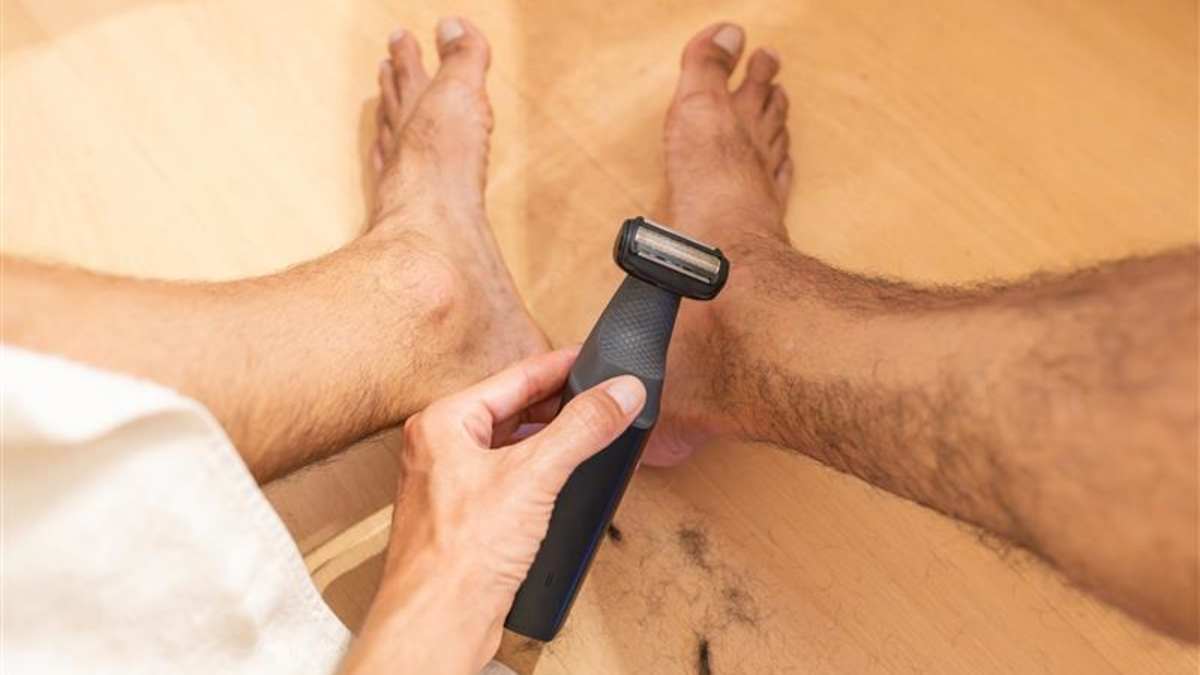
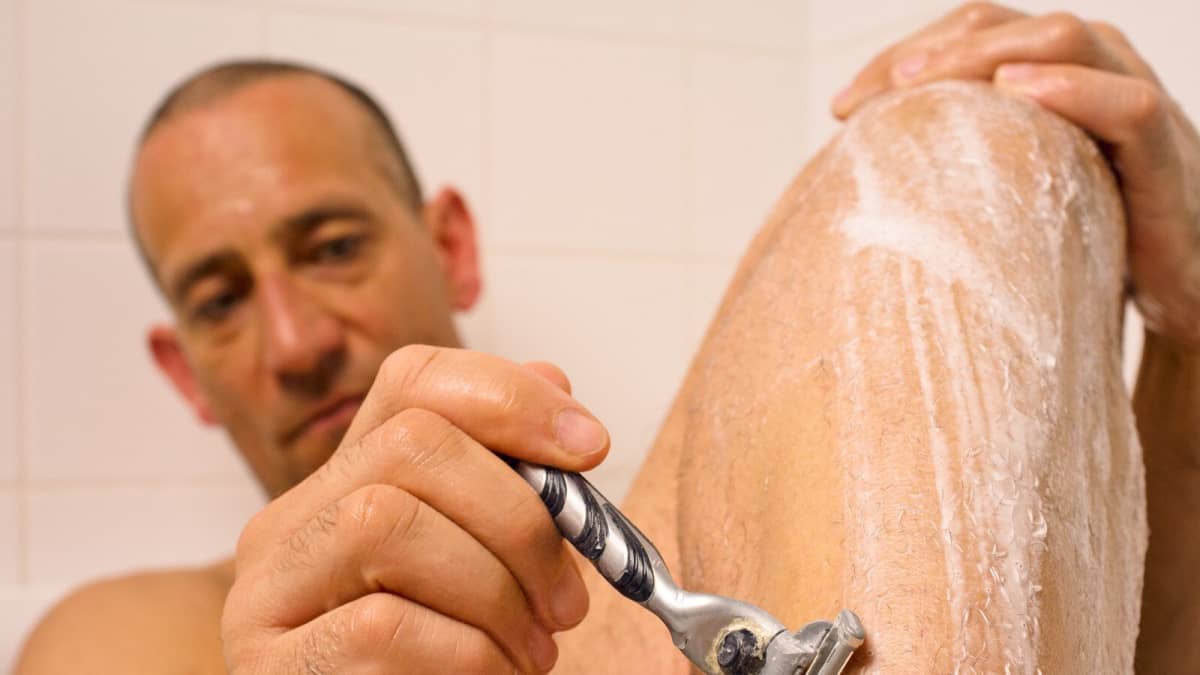
There are two fairly reliable indicators – or warning signs? – that cyclists, and male road cyclists in particular, take their sporting hobby seriously. Very seriously, in fact. First indicator: training according to a structured plan (with the option of taking it up a notch with a training camp in Mallorca in the spring). Second indication: shaved legs. You rarely see this in men outside the world of cycling. Among their partners and friends who haven’t (yet) fallen for road cycling, it usually provokes a mixture of frowns and amusement when their lower limbs suddenly appear hairless.
From a road cyclist’s perspective, however, the desire for a smooth ride – which, in terms of feel, is not unlike the lovingly maintained frame material – is understandable. After all, in the professional peloton, muscular legs are almost invariably clean-shaven. Unshaven calves quickly become a talking point on social media (or within the road cycling subculture). Take, for example, the Slovenian cyclist Primož Roglič, winner of major stage races, who started the 2023 and 2025 seasons with unshaven legs.

Amateur athletes look up to professionals like Roglič – after all, they often find themselves aiming higher when it comes to their own wattage figures. So why not emulate their idols when it comes to matters of aesthetics as well?
Aesthetics: tick! But what about aerodynamics?
But is it just about aesthetics? No, say advocates of leg shaving, citing the aerodynamic benefits of smooth legs. Scientific evidence is provided by a study carried out by a US cycle manufacturer in 2014, which has been frequently cited ever since: The Morgan Hill Wind Tunnel Study found that shaved legs do indeed result in a reduction in power output. Measurements were taken at a speed of 45 kilometres per hour. The corresponding time saving for triathlete Jesse Thomas was 79 seconds over 40 kilometres. Improvements were also measurable for five other athletes, who saved between 50 and 82 seconds under the same conditions. A similar individual trial by the Canadian triathlete Lionel Sanders in 2024 yielded similar results.
So, a done deal? Not so fast. Because the ‘studies’ only involved a small number of participants. So the trials weren’t strictly scientific or peer-reviewed. And even if smooth skin on the legs does measurably increase speed – is that really relevant for amateur athletes? After all, they aren’t constantly cycling at 45 km/h. Other factors have a much greater impact: from riding position and helmet shape to aerodynamic clothing, as well as flexibility, breathing and recovery. And a few kilos less on your hips might well translate into higher watt-per-kilo figures and speed. That cannot be ruled out.
Massages are more enjoyable with smooth legs
And what do the professionals themselves say? A survey of British athletes revealed the following: their main reason for having hairless legs was more comfortable massages. Professionals receive up to 25 leg treatments a month. It may well be that more hair means more tugging. But here, too, it’s questionable what role this aspect plays for amateur cyclists.
Other athletes admit that it is a sort of rite of passage into the sport, a signal that ‘you’re one of us now’. It’s a long-standing tradition: photos from the early years of the Tour de France in the early 20th century show that many of the cyclists were already shaving their legs back then. And scientific (or at least seemingly scientific) wind tunnel tests certainly didn’t exist back then.
The medical argument of ‘wound healing’ put to the test
One of the most frequently cited and seemingly medical arguments in favour of shaving one’s legs is the claim that it promotes better wound healing, for example in the case of common grazes (keyword: ‘scraped skin’). Is there any truth in this? Not much, says Swen Malte John, Scientific Director of the Institute for Interdisciplinary Dermatological Prevention and Rehabilitation at the University of Osnabrück. John is himself a keen cyclist and was the team dermatologist for the former Tour de France team Columbia-High Road, and before that T-Mobile.
“Cycling-related leg injuries can be treated very effectively with modern hydrocolloid dressings.” These dressings consist of an outer layer that is germ-proof and waterproof. Inside the dressing, hydrocolloids are at work – a group of polysaccharides and proteins which, on contact with water, form a kind of gel and promote wound healing. Whether the legs are shaved or unshaved makes little difference. For advocates of shaving, this means that even the most widely cited medical argument does not stand up to scrutiny.
Dermatologist John points out that every shave causes micro-lesions – tiny injuries. These make it easier for bacterial pathogens such as Staphylococcus aureus to enter the skin and cause inflammation – ranging from minor to more serious conditions such as folliculitis, an inflammation of the hair follicle. Such irritations can develop into boils or even abscesses – that is, collections of pus. By this stage at the latest, a visit to a specialist’s surgery is advisable, says Dr Swen Malte John. However, this usually happens anyway, as abscesses are very painful.
Shaving, waxing, epilation – they all have an impact
Whilst there are certainly differences between shaving methods, the dermatologist does not recommend any particular one. Wet shaving is the most damaging to the skin, followed by waxing and epilation. “Anyone who absolutely must shave should at least use an electric razor.” Whilst aftershave may provide relief, it carries other risks. In particular, there is a risk of developing contact allergies with regular use. “The body hair that we have retained through evolution serves a purpose,” adds John. “It aids sweat transport and, in certain areas – such as the genital region – can reduce friction, thereby helping to prevent inflammation.”
John points out one more thing to bear in mind: shaving body hair also removes a – albeit minimal – natural protection against UV radiation. This is because anyone who spends a lot of time outdoors without adequate sun protection is at an increased risk of skin cancer. Athletes should therefore – not only, but especially during the summer months – train outdoors in the morning or late afternoon wherever possible. According to expert John, UV-B radiation, which promotes skin cancer, is at its highest between 11 am and 4 pm, regardless of the temperature. “We can sense temperature, but not UV exposure.” Sun creams with a sun protection factor (SPF) of 50 are therefore essential – applied generously before going outside – and reapplied at least every two hours, or more frequently if sweating heavily.
So what should we do? It’s a matter of taste
So, should cyclists shave their legs or not? From a medical point of view: probably not. From an aesthetic, cultural and social point of view: probably yes. It remains, I suppose, a matter of personal preference, how it feels to ride, and individual taste. Amateur cyclists should treat it as such – whilst being aware that their unshaven club-mates also have good reasons for their choice.