


World premiere in the 32-inch category: Keller takes a podium place on his 32-inch bike
Dimitri Lehner
· 22.06.2026


Keller shines on historic debut
She could well have been feeling the pressure. A world premiere, a new bike format, a home crowd – but Alessandra Keller didn’t let any of that faze her. On the contrary: the Swiss rider put in a stellar performance at the XCC in Lenzerheide. From the first to the last lap, she was right up there with the leading group, riding aggressively and ultimately securing her third podium finish in a row.
Keller’s delight at the finish line was plain to see: “My aim today was to finish in the top eight to secure a good starting position for Sunday,” explained the 28-year-old. “But I felt great on the new bike. To finish straight on the podium in front of a home crowd at this world premiere – that’s a real treat!”
Whilst the women were celebrating in style, the short track event proved disappointing for the men’s Thömus maxon team. Mathias Flückiger, the second 32-inch pioneer, did not have the best of days, finishing in 32nd place. Sunday’s XCO race also proved less than satisfactory for the Riesenräder. Keller managed to fight his way back up to 19th place after a crash at the start of the race, whilst none of the men’s riders made it into the top 30.
Pre-production run begins – only 50 units available
Thömus nevertheless capitalised on the momentum of the top-three finish to pull off a marketing coup: immediately after Keller’s podium finish, the Swiss bike manufacturer announced a limited pre-production run of the Lightrider R32 World Cup. Only 50 units will be produced initially – for anyone who wants to ride the same bike as the world’s best. Those interested can register now at r32.thoemus.ch. CEO Thomas Binggeli: “Together with partners such as DT Swiss and Schwalbe, we are striving to develop the fastest and most innovative bike. Projects like this embody our philosophy.”

Bigger, faster, different: a look at the 32-inch model
Industry insiders say: “32 inches is here to stay! This isn’t just a marketing fad, but an evolution, just like 29 inches was years ago.” The Euro Bike trade fair in Frankfurt is set to begin in the next few days. By then at the latest, we’ll see what the manufacturers have been working on.
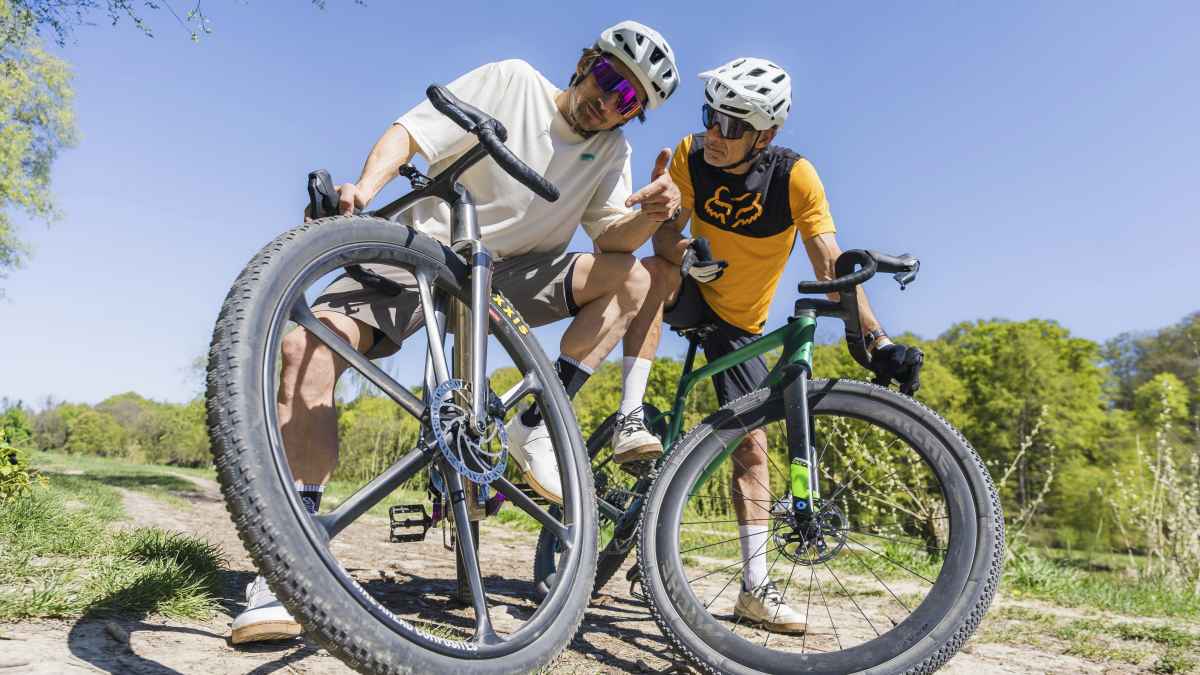
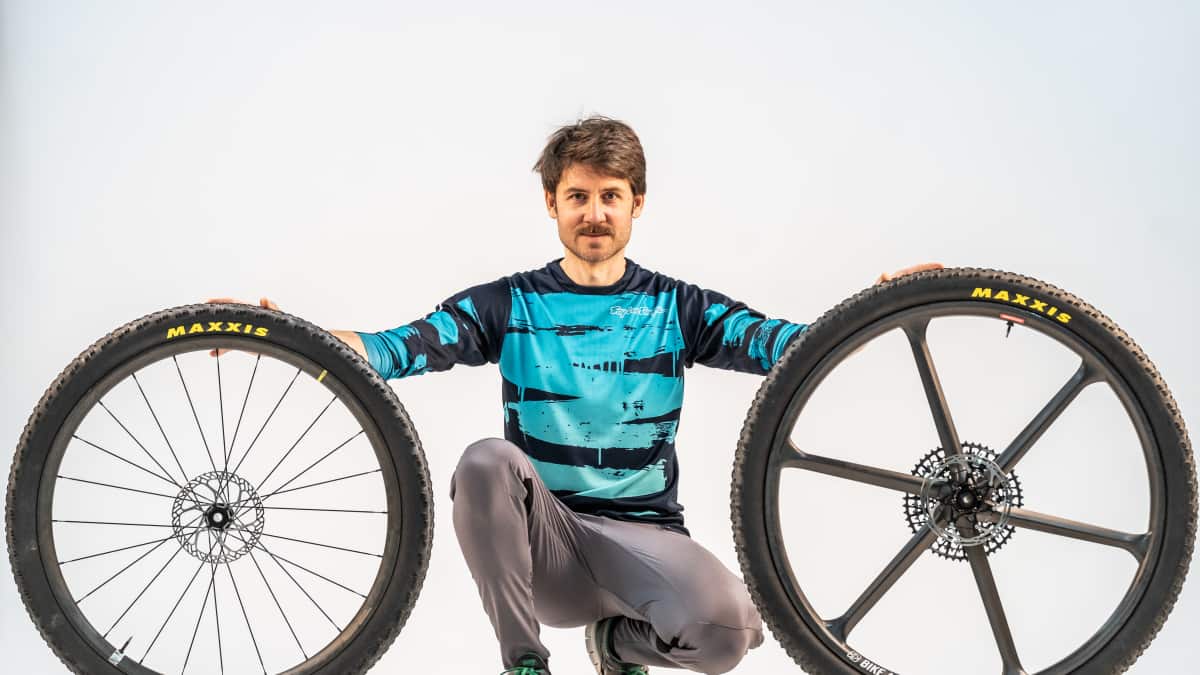
For a long time, 29-inch wheels were considered the gold standard in mountain biking. But now comes the next level: 32-inch wheels are said to combine the best of both worlds – the agility of smaller wheels with the rolling performance of ‘monster tracks’. BIKE magazine has put several models of this new breed through their paces. The manufacturers’ promise: more speed on rough terrain, better traction over scree, and more stable straight-line stability. It sounds tempting – but is it true?
A speed demon on the straight, an elephant on the hairpin bend
The test rides quickly made one thing clear: on fast, flowing trails, the XXL wheels really come into their own. The smooth ride is impressive, the speed advantage is noticeable, and rolling over roots and rocks feels almost effortless. But as soon as things get tight, the downside becomes apparent: on technical sections with lots of changes of direction, the 32-inch wheels feel cumbersome. Tight hairpin bends? Narrow forest sections? This is where the established 29-inch bikes really show off their manoeuvrability.
A shift in focus – a new approach to riding technique
The larger wheels fundamentally alter the bike’s handling characteristics. The higher centre of gravity shifts the weight distribution, which is particularly noticeable when cornering and during weight transfers. Anyone switching from a 29er will need to adapt their riding technique – body position, timing and movement patterns all need to be relearned. The testers report that there is a settling-in period which certainly requires patience.
A specialist rather than an all-rounder – who really needs a 32-inch screen?
Following extensive test rides across a wide variety of terrain, the conclusion is clear: 32-inch wheels are not a one-size-fits-all solution, but a highly specialised tool. For marathon racers on fast routes, and for cross-country pros looking to shave every second off their times – this is where the extra wheel size makes sense. But the all-round cyclist who loves technical trails and values agility is better off with 29-inch wheels. A revolution? More like an evolution for specific scenarios.
Conclusion: 32-inch mountain bikes broaden the range of options, but do not replace the tried-and-tested standard. Fast, yes; manoeuvrable, no – only time will tell whether this new size will catch on or remain a niche product.
Who is Thömus?
Thomas Binggeli is 50 years old and runs a Swiss bicycle company in Oberried, near Bern. The story of how the company was founded sounds like a youthful prank: whilst his parents were away on holiday, the young Binggeli sold the sheep without a second thought and set up a bike workshop in the barn. At the same time, he put together his first racing team – the club’s colour, red, was to become the brand’s trademark.
Binggeli took the decisive step in 1998 with the launch of his own brand, ‘Thömus’. Instead of simply selling bicycles, he began developing his own models – with a focus on carbon mountain bikes. The industry initially viewed the Bernese entrepreneur with scepticism, but later recognised his innovative spirit. The newcomer from a different sector had become a market player to be reckoned with.
With the professional team ‘Thömus maxon Swiss Mountain Bike Racing’, the brand made its mark in the UCI World Cup series. Under team manager Ralph Näf, Mathias Flückiger secured the overall World Cup title and an Olympic medal. Alessandra Keller also won the overall World Cup, whilst Lars Forster claimed several European Championship titles. The athletes’ successes have made Thömus the most successful Swiss cycling team of recent years – the team also won the team competition in the World Cup series, in which the leading bike manufacturers compete against one another.


Dimitri Lehner
Editor