


In this article, we use so-called affiliate links. With every purchase through these links, we receive a commission from the merchant. All relevant referral links are marked with . Learn more.
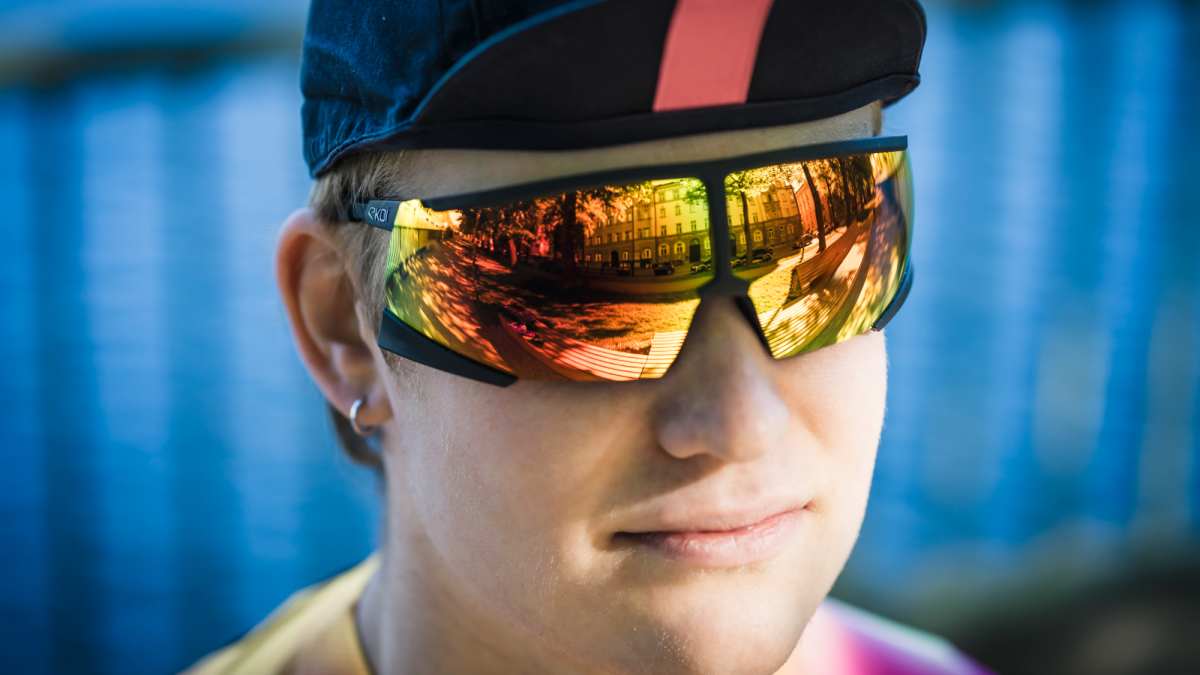
The French brand Ekoi was founded in Roubaix in 2001 and is now headquartered in Fréjus. Two distinctive features characterise the brand: direct sales via its own website and a wide range of products: Ekoi offers helmets, glasses, cycling clothing and cycling shoes, as well as accessories. The company sponsors three cycling teams in the WorldTour and other leagues, as well as several hundred individual athletes. Jens Voigt is Ekoi’s ambassador in Germany. We wanted to ask CEO Rattel for his views on the crisis in the cycling market and why sponsorship is so important for the brand.
Interview with Jean-Christophe Rattle, Managing Director of Ekoi
One thing that sets Ekoï apart is that you sell directly to the public. Many companies in the cycling sector do this, but not in the clothing sector. In your view, will other brands follow suit?
Yes, of course – other brands will follow. It was us who paved the way and demonstrated that this business model is viable and that there is great potential in direct sales, but I don’t see direct sales as the only solution. I think there’s a German brand like Cube that’s doing well, making money, becoming increasingly well-known – and they don’t use direct sales. I often say: just because you can make a burger doesn’t mean you’re any stronger than McDonald’s. Direct sales isn’t magic; in other words, there are a lot of factors you need to take into account: you need the right product, delivered quickly. You need to be visible – that is, have a presence on social media and in online marketing. And you need perfect customer service to respond to customers’ needs. If problems arise, you have to be very quick to respond. In short: it requires real expertise; it’s not enough just to have a website and say, ‘Right, that’ll do the trick’. That’s not how it works these days; you really have to take a professional approach.

Why has Ekoï not been affected by the general crisis in the sector?
You’ll be familiar with the problem: there was too much stock everywhere, so there were lots of discounts and a lot of confusion. But we’ve always sold online. We don’t have this problem with retail sales. We’re still growing by 20 to 30 per cent a year: that hasn’t changed, either before or after Covid. And we’ve noticed that there are three areas that are continuing to grow: road bikes, gravel bikes and triathlon bikes. Those are the three areas for us.
During the Covid year, your turnover was still around 12 million euros – can you tell us what the figure is now?
Next year we’ll be around 100 million euros, and at 100 million we’ll be amongst the market leaders. That’s a rough estimate – Castelli is likely to be slightly above 100 million, whilst many other brands are well below that figure. My primary goal is to make Ekoï an indispensable brand that continues to grow and attract customers – and that is precisely what we are investing in: plenty of sponsorship, plenty of innovation, plenty of customisation, plenty of differentiation. We don’t do things like the others do.
You sponsor teams and athletes in road cycling, triathlon and mountain biking. That costs a lot of money – what is your aim?
You have to stand out – I realised that a long time ago. Sponsorship is fantastic because it gives you visibility thanks to the teams. It’s a lot of work, but we also learn a great deal from the professionals when it comes to manufacturing textiles, and that opens up new opportunities for us. We’re working on aerodynamics, we’re also working on comfort – because the pros need a comfortable product – and we’re putting a lot of effort into the durability of the products. Feedback from the riders is very important to us.
Ekoï is also all about profit and profitability – visibility on television is key here. Is that why the helmets are so important to the professional teams?
Yes, that’s why many bike brands now make helmets compulsory. What sets us apart is that we can focus entirely on helmets. A bike brand can’t do that as well as we can, as their primary focus is on the bike itself. Everyone focuses on safety and aerodynamics, and we’re working on these areas. Admittedly, the market for this isn’t particularly large, but we need to be able to offer the teams the fastest helmet possible. And when it comes to helmets in particular – to come back to that – it’s all about expertise in the field of safety.

Their main segments are road bikes, gravel bikes and triathlon bikes – what about MTBs?
We’re represented in every discipline from head to toe. We’re really proud of that, because there aren’t many brands that manage to do that. In the mountain bike sector, we’re set to launch a carbon helmet that’s simply stunning. When it comes to gravel, we naturally have our own range of products. We’re investing heavily and are also active in cross-country, enduro and downhill. In fact, we’re really proud to have a strong presence across all segments – from head to toe.
The mountain biking sector has come under considerable pressure in recent years …
That’s a challenge. We could simply take the easy way out and say: ‘The mountain bike segment is currently in decline. We won’t get involved in that; it’s not worth investing in.’ But no, we’re doing things differently. If we have ambitions in the US, we need to focus on mountain bikes. Mountain bikes have proven their worth there and remain important, so we need to offer mountain bike products. The same applies to Canada, and it is from the mountain bike sector that the e-mountain bike has emerged. E-mountain bikes have a large market share, particularly in Germany.
Are there any new products in this range?
In February, we’re launching a special helmet for e-mountain bikes, featuring a very lightweight chin guard that has been developed exclusively for this purpose and meets specific standards. I want us to become a global brand, just like Oakley. I’ve always dreamt of this, because they’re represented in every sport. If you know how to make a road cycling jersey, you also know how to make a mountain bike jersey. The same applies to a road cycling helmet. If you have the right specialists, you can also make a mountain bike helmet.
One of the distinctive features of Ekoï is that the collection changes very quickly. New colours, a new style – is that always a risk?
To be honest, that’s pretty much the business model of the internet. If you want people to keep coming back to your website, there has to be something new. I think that customers – we live in a consumer society these days – used to buy an Assos jersey 15 years ago and keep it for as long as possible. They paid a high price to keep it. Today, people prefer to buy cheaper items, but can change them more often. Cycling gear has become very fashionable. It’s a fashion product, so you have to constantly offer something new. Sometimes you have to take risks because you’re not sure whether a particular design will go down well. When you sell online, you can also react quickly. You know straight away whether it’s working or not. That’s because you can analyse the traffic, the number of visitors and, above all, the conversion rate out of 100 people: how many actually bought something? And we can complete a collection in three weeks. That’s because our suppliers have the fabric in stock, so the design is printed, the templates are printed, and the fabric – it all happens quickly.
The bicycle market is going through a difficult period. Do you see any long-term problems?
The problem with bicycles is that in Europe we have manufacturers who are still essentially craftspeople – small businesses compared to the American or Chinese giants that are set to flood the market. That is the real problem, and I sincerely believe that in ten years’ time – or even sooner – many brands will disappear. Why? Because these companies have not invested enough in their expertise. Brands such as Cube and Canyon are investing heavily in their expertise to be able to withstand the emerging competition from the US and China. The companies from China will pose a problem for many. Chinese brands have enormous production capacities. And where will they export these to? They are trying to export them to the US, and they will export them to Europe. They have a highly developed industrial process and have invested heavily. A large workforce, substantial investment and high productivity, because they have the expertise – as can be seen in the car and motorbike sectors – to boost productivity, whilst we in Europe have fallen behind in terms of industrialisation in this area.
What challenges do you see for the future?
China is on its way. They’re already here with the wheels, the handlebars and the 3D saddles. The carbon parts – they’re already available. They’ll arrive with the bicycles. That’s for sure, and the accessories will inevitably follow in the wake of the bicycles. When the Chinese arrive, we know they’ll be competing on price. We have time, and we must use this time to develop specific products. When it comes to clothing, for example, it’s all about quick-drying fabrics. Comfort, durability – all of that is our expertise. All the experience we’ve built up. The others don’t have it. They can produce jerseys for 5 or 7 dollars. We have to offer something that stands out. The example of the automotive industry is striking. The automotive industry is in grave danger: because they have failed to master electric mobility, they have been overtaken, and because they have not preserved or further developed their expertise in the field of internal combustion engines. This is the nature of global competition, and after China comes India. I am aware of the danger, and I am glad to understand it so that we can devise an action plan to counter it.
At this point, you will find external content that complements the article. You can display and hide it with a click.
You used to take part in cycle races when you were younger – do you still do so today?
I have neither the time nor the inclination to do that. Cycling is about freedom, which is why I don’t feel like saying, ‘All right then, I’ll go for a ride at 5 or 6 in the morning.’ As for my training, a friend told me I should train on Zwift. But I don’t like Zwift because, in a closed room, I have neither the motivation nor the drive to perform at my best. I love cycling; it’s freedom – you give it your all, your spirit soars, you feel revitalised, you take a deep breath. That’s what I love, so I cycle at the weekend and enjoy trying out new things.
About the person: Jean-Christophe Rattel
Jean-Christophe Rattel (64) has Ekoï Founded in 2001 together with a friend. Prior to this, he had worked in sales at L’Oréal, Vetta and MBK. Initially, the company sold its products through large retail chains – in 2008, it switched to direct sales via its own website. Since then, the company has been based in the French seaside resort of Fréjus. One of Ekoï’s distinctive features is the wide range of products on offer: everything a cyclist needs from head to toe is available. Since the early days, CEO Rattel has relied on sponsorship. When Brice Feillu won a stage of the Tour de France in 2009 whilst wearing one of the brand’s helmets, this boosted the company’s profile enormously. Rattel subsequently stepped up sponsorship significantly and continues to this day to focus on marketing through high-profile teams and athletes.

Kristian Bauer
Editor