


Conclusion: Two world-class forks – Fox sets the standard
Fox and RockShox are pursuing the same goal: greater comfort, more grip and better utilisation of travel. However, their approaches to achieving this differ fundamentally. RockShox has developed the ZEB almost entirely from scratch, prioritising maximum linearity. Fox has refined the existing design, reduced friction and struck the perfect balance between sensitivity, reserve and precision. The Fox 38 also scores highly in the lab. If you’re looking for the more well-rounded overall package, go for the Fox. The new ZEB nevertheless remains one of the best enduro forks on the market. – Max Fuchs, BIKE test editor
Click here for the detailed test reports on both forks.
Key points at a glance
- Fox and RockShox are launching completely revamped versions of their flagship enduro models.
- Both forks offer a more responsive feel and make more effective use of the suspension travel.
- RockShox is designing the ZEB almost entirely from scratch.
- Fox is opting for evolution rather than revolution.
- In the lab, the Fox impresses with its higher braking stiffness and lower weight.
- The new ZEB stands out thanks to its improved utilisation of suspension travel.
- Fox comes out on top when it comes to traction and responsiveness.
The never-ending rivalry enters the next round
When Fox and RockShox launch new enduro forks at the same time, there’s more to it than just a standard model update. For years, the Fox 38 and RockShox ZEB have been battling it out for the top spot in the enduro segment. For the current generation, both manufacturers have fundamentally overhauled their top-of-the-range models – albeit with completely different approaches.

The common goal: less friction, greater comfort and suspension that makes better use of the travel. It is precisely in this area that many high-end forks have, until now, suffered from a very stiff default setting, which recreational riders in particular rarely made full use of, and as a result found the ride less comfortable.
RockShox is effectively redesigning the ZEB from scratch
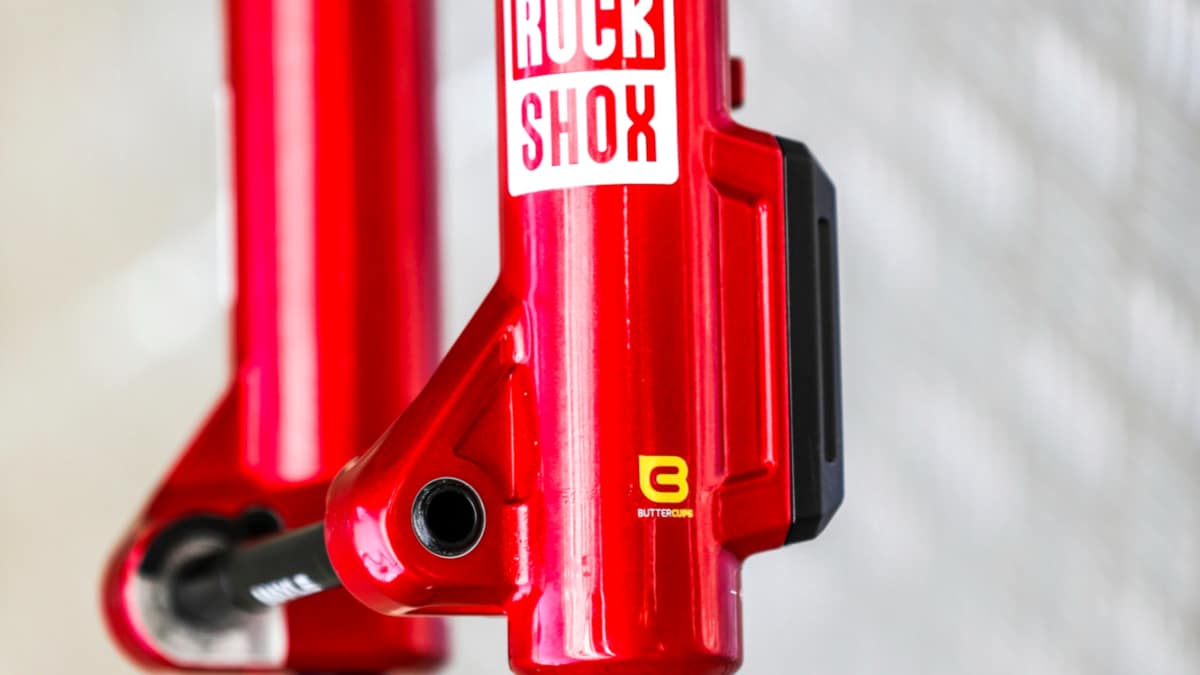
Just one component has survived from the ZEB’s predecessor – the thru-axle. Everything else is new: a new casting, a new triple clamp, additional struts around the bushing seats, more understated decals and a fork crown on which the bleed valves are now also mounted.
The heart of the new version, however, lies within: the LinearXL air spring unit in a cartridge design. As the name suggests, it is designed to produce a linear spring rate curve. This means that the force required to compress the spring increases evenly across the entire travel. RockShox hopes this will deliver a consistent and predictable ride feel, similar to that of a steel spring. There is, however, a catch:
Without a firm end-stroke progression, the maximum travel is released more easily, and the fork is more prone to bottoming out. The so-called ‘ABO’ helps to counteract this – a bottom-out buffer that can be adjusted from the outside using an Allen key. Depending on the setting, it absorbs bottom-out impacts over the final 10 to 17 millimetres of travel.
To make the ZEB run even more smoothly, another exciting piece of technology is being introduced. Each time the suspension compresses, a matrix of small recesses on the stanchions absorbs oil and, as the suspension extends, transports it via the slide bushings, where it is released again. This constant lubrication is designed not only to help reduce friction, but also to contribute to the suspension’s longevity and enable longer service intervals.
Thanks to the lower friction losses, the tuning of the new Charger 3.2 damping unit is stiffer than that of the previous model. This compensates for the lack of natural damping caused by friction and prevents the fork from bottoming out uncontrollably.
Fox is refining its tried-and-tested concept
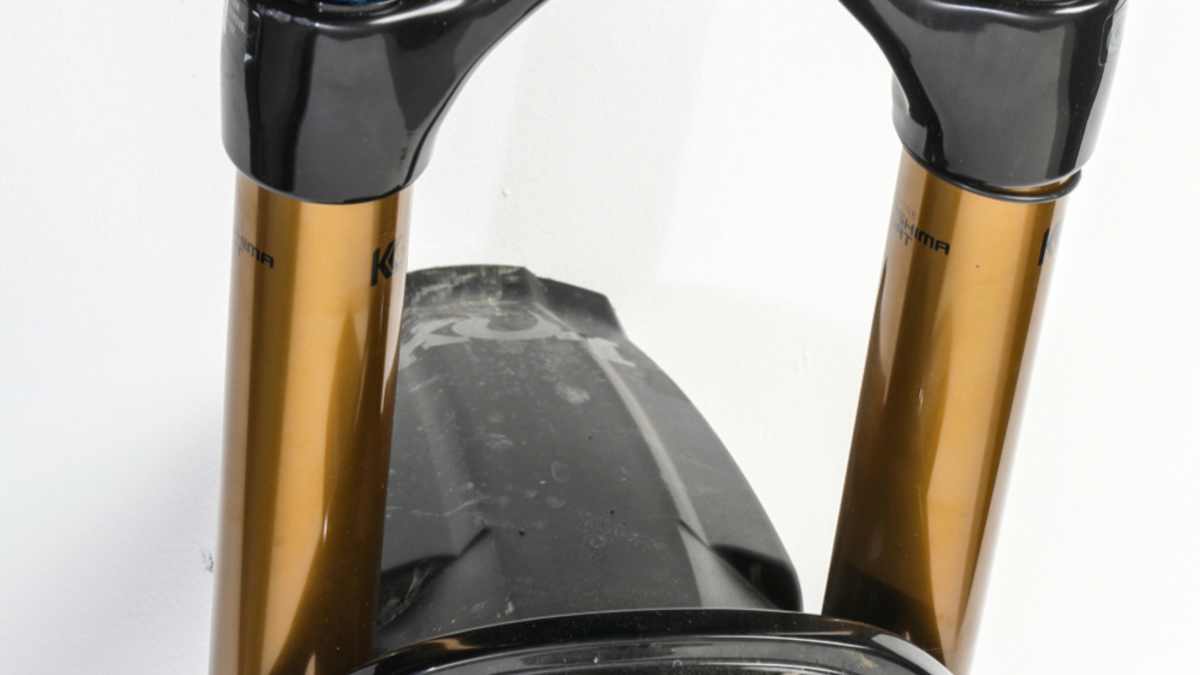
The external changes to the 38 are subtle. Like the Fox 40 and the 36, the Fox 38 now also features an open-work fork crown. In addition, the Californian manufacturer has redesigned the bleed valves on the rear of the fork.
Inside, however, considerably more work has gone into the design. Fox has moved away from the previous tube-in-tube design of the air spring and is instead relying on the so-called GlideCore air spring, which we are already familiar with from the Podium and the 36. Its unique selling point: the air spring is mounted in a floating arrangement inside the fork. This decouples the stanchion from the air chamber, allowing the piston to move more freely when the fork is under torsional stress. The result: less friction.
The increased air volume is also intended to produce a more linear response curve – though not quite as extreme as with RockShox. Nevertheless, the new 38 is designed to utilise the travel more effectively. But that’s not all: thanks to the optimised oil flow in the GripX2 damping unit, the adjustment range has shifted slightly further from stiff towards soft. The idea behind this is to provide greater comfort.
Lab results: Fox comes out on top thanks to its superior balance
Fox 38
- Braking stiffness: 294.6 Nm/°
- Torsional stiffness: 30.6 Nm/°
- Weight: 2447 g
- Braking stiffness: 263.9 Nm/°
- Torsional stiffness: 37.7 Nm/°
- Weight: 2565 g
Stiffness – good or bad?
A ‘soft’ fork isn’t necessarily a bad thing. Whilst high torsional stiffness ensures more precise steering, it can also reduce traction because the front wheel is more likely to skid. The situation is different when it comes to braking stiffness: the higher it is, the less the fork bends backwards during braking. This reduces stress in the system and enables a more responsive behaviour under load.
Our laboratory results These factors therefore tend to favour the Fox 38: it combines high braking stiffness with comparatively moderate torsional stiffness. Fox also has the edge when it comes to weight. Also worth noting: the stiffness figures for the current Fox 38 differ only slightly from those of its predecessor. The differences are more pronounced with the new ZEB – it is just under 13 per cent stiffer under braking whilst exhibiting around 15 per cent less torsional stiffness.
Editorial commentary
The trend is clearly moving towards comfort. For years, manufacturers were locked in an arms race to provide maximum support. The result was suspension set-ups that many amateur riders could barely make full use of. Fox and RockShox are now taking a different approach – and this is likely to benefit most mountain bikers. Instead of rock-hard race set-ups, grip, control and, above all, comfort are once again taking centre stage.

Max Fuchs
Editor