


Lightweight and compact, yet with incredible engine power! These are its key strengths of the new Avinox M2S super engine (see the review here). Whilst the focus is usually on the extreme power output of this unit – up to 1500 watts – another detail tends to be somewhat overlooked. This is because it is less obvious.
Compact is key: the link between engine design and driving characteristics
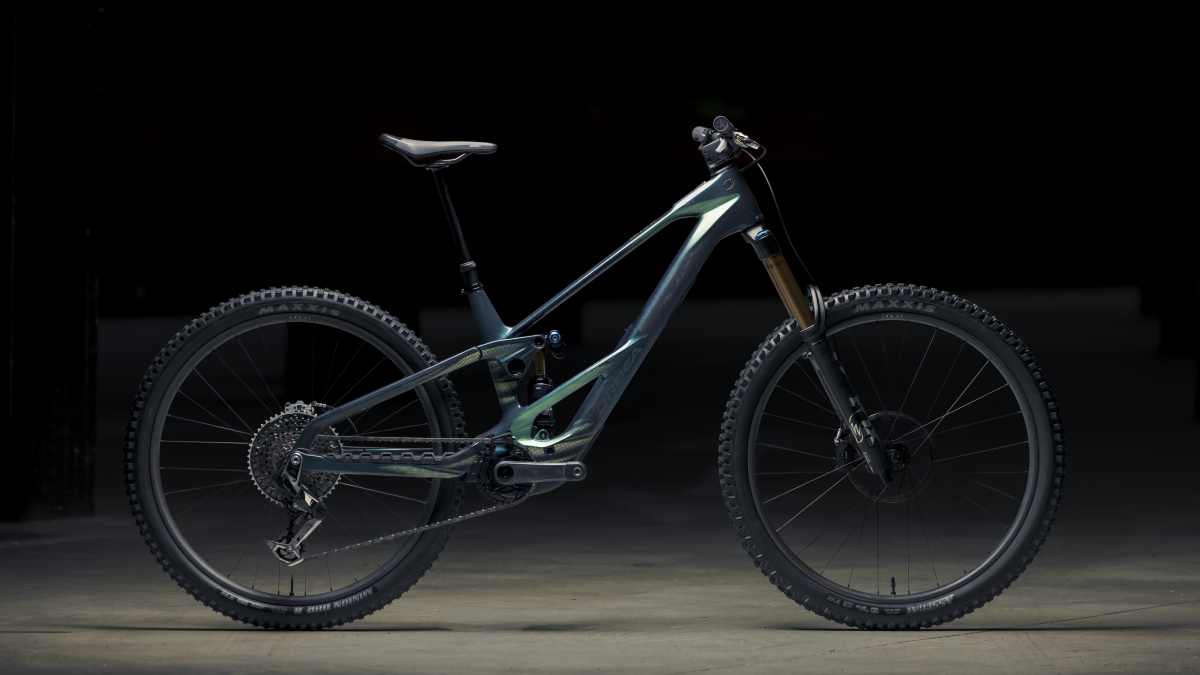
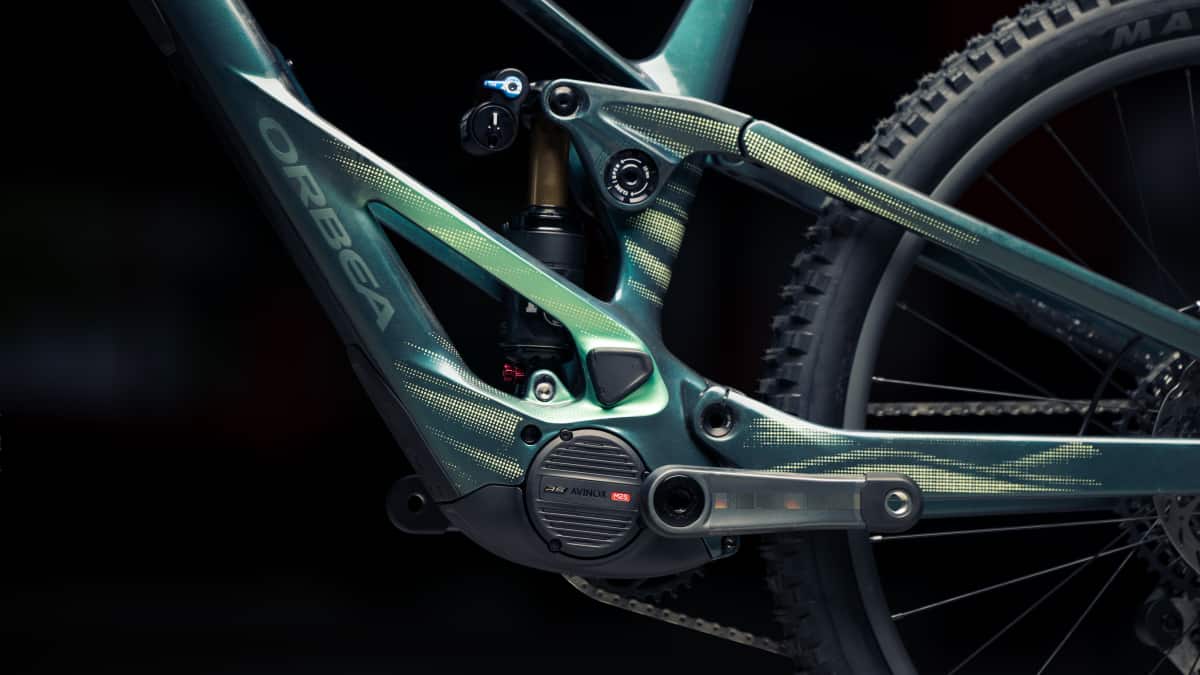
And it was precisely this detail that was decisive for the developers of the new Orbea Wild LT when choosing the new motor. Whilst the weight of 2.6 kg – compared to a Bosch Performance CX at 2.85 kg – makes no significant difference in the complete system of an e-mountain bike, the more compact design, on the other hand, can be a decisive factor. At least, that’s what the engineers at Orbea say.
The fact is: the position of the pivot points has a decisive influence on the suspension kinematics of a mountain bike. And thus on a crucial characteristic of a bike: how does the rear suspension perform? And in many cases, the pivot points – including the shock mount – are situated precisely where the motor takes up space. This restricts designers in their development work.
Beyond performance: Why Orbea chose the Avinox
Even though the difference in size between the Bosch Performance CX and the Avinox M2S isn’t huge, according to Orbea, this is precisely the main reason for switching from Bosch to Avinox. At the launch of the new Wild LT, the developers stated that the motor gets slightly less in the way in the crucial area. This has allowed the rear triangle’s kinematics to be optimised even further. Among other things, this has made it possible to reduce antisquat even further, which is intended to improve the bike’s traction.
Specifically, the shock absorber mounting – and therefore the pivot lever – could be positioned lower down on the bike. This also lowers the bike’s centre of gravity, giving the rider more freedom of movement and a lower step-over height.
The fact that this issue influences the design of rear sections is nothing new. The New rear suspension on the Santa Cruz Vala The engineers attributed this to the possible positioning of the pivot points. This was because the brand’s iconic VPP design could not be implemented ideally with the motor and was consequently dropped from the range for the Vala and Bullit e-MTBs.

Florentin Vesenbeckh
Editor CvD
