


10 Affordable Cross-Country Bikes: World Cup-level performance, entry-level prices from 2,499 euros
Jan Timmermann
· 25.09.2026

In this article, we use so-called affiliate links. With every purchase through these links, we receive a commission from the merchant. All relevant referral links are marked with . Learn more.
Cross-country is one of the few disciplines in mountain biking where bikes without motors are still in demand. The lightweight and fast full-suspension bikes ridden by World Cup professionals are truly fascinating. Unfortunately, good kit for ambitious racers is also particularly expensive. Nevertheless, bike manufacturers also offer more affordable XC mountain bikes for well under 4,000 euros. We’re putting ten of them in the spotlight and assessing whether these entry-level cross-country models are really worth the investment.
Conclusion
In cross-country cycling, it is particularly difficult to find affordable prices. Weight and the spec of the bike can make the difference between victory and defeat on the race course. The most affordable models on the market offer XC beginners a solid foundation for training and their first competitive experiences, but unfortunately are unlikely to make it onto the podium. - Jan Timmermann, BIKE editor
1. Bulls Wild Edge
With full suspension and a particularly attractive price, the entry-level model from this German specialist retailer is a real draw. In our test of its more expensive sibling, we praised its light weight and agile handling. However, this is likely to apply only in part to the more basic Bulls Wild Edge. In particular, the rigid seat post and a narrow rim-tyre combination set its limits on challenging terrain.

- Price: 3,599 euros
- Suspension travel: 120 / 120 mm
- Frame material: carbon

2. Cannondale Scalpel 4
The Cannondale Scalpel 4 also boasts a high-quality carbon frame at a fair price. The American brand even includes a dropper seatpost and high-quality wide tyres in this value-for-money deal. In our test of the top-of-the-range model, we were impressed by the powerful suspension of the latest Scalpel. The Model 4 variant, however, makes some compromises in terms of suspension quality due to its basic RockShox SID Base fork.
- Price: 3,699 euros
- Suspension travel: 120 / 120 mm
- Frame material: carbon

3. Canyon Lux World Cup CF 9
The frame of the Canyon Lux World Cup CF 9 is based on the same state-of-the-art design as the current race bike ridden by cross-country star Luca Schwarzbauer, but features a slightly heavier carbon construction. We were very impressed by the excellent geometry when testing a more expensive model. The spec of the entry-level version is comparatively high, though it lacks the support of a specialist dealer.
- Price: 3,999 euros
- Suspension travel: 120 / 110 mm
- Frame material: carbon

4. Giant Anthem Advanced SL 3
The Giant Anthem Advanced SL3 can no longer really be described as a ‘budget’ bike, but in our experience, its carbon frame is lightweight and features a fast geometry, including flip-chip adjustment. Our test confirms that the Giant Anthem Advanced SL has a lovely racing character. The basic version, however, has to make do with compromises in terms of the suspension fork and components.
- Price: 4,500 euros >> available here
- Suspension travel: 120 / 120 mm
- Frame material: carbon

5. Orbea Oiz H30
The Orbea Oiz H30 seems unbeatably good value. This is partly down to the aluminium frame and partly to the lower standard of components. In its aluminium version, the Oiz doesn’t quite feature the very latest geometry of its World Cup counterpart, and it tends to be a bit on the heavy side when it comes to tyre choice and suspension. The H30 is more of an affordable touring bike than a lightweight race bike.
- Price: 2,499 euros >> available here
- Suspension travel: 120 / 120 mm
- Frame material: aluminium

6. Rockrider XC Race 940 S Comp
The sports goods giant Decathlon’s own brand equips the World Cup-proven carbon frame with lightweight carbon wheels even at the entry-level price. All in all, this makes the Rockrider cross-country full-suspension bike comparatively light. However, compromises have to be made in terms of the suspension fork and tyre width. The geometry is a bit ‘old-school’ and could do with an update.
- Price: 3,999 euros >> available here
- Suspension travel: 120 / 120 mm
- Frame material: Crabon

7. Santa Cruz Blur Deore
Even the most affordable model in the new Santa Cruz Blur range is based on the high-quality CC carbon frame with a storage compartment and comes with a lifetime guarantee. The geometry is cutting-edge and versatile. Naturally, customers pay for all this. The spec is functional but not particularly light, and is geared more towards trail riding fun than competitive racing.
- Price: 4,999 euros
- Suspension travel: 120 / 120 mm
- Frame material: carbon

8. Scott Spark RC Comp
The new Scott Spark isn’t just good-looking; it’s also technically state-of-the-art. A host of frame features and a concealed shock make this Swiss bike truly unique. Based on our impressions, the new rear triangle is very capable, and the geometry is also perfectly suited to modern cross-country courses. However, with the more affordable Comp version, riders shouldn’t expect too much from the basic suspension and drivetrain components.
- Price: 3,699 euros >> available here
- Suspension travel: 120 / 120 mm
- Frame material: carbon

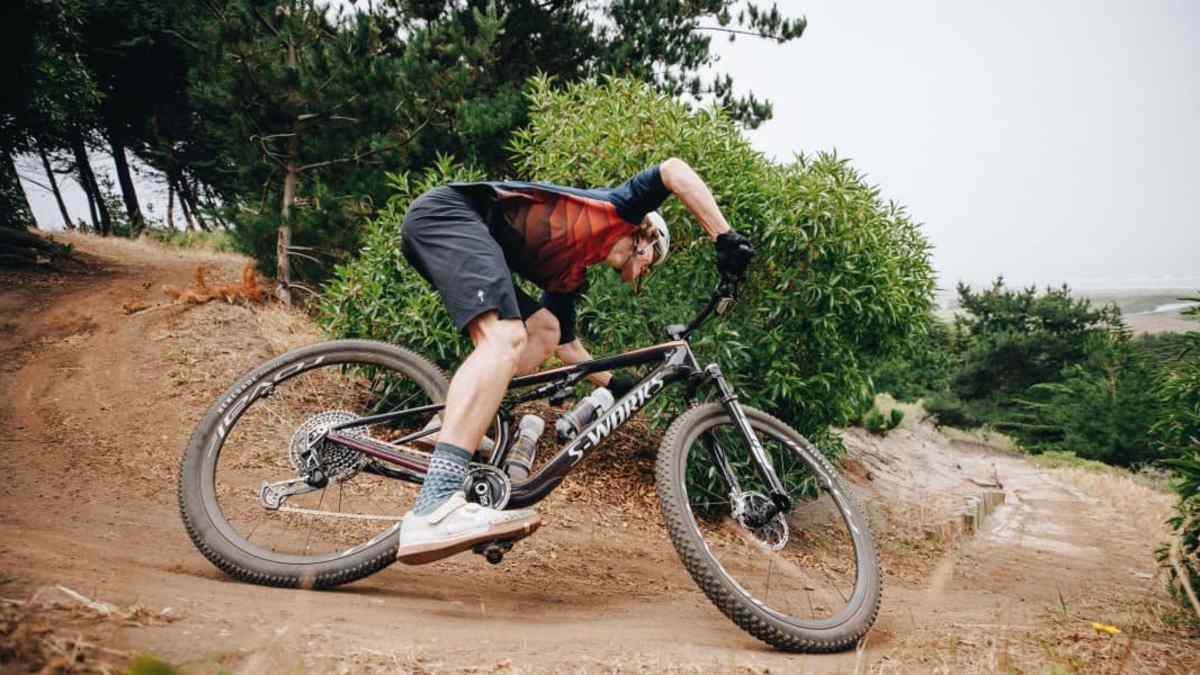
9. Specialized Epic 9 Sport
The Specialized Epic is a benchmark in cross-country cycling. In its latest iteration, the frame is particularly light, and the suspension has already impressed us in our tests. The most affordable Epic 9 naturally comes without feather-light carbon wheels and has to make do with more basic components in some areas. However, the geometry is state-of-the-art and the frame should provide a worthwhile basis for future upgrades. It comes fitted with a wireless drivetrain as standard.
- Price: 4,199 euros >> available here
- Suspension travel: 120 / 120 mm
- Frame material: carbon

10. Trek Supercaliber SL 9.6 Gen 2
The Trek Supercaliber is all about racing. In our test of the more expensive version, we praised the efficiency of the short suspension travel. Unfortunately, the frame’s geometry and weight are no longer among the best in the world. The more affordable Trek Supercaliber SL 9.6 Gen 2 hits the race track with basic components, particularly the suspension fork and accessories.
- Price: 3,999 euros >> available here
- Suspension travel: 110 / 80
- Frame material: carbon

What do you think: would you go for a cheap cross-country bike, or would you rather invest a bit more to get better components and a lighter bike?

Jan Timmermann
Editor