


Trek'n Eat Coffee: Filter-bag coffee from a reusable pouch for bikepacking
Sebastian Brust
· 08.07.2026


First things first: a coffee. Before the day can really get going in the morning, when your fingers are still too stiff, or simply to top off a summit experience, many people reach for a cup of this caffeinated pick-me-up.
But because some people don’t have the time or the motivation to grind, brew and set up a filter whilst on the go, there’s also coffee in a sachet – caffeine, and straight away. Well, almost; you still need hot water.
Katadyn, known for its water filters, is launching two coffee products under the Trek’n Eat brand, aimed at bike packers and touring cyclists. Mission Coffee delivers a strong brew, whilst Summit Coffee is milder.
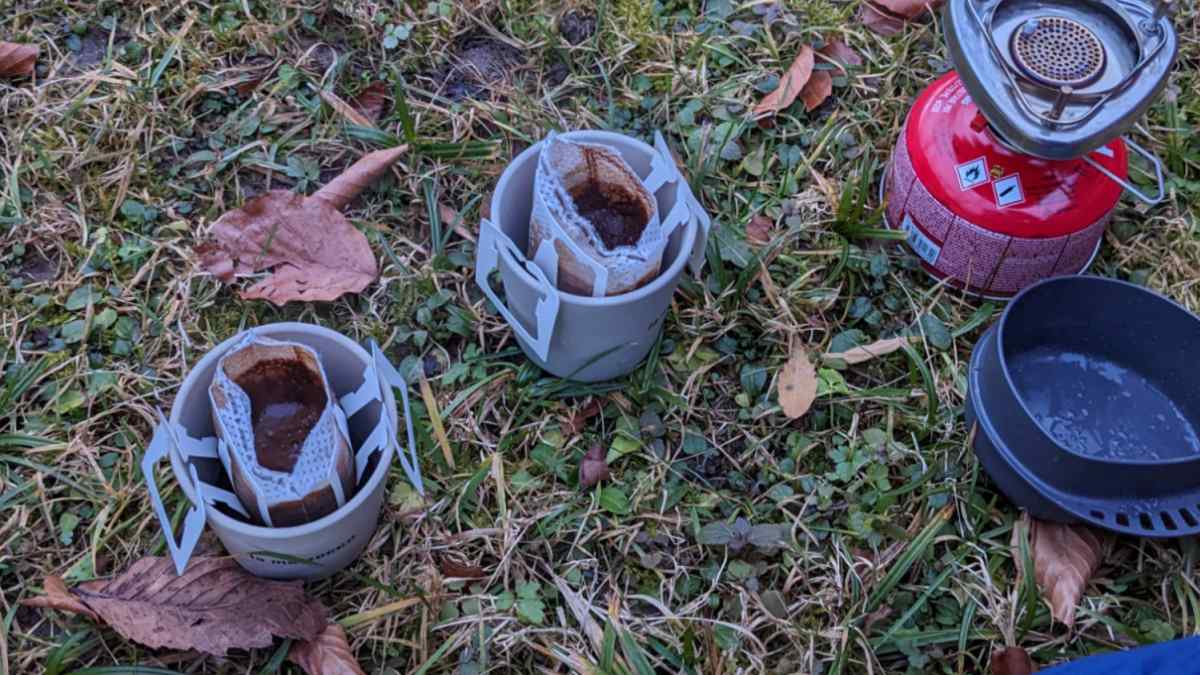
Both use the ‘brew-in-the-bag’ system: pour hot water into the bag, leave to steep for a few minutes, and you’re done. The built-in coffee brewer uses a hybrid method that combines elements of filter coffee and the French press.
Reusable coffee maker reduces waste
Good because it’s sustainable: the coffee brewer in a bag can be reused after use. Empty out the coffee grounds, clean and dry the bag – then you can refill it with fresh ground coffee. The packs are made from recycled kraft paper on the outside and heat-resistant, BPA-free polyethylene on the inside.
The polypropylene lid is also reusable. Markings indicating the amount of water show whether the coffee should be mild, medium or strong. The longer the brewing time, the stronger the result.
Caffeine & Cycling – why they’re such a perfect match
Coffee plays an important role for many cyclists – and not just because of the taste. For some, brewing a cup of coffee is a veritable sacred ritual, for which there is now even our own fan merchandise . So coffee and cycling go hand in hand – but why is that?
Coffee – or rather the caffeine it contains – invigorates and stimulates; and this is not just a subjective feeling, but a fact that has been scientifically proven on numerous occasions. A A meta-analysis published recently in the *Journal of the International Society of Sports Nutrition* showed Once again, moderate doses of caffeine can improve performance. That must be it. Legal doping. That’s probably why coffee is every German’s favourite drink.
Freeze-dried meals from Trek'n Eat
These speciality coffees are new to Trek'n Eat; according to the label, they are produced in Denmark. There is no information about where the beans come from. Nor is there any mention of fair trade or organic farming. The brand mainly produces freeze-dried meals and snacks in Germany.
The waterproof, resealable packaging fits into your touring luggage. The range extends from meat dishes to vegetarian options and desserts, available in various pack sizes. Trek’n Eat is a own-brand product of the Swiss Katadyn Group, which is well known for its water filtration systems.
Trek’n Eat Mission Coffee & Summit Coffee – Key information at a glance:
- Product: Mission Coffee (strong), Summit Coffee (mild)
- System: Brew-in-the-bag with integrated coffee brewer
- Method: Pour hot water into the teabag and leave to infuse
- Method: A hybrid of filter coffee and French press
- Reusability: The coffee maker can be refilled after cleaning
- Packaging material: 100% recycled (kraft paper on the outside, BPA-free polyethylene on the inside)
- Lid: polypropylene, reusable
- Dosage: Markings for mild, medium and strong
- Manufacturer: Trek'n Eat (Katadyn Group)
- Country of manufacture: Denmark
Sebastian Brust
Editor
