
Text: Tim Farin, Valentin Erhardt
This is exactly where fascia comes into play – a term that has long been established in sporting circles, but is often misunderstood. Fascia are collagen-rich connective tissue structures that envelop muscles, support organs and extend throughout the entire body like a three-dimensional network. They are not merely passive ‘packaging material’: fascia transmit forces, influence posture and play a measurable role in mobility and coordination.
What happens when the fascia causes problems?
Simplistic images such as ‘stuck’ or ‘twisted’ fasciae are a matter of debate in the scientific community. What can actually happen is this: with prolonged one-sided strain or a lack of exercise, the connective tissue can lose its ability to glide smoothly – the various layers of fascia can no longer slide past one another as easily. In severe cases, collagen can proliferate and cause the tissue to stiffen, restricting movement. For cyclists who remain in a fixed position for hours on end, this is a real risk – exacerbated by the daily office routine before and after cycling.
What helps – and what doesn’t?
If symptoms persist, the first step is to get them checked out. If there is no serious underlying cause, targeted fascia training can be a useful part of your regime. The best-known approach is foam rolling – self-massage using a hard foam roller or ball. Studies show that regular rolling can improve mobility, particularly when combined with vibration devices. On its own, however, the roller is no miracle cure.
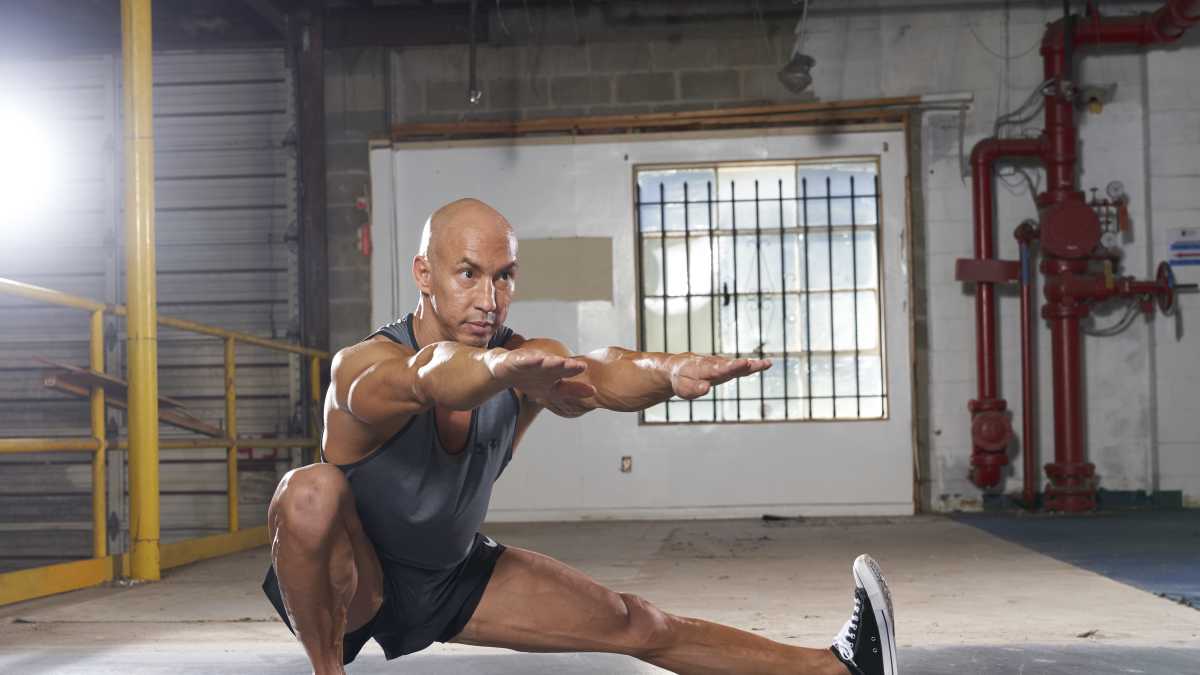
Researchers recommend a training programme based on four pillars: multidirectional stretching of entire muscle chains (rather than isolated muscles), myofascial release through slow, firm – but not painful – pressure; springy movements such as light hopping, which trains the elasticity of tendons and fascia; and mindful body awareness – in other words, listening to your body’s signals before you become overloaded.
Important: Fascia training is no substitute for a varied exercise programme. You’ll benefit most if you incorporate it into a programme comprising strength, endurance and coordination exercises. And if you suffer from persistent pain, you should seek medical advice – as some symptoms may be caused by more than just stiff connective tissue.