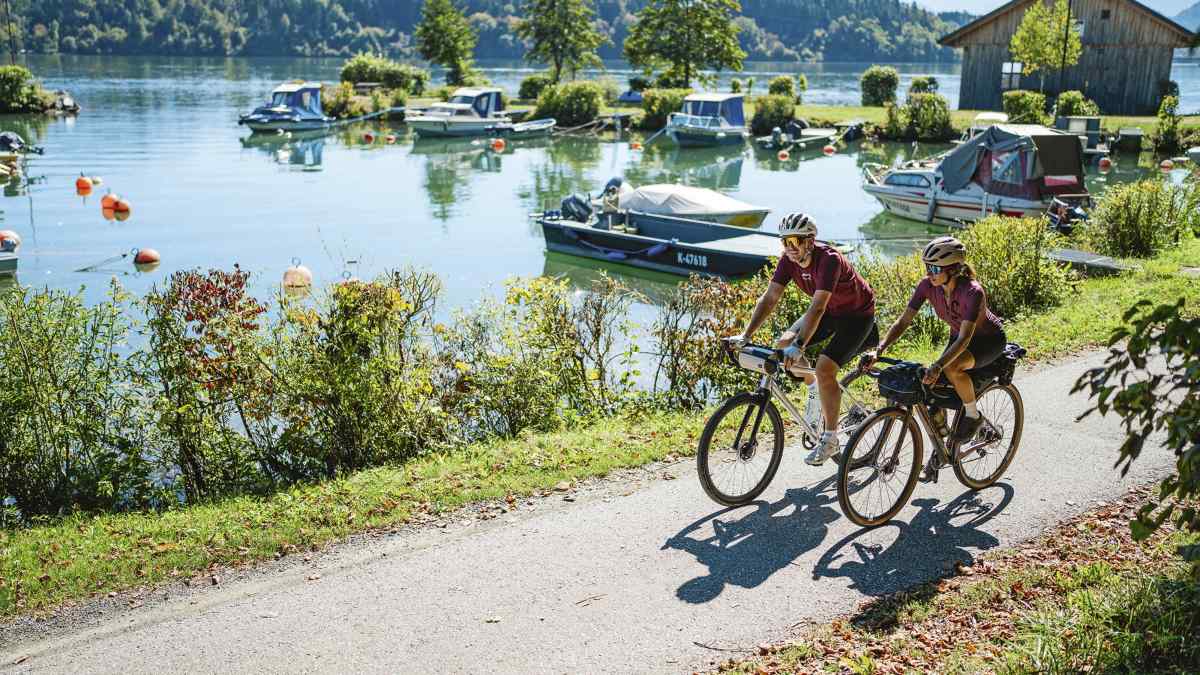
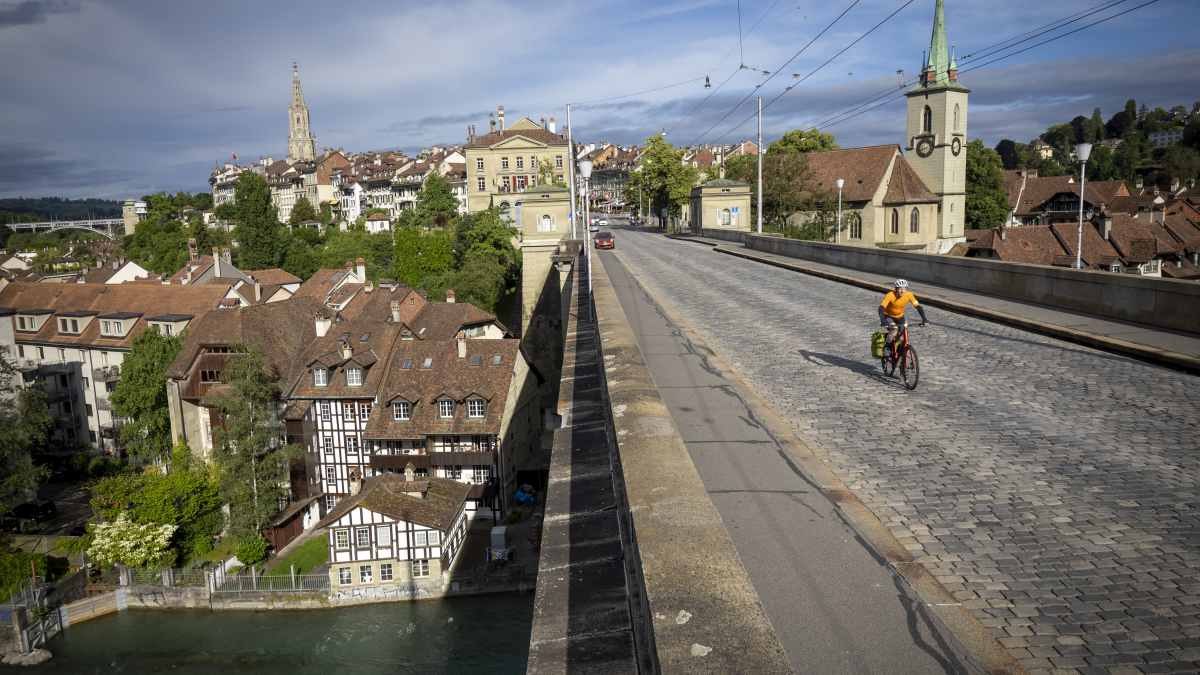
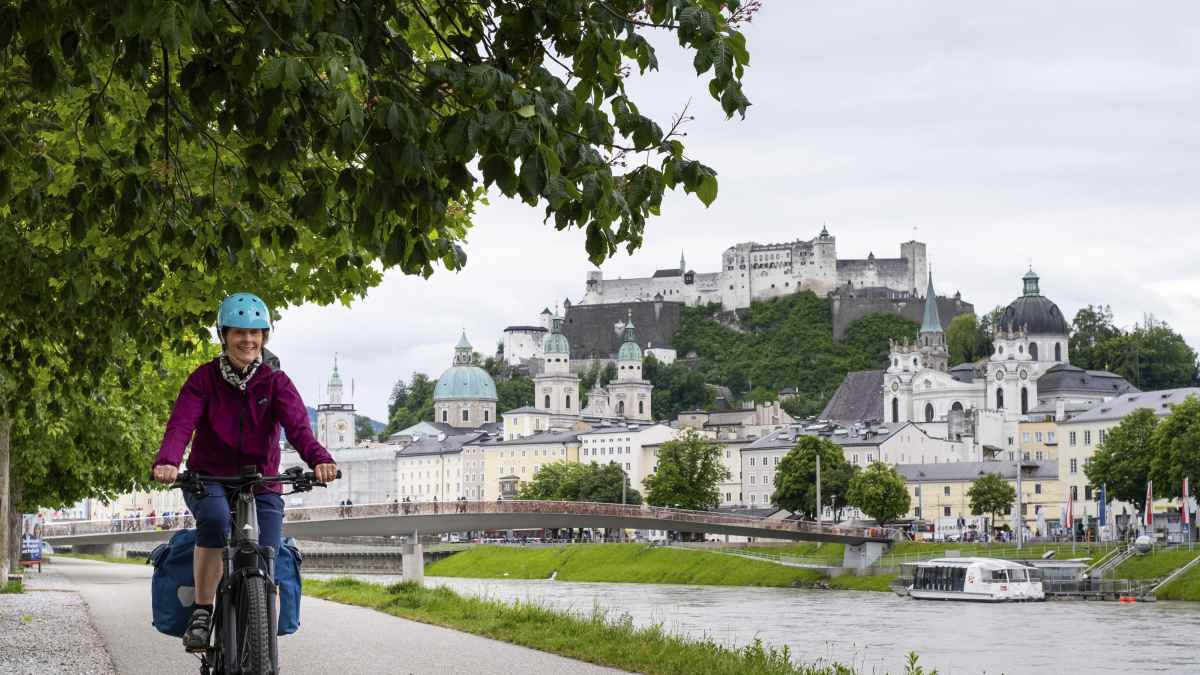
The basis for these and many other tours is the Liberation Route Europe, a project of the Council of Europe, which is a "certified cultural route" and connects places of remembrance of the Second World War throughout Europe in the form of a virtual, transnational memorial. Various tours can be planned via the website and app - for hiking, cycling or even as off-road routes suitable for mountain biking. This makes it possible to go on a variety of discovery tours of a completely different kind!
One particularly impressive route can be found in Berlin - a city that still bears traces of its Nazi past and the Second World War. Streets, monuments and buildings tell of an eventful history. This 23-kilometre cycle tour along the River Spree and the Landwehr Canal takes you to key sites in Berlin's war history - from the beginnings of the Third Reich to the Battle of Berlin in April and May 1945. Plan around 2 to 3 hours, with time to stop and linger.
Symbolic start at the Reichstag
The tour begins at the Reichstag building, where the Soviet flag was raised in May 1945 - a staged propaganda photo by war photographer Yevgeny Ananyevich Khaldei, which came to symbolise the end of the war in Europe. The battle for the Reichstag was one of the last battles in the capture of Berlin. Soviet troops only gained complete control after days of fighting.
Along the Spree to bridges and bunkers
From here, you cross the Spree to the Moltke Bridge, which served as a bridgehead for the Soviet advance on the Reichstag at the end of April 1945. It was not fully reconstructed until decades after the end of the war. The Weidendammer Bridge marks the escape route of German troops and personnel from the Führerbunker in the final days of the war. The Tiergarten flak tower, Berlin's first flak tower complex, once stood in Tiergarten. It served as an air defence, military hospital and art depot. During the Battle of Berlin, it was a favourite target of the Soviet air force. After the war, it was completely demolished. Today's Straße des 17. Juni was the site of the east-west runway in 1945. In the last days of the war, transport planes landed here to fly in Nazi functionaries and evacuate the wounded.

Centres of power of terror
The Shell House, built in 1930/31, served as the headquarters of the Kriegsmarine from 1934. Hitler himself is said to have told the architect Emil Fahrenkamp: "So you are the man who did the Shell House wrong." Since 2012, it has been the second official residence of the Federal Ministry of Defence. The Topography of Terror stands on the site of the former headquarters of the Gestapo, Reichsführung-SS and Reich Security Main Office. The central permanent exhibition documents these institutions and the crimes they organised. A second exhibition is dedicated to Berlin's role as the capital of the Third Reich. The Reich Ministry for the Occupied Eastern Territories resided in the former Yugoslavian legation, which was built during the Nazi era. Today, the German Council on Foreign Relations is based here.
Remembrance and warning
The Memorial to the Murdered Jews of Europe, an impressive field of stelae, invites visitors to reflect on the Holocaust. Not far from it, the Jewish Museum has been telling the story of Jewish history and culture since 2001. The German Historical Museum presents 2,000 years of German history. The ground floor is dedicated to the Weimar Republic, the Nazi regime, the post-war period and the division of Germany until reunification in 1990. The German Resistance Memorial Centre is located at the historic site of the attempted coup against Hitler on 20 July 1944. The permanent exhibition shows the social breadth and ideological diversity of the resistance against the dictatorship.
Airport and war ruins
Tempelhof Airport, with its characteristic Nazi architecture (construction began in 1936), later became the lifeline of the Berlin Airlift during the Soviet blockade. The ruins of the Kaiser Wilhelm Memorial Church in Charlottenburg stand as a memorial against the war. It was damaged during air raids in November 1943 and completely destroyed in April 1945. The ruined tower was deliberately preserved. The modern church was consecrated on 17 December 1961.
Further stops along the route
The Anhalter Steg, now a pedestrian bridge, is a reminder of the railway bridge to Anhalter Bahnhof. Shortly before the end of the war, the nearby railway tunnel was flooded by the Landwehr Canal after an explosion. The Friedrichstraße high-rise bunker was built in 1942 as a Reichsbahn bunker as part of the "Führer's immediate action programme" for the construction of air raid shelters for the civilian population.
The tour ends where it begins, at the Reichstag, where the photo mentioned at the beginning was taken. On 16 April 1945, Soviet troops began to encircle Berlin. Five days later, the first soldiers marched into the city from the east. On 2 May 1945, two days after Hitler's suicide, the last German units surrendered.
Our conclusion

This cycle tour offers the freedom to stop, observe and soak up Berlin's unique atmosphere. The route links historical sites to create an impressive overall picture of the history of the war - from the reign of terror to resistance and liberation. These 23 kilometres can be easily explored by bike and the eventful history of the city traced.
You can download the route as a GPX file and find more information on the Liberation Route Europe website and in the app under this link