A cycling tour along EuroVelo 13: The Iron Curtain Trail – a borderline experience in the Czech Republic
Thomas Widerin
· 28.06.2026


10,500 km, 20 countries, an eventful history: EuroVelo 13 winds its way from the Barents Sea to the Black Sea – always following the former Iron Curtain. Our author cycled one of its most impressive sections: from Cheb through woods and meadows to Horní Planá in South Bohemia.
I couldn’t have chosen a more historic starting point for my tour: the West Bohemian town of Cheb, which is one of the oldest and most historically fascinating towns in the Czech Republic. On the cobbled forecourt of the Romanesque Cheb Castle, with its tower built from blocks of black volcanic tuff, I get on my bike. Wolfgang Goethe himself was particularly fond of spending time here in the region. Ondrej, a local tour guide who watches me as I secure my panniers, advises me not to miss cycling to the ‘Stöckl’. This colourful cluster of 11 individual medieval merchants’ houses is also Cheb’s landmark. And indeed, a hint of medieval atmosphere accompanies me as I cycle past these charming houses on my way out of Cheb. I’m looking forward to the next few days and my adventure tour all the way to Horní Planá in South Bohemia.
Along the border through the woods
Just a few kilometres south of Cheb, I cross the border from the Czech Republic into Germany for the first time. Over the next few days, I’ll be cycling back and forth between the two countries several times. The landscape here in the Upper Palatinate is a varied mix of rolling hills, dense woodland and fertile grain fields. I cycle along beautifully laid-out cycle paths and disused railway lines, through avenues of chestnut trees, and can’t help but smile at a potato nature trail just before Bad Neualbenreuth. The renowned spa town welcomes me and many other cyclists with a picturesque townscape, almost perfectly preserved half-timbered houses and Baroque churches. As the highlight of the day, just above Bad Neualbenreuth, right by the local ‘Grenzlandturm’ (border tower), I’m treated to a free history lesson. Günther, a local retired forester, spends nearly an hour telling me many stories about ‘the old days’. The tower served as a vantage point for people to ‘look east’ – they wanted to peer across the border to their neighbours. After crossing over to the Czech side, the next two hours take me almost exclusively through dense woodland. On former tank tracks and stony forest paths that constantly wind uphill and downhill, my thighs keep demanding a short breather. It is only just before the border town of Bärnau that the paths lead out of the thicket again. Now I need a break and spend it at the Bärnau-Tachov History Park. ‘Hands-on medieval history’ is the slogan here at Germany’s largest archaeological open-air museum. The comments from an elderly couple, with whom I’m strolling through the park, make me a little nervous. They’re currently cycling the route in the opposite direction and tell me that, despite their e-bikes, they’ve already had to get off several times today. And indeed: the entire route from Bärnau to Esslarn is quite a challenge. In the hinterland, I cycle past numerous boundary stones and markers through dense, often eerie-looking dark woodland. There are several long, drawn-out climbs and descents. Time and again, the forest track narrows into a narrow path where cycling is no longer possible. So I have to dismount and push. I’ve certainly earned the plate of juicy red cherries and an oversized slice of cake that my friendly hostess serves me in the small, idyllic holiday resort of Eslarn.

Lonely and all alone
Today starts with rain. Cycling is an outdoor sport, and getting a bit wet now and then is simply part of the deal. “Just grit your teeth and get on with it”! Shortly after Eslarn, a familiar sight greets me once more: the village road turns into a gravelly forest track and leads into dense woodland. For almost 50 kilometres, always along the border, right up to just before Furth im Walde, the signposts lead me exclusively through mixed woodland and small open sections with meadows. Once again, my only ‘companions’ are the boundary stones and a few dilapidated huts. The ground is soggy and slippery from the rain. I have to be incredibly careful not to slip. Despite my modern outdoor clothing, I’m getting wet all over. I don’t come across a single soul all day. I feel as though I’m in another world. Every now and then I pass the edge of a small hamlet, but everything seems deserted. Presumably, even the soldiers who used to guard the border back then often felt very lonely here in the dense forest. I stop for a break at the Grafenried archaeological site. This site is one of many ‘vanished villages’ in the Bohemian Forest, whose inhabitants were simply deported after the Second World War and whose homes were destroyed. The sight of the crumbling walls moves me deeply. During a brief detour to Furth im Walde, I top up my water bottles and buy provisions for the hinterland. The border town is famous for the ‘Further Drachenstich’, Germany’s oldest folk play.
From my cycling map, I can see that over the nearly 60 km to the next stage destination in Železná Ruda, I have 1,100 metres of climbing ahead of me. Cycling isn’t always possible. On the sections with narrow, root-riddled footpaths, I even have to lift my bike over fallen trees a few times. I come across two elderly Czech men with metal detectors and spades. They speak good English and tell me about their finds. They’ve already unearthed old soldiers’ helmets, countless cartridges and even old weapons. All relics from the days of border patrols. At the end of the long climbs, there’s usually a nice rest area with a table and benches. At almost all of these spots, there are also stone monuments. In Železná Ruda, I can finally dry my completely soaked clothes and fortify myself with a hearty Czech goulash for the next stage of the journey.
Through the Bavarian and Bohemian Forests
“Bavarian Forest National Park”: The map on the wooden sign just past Železná Ruda marks the start of a very special landscape. Together, the Bavarian Forest and Bohemian Forest National Parks form the largest contiguous forest reserve in Central Europe. After yesterday’s rainy day, the sun is shining again and I no longer need a jacket. The route to Modrava is like cycling through an enchanted forest. Where the warm rays of the sun hit the damp forest floor, steam rises and a silvery mist drifts amongst the trees. There are many small, bubbling mountain streams, sections covered in moss and wetlands. Today, the beauty of the landscape even distracts me a little from the long, drawn-out climbs that I’ve already ‘grown fond of’. Time and again, peeling metal signs bearing the words ‘Caution: Border’ remind me that the ‘Iron Curtain’ once ran through this fairytale forest. Right in front of one of these signs, I come across two other cyclists from Germany who, like me, are riding without electric assistance. All three of us agree that, thank goodness, there’s no longer any need for soldiers in this area. We cycle together for a short while, then our paths part again. Just before the Czech village of Modrava – a former fishing and hunting settlement – the forest track leads out of the woods and turns into a tarmac cycle path.
The final stage of the day takes me along various gravelly forest tracks right through the heart of the Bohemian Forest Nature Reserve. I’m enjoying completely unspoilt nature, where even lynx and elk still make their home. There is no disturbing noise, no hustle and bustle, no border patrols. It must have been quite different during the ‘Cold War’. After a break with lots of other cyclists, in front of a converted railway carriage in Stožec, I set off on the final stretch. No one is with me, as the other cyclists are sticking to the tarmac cycle paths. And so I find myself alone again on the way to Horní Planá. By now, I’ve got used to cycling alone through the wooded and hilly landscape. I’m glad not to be cycling in a group, but to be able to enjoy the silence and stop whenever I like at a boundary stone or one of the commemorative plaques.
Tired, satisfied and impressed upon reaching the finish line
I usually round off all my longer cycling trips with the same ritual: I enjoy a cold beer at my destination in a nice pub or a cosy outdoor terrace. But not this time. I don’t want to swap the peace and seclusion of the last few days for the hustle and bustle. Instead, upon reaching my destination in Horní Planá, I sit down on the banks of the Lipno Reservoir. There, I reflect on the 347 km and 5,350 hm of climbing. I’ve been fortunate enough to experience a very special adventure along the former ‘Cold War’ border. I’m tired, but I feel good, content and impressed. Above all, though, I’m glad that armed conflicts, border patrols and forced resettlements are now a thing of the past in this region.
The tour: stages and highlights
At this point, you will find external content that complements the article. You can display and hide it with a click.
1: Cheb/Eger – Bärnau | 68 km, 900 hm uphill, 50% tarmac, 50% unpaved
Places of interest: the castle, the ‘Stöckl’ market square in Cheb, the border tower in Bad Neualbenreuth, and the Bärnau History Park
2: Bärnau – Eslarn | 50 km, 670 hm uphill, 20% tarmac, 80% unpaved
Not to be missed: This section runs almost entirely through the ‘wilderness’
3: Eslarn – Furth im Walde | 55 km, 920 hm uphill, 20% tarmac, unpaved
Places of interest: Old Town, the ‘Drachenstich’ in Furth
4: Furth im Walde – Železná Ruda | 57 km, 1,100 hm uphill, unpaved + forest floor
Not to be missed: The archaeological sites at Grafenried
5: Železná Ruda – Modrava | 47 km, 950 hm uphill, 40% tarmac, 60% unpaved
Not to be missed: Bavarian Forest National Park
6: Modrava – Horní Planá | 70 km, 810 hm uphill, 40% tarmac, 60% unpaved
Not to be missed: Horní Planá Reservoir
General information and travel tips
Region
Czech Republic: EuroVelo 13 – Cheb to Horní Planá section (part of the Iron Curtain Trail)
Travelling to Cheb, Czech Republic
Car/Bus: From Germany via the E48 motorway (to the Cheb exit), then via regional road 606
Transport information: www.oeamtc.at/laenderinfo, Bus www.flixbus.cz
Rail: Station for express and regional trains. Timetables/bookings: www.bahn.de/, www.oebb.at, www.cd.cz/
Important: You must book a cycle space in advance on international/inter-regional trains!
Toll information: Czech Republic: https://www.adac.de/ travel-leisure/tolls-vignettes/czech-republic/
Return journey from Horní Planá / Czech Republic
Rail: Take the local train to Budweis, and from there, any train.
Overnight stays
Accommodation is only available in larger towns along the original route. Most options are in the low to mid-price range. Advance planning is essential (the route often runs through the countryside).
Accommodation along the route: ev13.eu/de/lodgings/
Tips from the author: Very clean, cycle-friendly accommodation with friendly staff includes
Bärnau: “Zur Post” inn, www.ghzp.de
Eslarn: “Zoiglstum” Inn, www.zoiglstum.de
Horní Planá: ‘Orsino’ Resort, www.resortorsino.cz/de
Food and drink
Inns and restaurants are only found in larger towns. Small villages and hamlets often have only small shops or self-service options (vending machines).
Tip: Make sure you plan well in advance and take enough food and drink with you for each day’s stage. Tips on food and drink: ev13.eu/en/eat-and-drink/
General information
- Czech Republic: www.visitczechia.com/de-de
- EuroVelo in full: https://de.eurovelo.com/
- Iron Curtain Trail: https://de.eurovelo.com/ev13/bavaria-czechia and https://ev13.eu/de/
- Planning individual stages: https://en.eurovelo.com/ route-planner
- www.visitczechia.com/de-de/news/2019/08/n-cycling-iron-curtain
Cycling maps
Tip: Esterbauer Publishers, maps available for all sections of the EV13, www.esterbauer.com/ bikeline-produkte
Cycling infrastructure
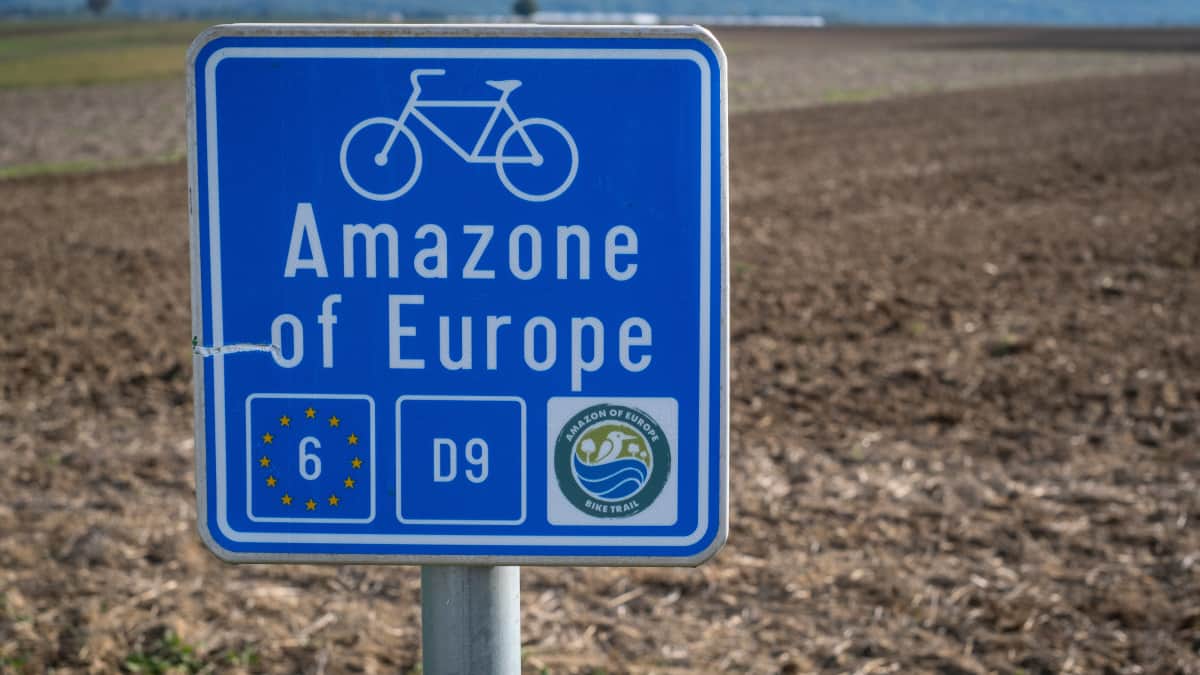
The route runs mainly through the countryside, features many challenging climbs, and only around 30 per cent of the paths are tarmac-surfaced, whilst 70 per cent are unpaved (gravel-surfaced forest and woodland tracks, as well as several sections where you’ll need to push your bike along narrow paths). It is challenging overall, and a good command of your bike (especially an e-bike) is essential. Most of the route is signposted (direction arrows with the EuroVelo 13 symbol: blue background, the number 13 in the centre, surrounded by yellow EU stars, and in some cases with kilometre markers indicating the distance to the next towns). However, as the signposting is not continuous, it is recommended that you use one of the standard navigation apps. Cycle shops, e-bike charging points and repair shops are only available in larger towns.
Tip: Make sure you bring rainwear, a small first-aid kit and a tool kit + repair kit/pump!
Conclusion by travel writer Thomas Widerin
Soldiers used to patrol this area; today, walkers and cyclists enjoy the border region between Bavaria and the Czech Republic. Anyone cycling along EuroVelo 13 from Cheb to Horní Planá will find themselves immersed in a particularly fascinating landscape, brimming with adventure and moving history.