


The mountains are coming to town
BIKE: Tarek, why do events like Cerro Abajo Stuttgart attract such large crowds?
Tarek Rasouli: Because Germany is a huge mountain biking nation, but proper action-packed events are rare. In Stuttgart, the two came together: spectacular sport and a course right in the heart of the city.
BIKE: Your old District Ride formula: Bring the action to the people.
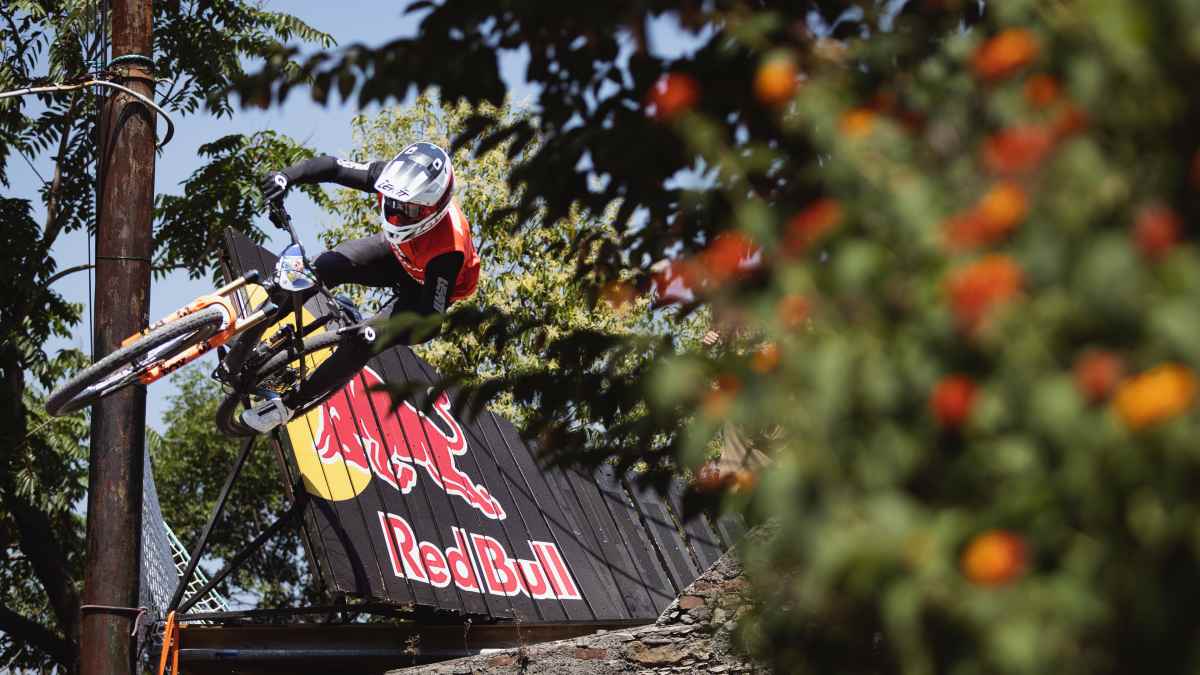
Rasouli: Exactly. Nobody has to get in the car, drive up into the mountains and spend half a day hiking. People leave the café – and suddenly a rider flies right over their heads. It couldn’t be any easier to get started.
BIKE: Why does this work better than some traditional competitions?
Rasouli: Because it’s a sport you can understand straight away. There’s a steep road, and here comes a rider hurtling down it – very fast and quite spectacular. You don’t need a rule book to get it.
Range starts at the edge of the track
BIKE: The spectators in Stuttgart weren’t there by chance. They came there on purpose.
Rasouli: That’s the second point: nothing works without a community. Red Bull has spent years building up Cerro Abajo and raising its profile. Added to this is a thriving mountain-biking scene in and around Stuttgart. Good advertising finds an audience there that’s already raring to go.

BIKE: Around 20,000 people turned out for the District Ride in Groningen. Why were there fewer?
Rasouli: This format was new to the Netherlands. Stuttgart, on the other hand, already had an international series under its belt in the form of Cerro Abajo. Recognition takes time to build. Even a spectacular course does not automatically fill the streets.
BIKE: So a cycling nation on its own isn’t enough?
Rasouli: No. Just having lots of bikes doesn’t make it a cycling event. Otherwise, there’d be a World Cup atmosphere outside every supermarket.
Heroes fill the slopes
BIKE: Classic races can also attract huge crowds. Les Gets, for example.
Rasouli: Les Gets is situated in a region with a strong cycling culture. Add to that French stars such as Loïc Bruni and Amaury Pierron. National heroes change everything. The fans don’t just see athletes – they see their own people.
BIKE: So do events need familiar faces?
Rasouli: Absolutely. A good story provides images; a hero evokes emotions. When the two come together, they create atmosphere.
BIKE: And isn’t that exactly what some events are lacking?
Rasouli: Sometimes, yes. Perfect organisation alone isn’t enough. An event can be a major sporting occasion and still feel empty. People want a sense of connection, stories and someone they can share the excitement with.
A public festival rather than a specialist event
BIKE: Stuttgart felt more like a folk festival than a mountain bike race. Or, as rider Tommaso Francardo put it: “I felt like a football star playing in an international match in Stuttgart”.
Rasouli: That’s the strength of an event like Red Bull Cerro Abajo Stuttgart. People who come for the sport stay for the atmosphere. And those who happen to come for the atmosphere discover the sport. Urban events don’t just appeal to the core scene.
BIKE: Critics point to the cost and carbon footprint of such urban routes.
Rasouli: The debate is valid. But even an event in the mountains attracts thousands of people and vehicles. The key factor is how responsibly it is planned. The city also has one advantage: many spectators reach the route by bus, train or bicycle.
The secret to success
BIKE: So what is the formula for a successful public event?
Rasouli: Spectacular action, a strong community, well-known riders and a track that brings the action to the people. Then you just need to tell the story well. Red Bull has done a pretty effective job of promoting Cerro Abajo.
BIKE: Sounds simple.
Rasouli: The formula is simple. Putting it into practice is brutal.
BIKE: Does this format have a future?
Rasouli: Absolutely. The 90,000 spectators at the first event in Stuttgart send a powerful message. Events like this won’t supplant the World Cup, mind you. But they show just how big mountain biking can be when you take the sport out of the woods and bring it right into the heart of everyday life.

Dimitri Lehner
Editor