


Pros and Cons of Cerro Abajo: Downhill cycling in the city – a daft trend or the future of the sport?
Laurin Lehner
· 04.09.2026

“Mountain biking belongs in the mountains,” claims Jan Timmermann. | Photo: Georg Grieshaberd
Downhill bikes are made for the mountains. For loose scree, tangles of roots and steep forest trails. For places you have to take the lift up to first, before racing back down at full speed.
But what if the mountain is a town?
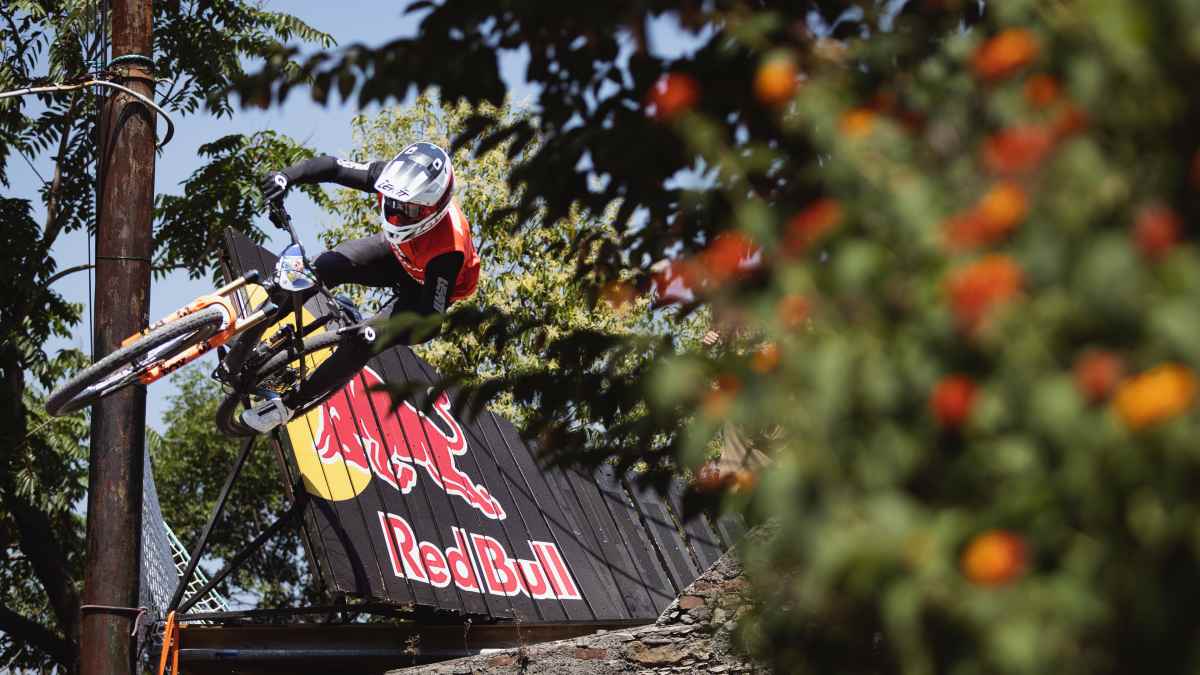
That is precisely the idea behind City Downhill – and it is as simple as it is mad: take a historic old town, close off the streets, build a few jumps and let the world’s best downhill riders race through alleyways that were actually built for pedestrians and hordes of tourists. Cobblestones instead of gravel tracks. Building walls instead of trees, barriers instead of mountain scenery.
The result is one of the most spectacular disciplines in cycling – raw, loud and urban.
The Cerro Abajo Series has turned this format into a world-class event. Valparaíso, Genoa, and now Stuttgart. The series takes the elite of city downhill racing to Latin American colonial cities and European metropolises, where narrow staircases, steep cobbled ramps and razor-sharp building edges form the race course.
The terrain is anything but ideal – and that’s exactly what makes it so gripping. When a bike designed for root-strewn descents and bike park trails suddenly shoots between balconies and flies over church steps, it creates a thrill that no World Cup slope in the world can replicate.
Critics, however, see this format as a misuse of the sport. Mountain bikes, as the name suggests, belong off-road, particularly in this premier discipline.
Pros and cons: Downhill cycling in the city: a daft trend or a sport with a future?
Pro
City downhill races are spectacular, the atmosphere is unrivalled – and the risk is hardly any greater than at a World Cup event. Full speed through narrow alleyways, two-wheel slides on cobblestones, stair gaps with shoulder-width handrails to the left and right. The city, familiar to everyone from a day out strolling around, becomes a playground for downhill riders for a day. Watching the pros ride through the alleyways is a unique experience – and one for the whole family. World Cup races take place on remote mountain slopes; city downhill events bring the excitement right on your doorstep. Crowds of 30,000 people are not uncommon.
Lars Scharl, action photographer

Con
Yeah, OK, I used to head into the city centre as a teenager too, to spend the whole day jumping stair gaps there. But today I’d say: it’s much cooler in the woods! To me, the urban spectacle is a bit like a street fair. Granny and Grandad roll their eyes, everyone gets an ice cream and, if you’re lucky, you might see a cyclist crash into the tarmac. To convey the fascination of cycling, I don’t need crowded cities or the added risk. Mountain biking belongs on the mountains: roots, rocks, proper earth. The ‘wow’ factor might be replaceable, but the trails aren’t.
Jan Timmermann, BIKE editor

What do you think? Let us know in the comments

Laurin Lehner
Editor
