


Bikepacking: Comfort or lightness? Testing the Therm-a-Rest Neoloft sleeping mat
Laurin Lehner
· 18.09.2026


In this article, we use so-called affiliate links. With every purchase through these links, we receive a commission from the merchant. All relevant referral links are marked with . Learn more.
Sleeping. Sounds easy. But it isn’t when, after a long bike-packing tour, you roll out your sleeping mat and it provides about as much insulation as a horse blanket, or when it deflates in the middle of the night because the ground isn’t quite level. Game over. Rest gone.
It’s actually quite simple: a good sleeping mat needs to be lightweight, take up hardly any space in your rucksack, and, ideally, last just as long as your favourite cycling shorts. And, of course, it needs to be quick to inflate in the evening – because after a long day in the saddle, nobody feels like faffing about.
So that you don’t have to try out every mat yourselves, we’ve done it for you. Several nights’ stay, different surfaces, varying temperatures. What were the results? You’re about to find out.
1. Lightweight and compact – a must-have for bike packers
No, in the case of the Neoloft This is not an ultralight sleeping mat that packs down to the size of a tin. Nor does it set out to be one. If that’s what you’re looking for, go for the tried-and-tested NeoAir XLite from the same publisher.
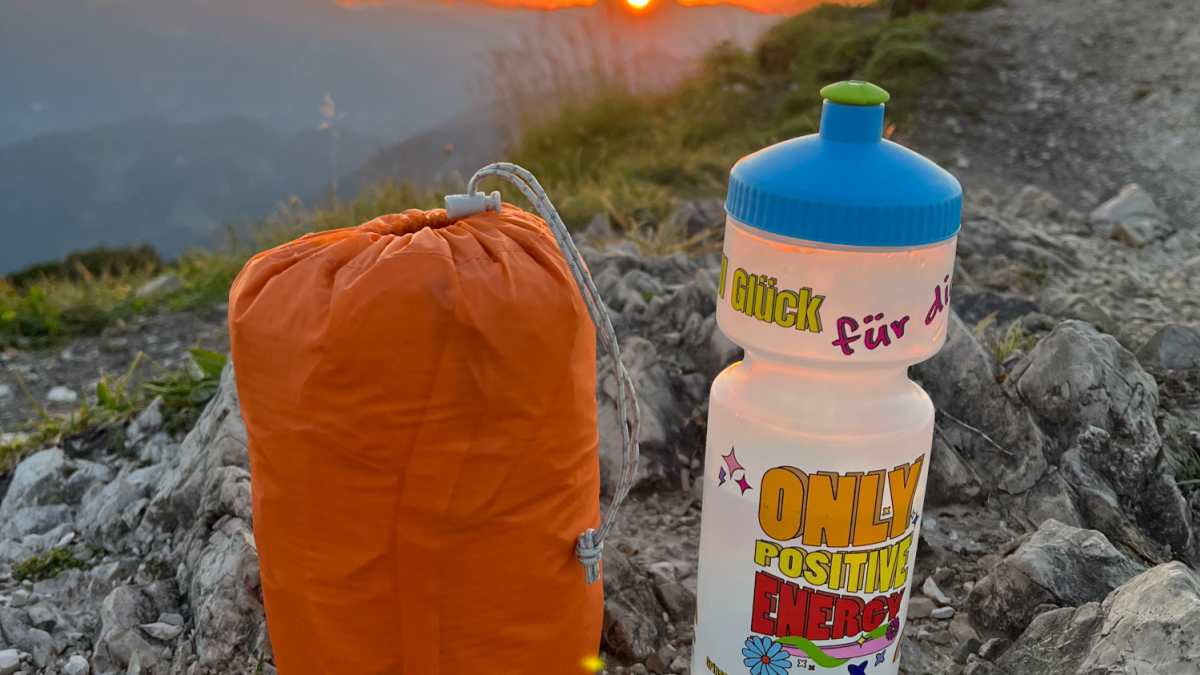
The Neoloft is all about comfort. Just under 12 centimetres thick – that’s quite substantial. The manufacturer quotes an R-value of 4.7: the higher the R-value, the better the insulation. An impressive figure – according to Therm-a-Rest, the mat provides reliable protection against the cold even in moderate sub-zero temperatures. The Neoloft weighs in at 918 grams. Not super-light, but perfectly reasonable given its features. The pack size is fine for normal camping – but in our view, it’s too bulky for bikepacking adventures.

2. Easy to use
It’s delightfully straightforward to use. The pump bag supplied is generously sized and does the job quickly and reliably: simply attach it to the ‘Inflate’ valve, pump it out five to ten times – and you’re done. The deflate valve lets the air out quickly. Deflate, roll it up, stow it away – it all goes smoothly.
3. It should be comfortable …
… and here it is. This is exactly where the Neoloft really comes into its own. Thanks to its thickness, you sleep on it as if on clouds – unusually high, but wonderfully soft. The material feels pleasant to the touch, is non-slip and quiet.
4. Not too expensive, please …
As we all know, what ‘expensive’ means is in the eye of the beholder. The fact is: just under 300 euros is a hefty price tag. Therm-a-Rest is one of the high-end brands – and that is reflected in the price. If you compare the Neoloft with its competitors in terms of R-value and weight, it tends to fall in the top third. It’s certainly no bargain.
5. Shelf life
Anyone investing that much money naturally wants the mat to be durable. It’s too early to make a definitive judgement after just a few nights’ sleep – that requires a proper long-term test. An update after 20 nights will follow. So far, the Neoloft has performed admirably on stony ground with coarse gravel. In other words: no defects, no weak spots.
Conclusion:
The Therm-a-Rest Neoloft Performed impressively in the first test. It is aimed at bike packers and multi-day hikers who prioritise comfort above all else – and are happy to accept around 400 grams extra and a larger pack size in return. The inflation system using the pump bag works flawlessly, and the sleeping comfort is simply top-notch. Nevertheless, there is some criticism: at 918 grams, the Neoloft is too bulky for those obsessed with weight and pack size. In short: if a truly restful night’s sleep is more important to you than a light weight and small pack size, the Neoloft is the perfect choice. For everyone else, we recommend taking a look at its ultralight counterpart Therma-a-Rest NeoAir Xlite NXT. For bikepacking, I’d definitely go for the latter.
Laurin Lehner, BIKE editor
In a nutshell
- Made in Ireland
- R-value: 4.7 (suitable for winter use down to approx. -5 °C)
- Sizes: Regular, Large
- Dimensions: 185 (length); 66 (width); 11.7 (depth)
- Weight: 918 grams, including the pump bag and pack sack
- Price: 294.95 euros >> Available at a reduced price here


Laurin Lehner
Editor