


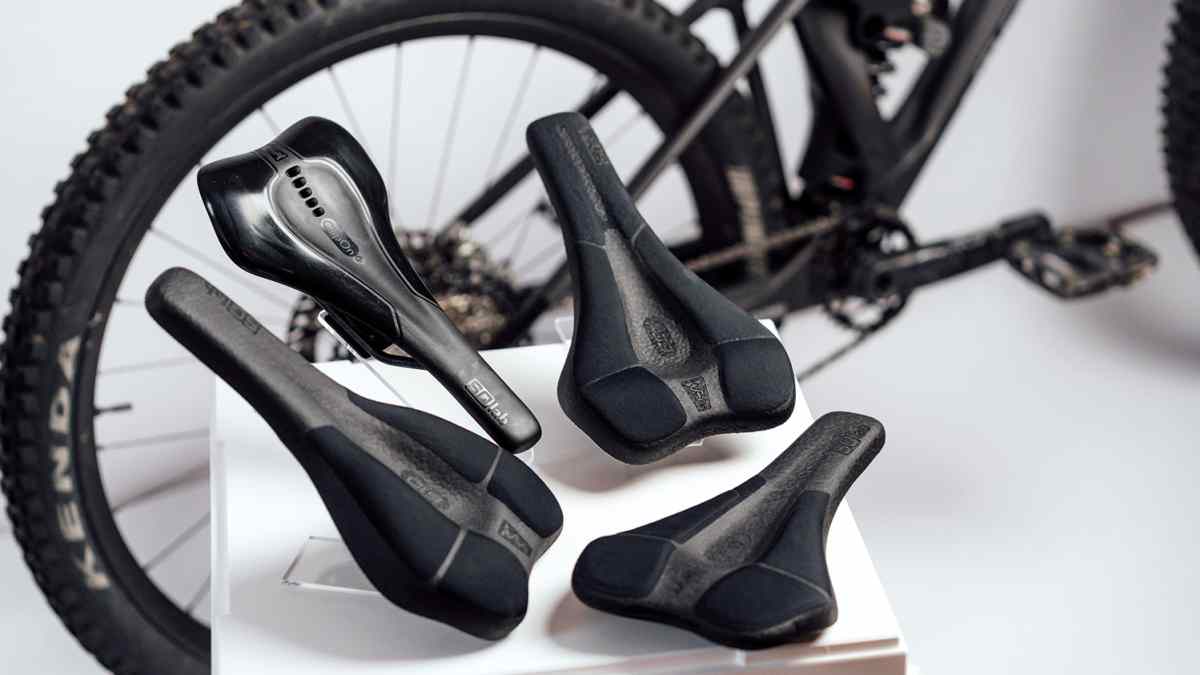
The SMS series is Ergon's response to changing mountain bike geometries. Steeper seat angles and more compact seating positions require different solutions than classic, long saddles. The aim of the developers: to distribute pressure evenly, relieve sensitive zones and at the same time allow maximum freedom of movement.
Ergon SMS: New approaches against seat pressure on the trail
The core of the concept is a Slightly curved seat surface in combination with a Enlarged ergonomic relief channel. Intensive pressure mapping analyses showed where pressure peaks occur in the perineal and sit bone area - and how they can be specifically minimised. The result should be a homogeneous pressure distribution that significantly reduces numbness and pain points.
Ergon offers the SMS saddles gender-specific on. The shape of the relief openings is precisely tailored to the respective anatomy, and the women's models also feature Gel inserts for use.
Compact, manoeuvrable, MTB-typical
Striking is the Short, flat saddle nose. It offers support on steep climbs, but remains inconspicuous when riders actively change their riding position. The gently curved Y-shape and a large side radius provide more legroom on the inner thighs - important for a smooth stride and freedom of movement on technical trails.
For comfort, Ergon relies on its tried and tested OrthoCell upholsterywhich is designed to dampen pressure peaks and better accompany movements - whether on rough single trails or long bikepacking stages. Incidentally, the SMS series is manufactured exclusively in Europe.
Ergon SMS series: Info & prices
- Field of application: Trail, All-Mountain, Enduro, Bikepacking
- Saddle shape: Compact, short and flat nose
- Discharge: Enlarged, ergonomic relief channel
- Fit: Gender-specific models (men/women)
- Upholstery: OrthoCell, with additional gel for women's models
- Design: Y-shape with large side radius for legroom
- Manufacturing: Made in Europe
- Price: 79.95 Euro (SMS Sport Men/SMS Women) / 99.95 Euro (SMS Comp Men/SMS Sport Gel Women)
Conclusion from an editorial point of view
With the SMS series, Ergon is taking a consistently pragmatic step: instead of ever thicker padding, the focus is clearly on shape, pressure distribution and a modern riding position. The approach of actively avoiding pressure before discomfort arises stands out positively from many classic MTB saddles.
In the market segment of current "short-nose" MTB saddles, Ergon joins the competition from Specialized, SQLab or Fizik - but brings its extensive ergonomic experience to bear.
Riders on steep, compact bikes in particular should benefit from the new relief concept. Whether the theory is convincing in practice depends - as always - on the personal sit bone distance and the individual setup.

Stefan Frey
Editor
