


The story of Wolf Tooth begins in 2013 - not on a factory floor, but in a basement. Three engineers, led by Mike Pfeiffer, developed the first chainring there and presented it in a mountain bike forum. The response? Overwhelming! Everyone wanted a chainring made in the basement with a special tooth profile for the Triumph single drive train. Just one year later, the demand was so great that the founders quit their jobs to concentrate fully on the young company.
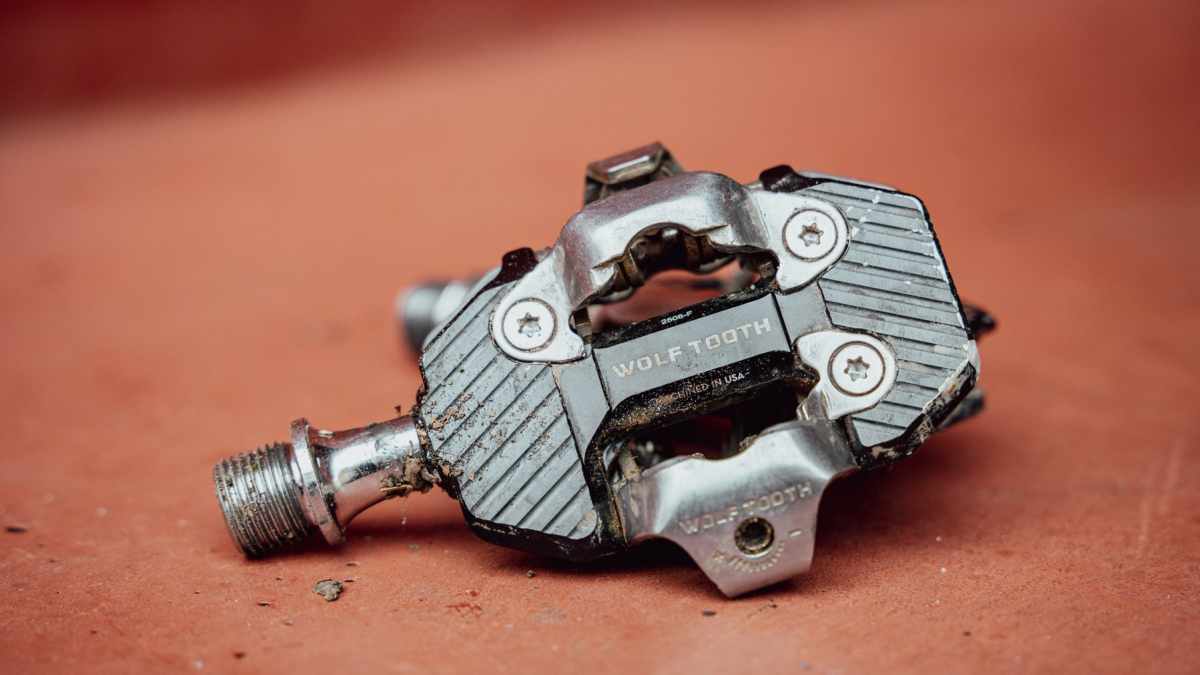
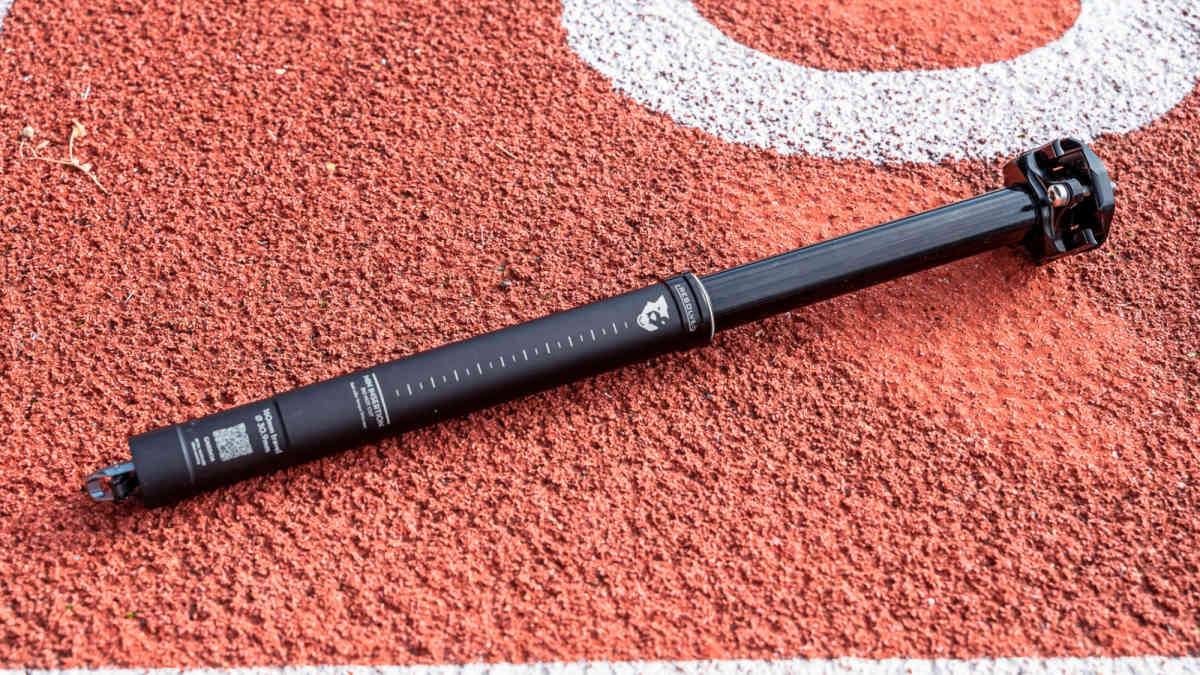
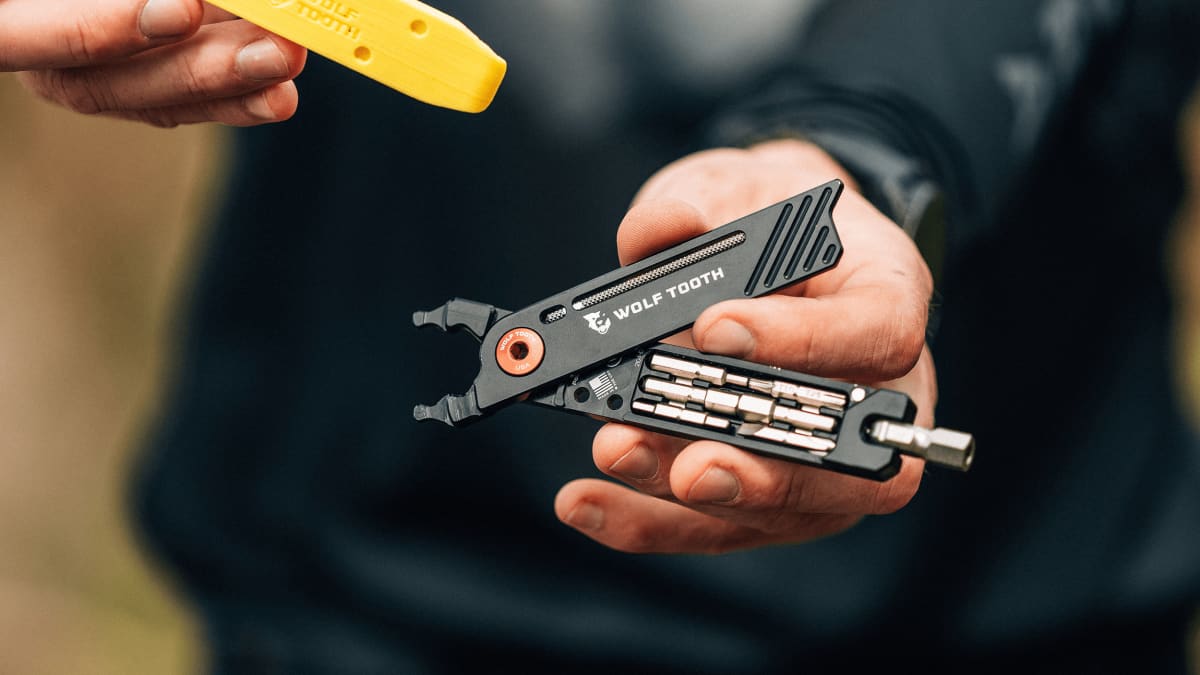
What followed was a classic - and yet unusual - growth path: instead of scaling quickly, Wolf Tooth remained true to its DNA. The portfolio was expanded step by step - from chainrings and dropper remotes to tools, axles and clever accessory solutions. Today, Wolf Tooth develops, designs and produces all its products itself at a new site in Burnsville. The original basement has become a 3500 square metre headquarters. Over 60 employees manufacture thousands of products there every year. The portfolio ranges from headset to thru axles and brake adapters to tools. Wolf Tooth's trail pedals even recently won a prestigious BIKE Buyers' Recommendation in the low weight category.
By bikers for bikers
The team behind Wolf Tooth consists of active bikers who develop their products based on practical experience. This results in solutions for real problems. The foundation for the company's success was laid by chainrings with an optimised tooth profile for better chain retention. Similarly, special adapters, such as the Road-Link, which allows larger cassettes to be used for larger gear ranges on gravel bikes and road bikes, were also a hit. Today, modular systems such as the B-RAD for flexible mounting options are also in demand at Wolf Tooth. Over time, the label has continued to expand its expertise. In addition to components, the company also created its own brands such as Otso Cycles with hardtails and gravel bikes - a logical step towards realising design ideas in a holistic way.

Wolftooth describes itself as being driven by requirements, not trends. Innovation does not always have to be loud and the most important features are not always obvious. The focus is always on function and details that are often only recognised at second glance - such as the Wolf Tooth En-Case system, which allows tools to disappear invisibly into the handlebars. Instead of large platforms, the brand concentrates on the inconspicuous but crucial interfaces on the bike. A good example is the famous "Drop-Stop" chainring: the asymmetrical tooth shape is designed to improve power transmission and reduce dirt deposits at the same time. Wolf Tooth naturally also pays attention to compatibility with other manufacturers such as Shimano or Sram.
Made in Minnesota
From the very beginning, Wolf Tooth has focussed on precise production under its own roof instead of mass-produced goods from the Far East. Unlike many of its competitors, Wolf Tooth still manufactures the majority of its products in the USA today. However, in-house production in Minnesota is no coincidence, but part of the brand identity. The Americans strive for components with extremely tight tolerances and often rely on complex CNC production. Wolf Tooth expects local production to maximise control over quality, materials and processes.
The developers describe themselves as "obsessed over details" and have a penchant for particularly well-sealed bearings, precisely milled aluminium parts and durable designs with replaceable small parts. For this reason, Wolf Tooth is also committed to functional sustainability and grants its customers the "Right To Repair". As bikers, the team behind the brand naturally knows that crashes and defects are part and parcel of cycling. That's why Wolf Tooth makes sure that critical parts can be replaced and that spare parts are available across the board.
Interview with the producers
BIKE: Are the original founders of Wolf Tooth still with the company?
KURT STAFKI, WOLF TOOTH: Yes, Mike Pfeiffer, Brendan Moore and Dan Dittmer are still active in the company and run it. The company is still fully owned by the founders.
Why does Wolf Tooth continue to produce in the USA when many manufacturers moved to Asia a long time ago?
In-house production is a central part of our DNA. It enables us to develop and bring products to market faster and more efficiently. Design iterations that could take months in a typical supply chain can be realised in days or even hours. This is made possible by our great team of engineers, programmers and machine operators in our manufacturing facility, which allows us to be competitive and grow successfully as a US manufacturer.
What are the biggest challenges for Wolf Tooth at the moment?
The cost of raw materials is a major challenge. Aluminium is significantly more expensive here in the US than in most other countries. In addition, tariffs continue to be a major problem as they have increased the cost of everything from CNC machines to raw materials to small hardware components.
How many people work on the production of Wolf Tooth parts?
At our headquarters in Minnesota, we employ a total of around 70 people in all areas of the company. Around half of them work directly in production or assembly.
Wolf Tooth offers a very wide range of components. How do you decide which product goes on the market and which doesn't?
We focus on products where we can offer something unique or better than the existing solutions. Our recently launched clipless pedals are a good example: there are many options on the market, but ours are successful because they stand out. We also analyse the performance and cost of competing products intensively to assess whether a Wolf-Tooth product can be competitive. This year will be the biggest and most exciting year for new products in our history.
Wolf Tooth seems to attach great importance to making parts repairable and recycling waste materials. What drives the brand when it comes to sustainability?
We all - as cyclists and consumers - know the frustration of expensive products that are still usable but have to be thrown away because simple replacement or wear parts are not available. We want our customers to be able to use their Wolf-Tooth components throughout their lifetime - and that lifetime is designed to be one of the best in the industry. The world has enough disposable products; we want to offer a more compelling alternative that provides more long-term value and lower total cost of ownership.
Conclusion
Behind Wolf Tooth is an authentic company history of bikers who recognised problems on the trail and tried to solve them with small but fine products. A clever approach to practical bike parts and sometimes unique solutions, if you ask me. The small basement project has long since become a renowned company. It's nice that production has remained local. - Jan Timmermann, BIKE editor

Jan Timmermann
Editor