


My Pivot and I, a relationship with ups and downs. Last summer, I put the new Trailcat SL to the endurance test. However, neither of us really warmed to it. There was always reason to criticise. I kept swapping components in search of the ideal setup. The rear tyre was too rough for me on the one hand, and not puncture-proof enough on the other. One of the rocks hit the rim so hard that I have had to ride with a tube instead of tubeless ever since. The stem was also too long and the riding position too front-heavy. And the saddle? To put it mildly, it was a disaster in the form of a padded seat.
But what annoyed me the most was the choice of brake system. The Sram DB8 is not considered a deceleration miracle per se. But in combination with the 180 mm brake discs at the front and rear, I had the braking distance of a goods train on fast descents. I had to extend many a bend in a straight line. Long downhills became a test of strength for the brake fingers and the constant wobbling after hard braking manoeuvres strained my nerves.
Upgrade to the new Galfer Shark Evo discs
So the news that brake disc and pad specialist Galfer was launching a new MTB brake disc on the market came at just the right time. The Spanish manufacturer has been producing brake accessories for over 70 years and is an icon in motorbike sport. The Disc Shark EVO is the logical further development of the already legendary Shark series and is designed to significantly improve temperature management on the bike.

Galfer Disc Shark EVO - Key facts at a glance
- Field of application: Enduro, downhill and E-MTB.
- Special feature: Patented cooling fins ("Shark Fins") for heat dissipation; optimised semi-rigid connection; three colours; black, silver, Kashima-Koating.
- Design: Optimised friction ring for constant friction coefficients.
- Brake disc mountCentrelock / 6-hole
- Sizes: 180 mm / 203 mm / 223 mm
- Thickness: 2.0 mm
- Weight168 g / 199 g / 225 g
- Price: 85 to 125 Euro
The anatomy of the shark fin disc: Cooling is everything
The most striking feature of the new EVO version remains the characteristic "fins" on the inside of the friction ring. These serve as small heat sinks that increase the surface area and dissipate heat away from the brake caliper. However, Galfer has once again tweaked the material composition and cut-out design of the EVO version. The aim is to make fading (the loss of braking power when hot) a thing of the past.
The EVO line is designed especially for enduro and e-mountain bikes, which place enormous demands on the hardware due to their high system weight. At 2.0 millimetres thick, the disc is massive enough to absorb heat, but still reasonably light thanks to the special holes. For comparison: A Magura MDR-P with a diameter of 203 millimetres weighs around 216 grams.
The practical check: light and shade of the Disc Shark EVO
Advantages:
- Outstanding heat management: The "Shark Fins" are designed to measurably reduce the operating temperature. This protects the seals in the brake calliper and ensures a constant pressure point.
- Aggressive bite: The design of the friction ring is optimised for maximum deceleration. Those who like digital braking characteristics will find what they are looking for here.
- Reduced pad wear: The optimised holes are intended to improve the cleaning of the pads while driving.
- Stiffness: The disc is extremely torsion-resistant, which should minimise annoying ringing or grinding.
Disadvantages:
- Weight: Compared to filigree lightweight discs, the EVO weighs a few grams more.
- Noise development: The aggressive design can lead to a characteristic "whirring" noise when braking with certain pad combinations.
- Price: Galfer plays in the Champions League here - this is also reflected in the price per disc.
Conclusion: First driving impression
Galfer supplied organic pads from the Pro series to match the new Disc Shark Evo. These are said to be particularly powerful and resistant to fading. After just a few braking manoeuvres, the pads and discs have already run in well with each other. The upgrade is particularly noticeable on the front wheel. The Galfer combination decelerates extremely powerfully and with a pleasantly direct effect. The manual force is now significantly lower than with the standard Sram brake discs. An improvement in braking performance is also noticeable on the rear wheel with the same disc size (180 mm). The annoying wobbling after hard braking manoeuvres? Gone. The Galfer disc hardly warps even on long descents. Tired brake fingers? Not a trace so far. How quickly the Pro pads wear out remains to be seen, but so far I'm more than satisfied with the performance of the new Disc Shark Evo. The biggest drawback of the Galfer discs: the exorbitant price.
The competition: Who else is biting in the gravity segment?
Galfer is not alone in the hunt for the perfect deceleration. Anyone looking for alternatives to the Shark® EVO should have these models on their radar:
- SRAM HS2: The Americans have opted for a thicker disc (2.0 mm) and a special thermal coating on the spokes to improve heat dissipation. A very solid all-rounder.
- Magura MDR-P: The favourite of many e-bikers. Thanks to the two-part design, the windscreen remains absolutely flat and heat-resistant even in extreme heat.
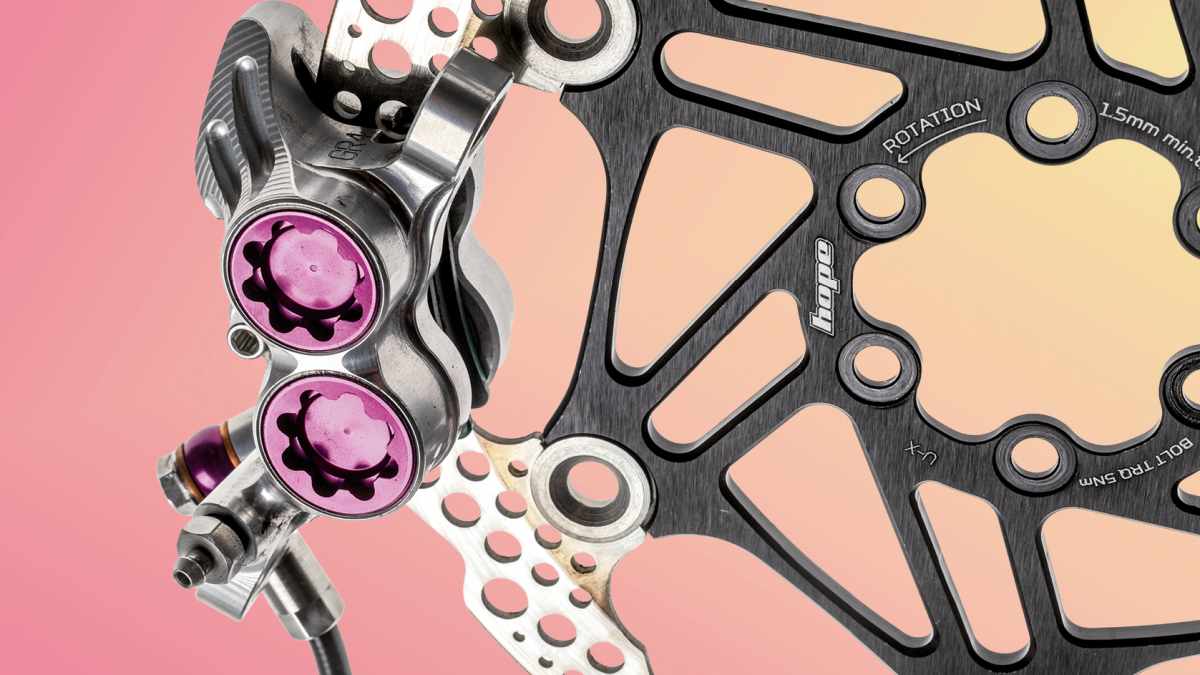
- Hope Floating Disc: The classic for individualists. The aluminium spider thermally separates the friction ring from the hub and comes in many stylish anodised colours.

Stefan Frey
Editor