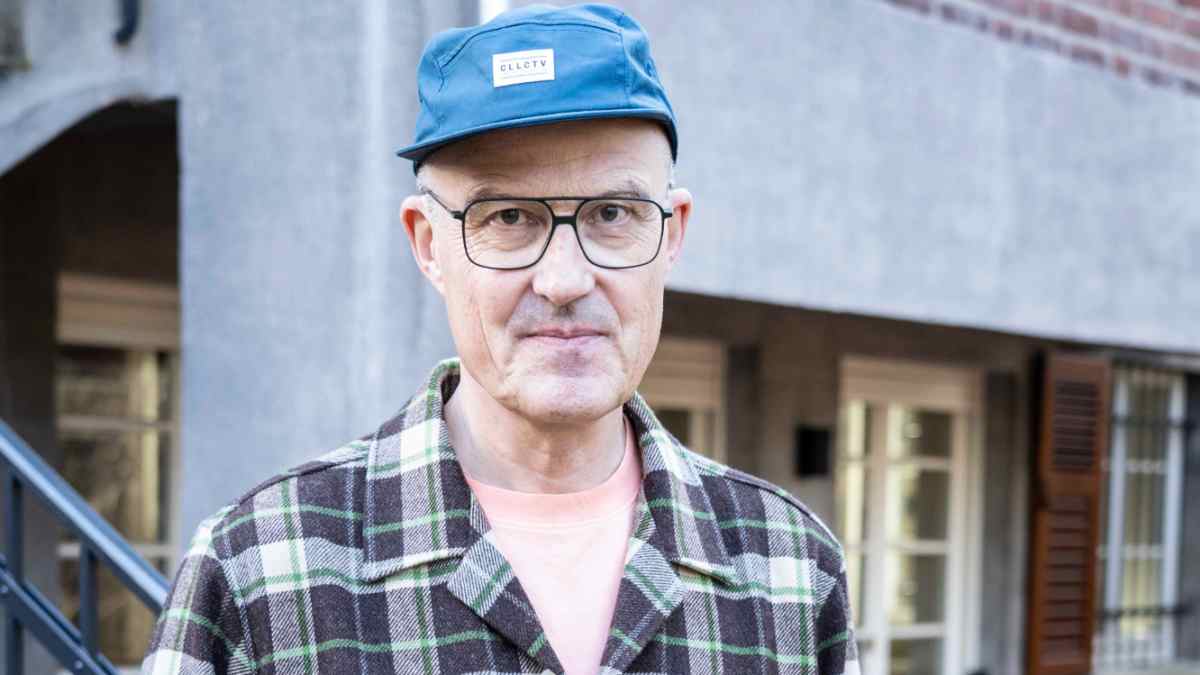
Mountain biking history: One man, one museum: An interview with Jeroen van Roekel
Holger Meyer
· 20.08.2026


The old school doors swing open on both sides, just like in a Western saloon, as I step into the Mountain Bike Museum in Arnhem. Standing behind them is Jeroen van Roekel, a calm, friendly man who speaks German with a charming Dutch accent. He leans back relaxed behind a homemade wooden bar. In front of it stand fluffy bar stools upholstered in fur, which look as though they’ve already heard countless cycling stories. We sit down for the interview.
An interview with Jeroen: “I have two firm rules...”

Jeroen, when did you start collecting bicycles?
In the second half of the 1990s, a bike dealer offered me the chance to take on his old rental mountain bikes. Otherwise, they would have ended up in the bin. So I suddenly found myself with ten old bikes, which I refurbished and then sold. In doing so, it struck me what a shame it is that so many old bikes are simply thrown away. This realisation gave rise to the idea of preserving this history – and with it, the idea for a mountain bike museum.

Did having ten bikes give you the idea of setting up a mountain bike museum?
Haha, not quite. It was a process. To me, mountain biking means freedom: you, your bike and nature. It’s fascinated me since 1989. Back then, I devoured every magazine and was constantly seeing bikes and components that were often beyond my means. And suddenly, those very bikes and parts were being thrown away. So I started collecting, searching for and salvaging them. Eventually, the cellar became too small, then the garage – and finally, the museum came into being.
We’re standing here in your museum – how many bikes are there in the old school?
There are currently around 300 bicycles in this building. Overall, however, we’re heading towards 1,000 bikes – many of which are still projects that are being assembled or restored.
Is there a particular highlight in your collection?
That’s a very difficult question. There isn’t just one standout bike. For me, it’s always the story behind the bike that counts – not whether it’s the most expensive, the most beautiful or the fastest. At least ten bikes spring to mind straight away. For example, the Groovey Cycleworks, which was built especially for me. Rudi from Groovey said at the time: “Jeroen is visually impaired – if he wants to keep cycling, he needs a special bike.” So he built me one of the first 29-plus bikes, so that I can simply ride over anything I can’t see. That story means an incredible amount to me. Or an old Trek that was donated to me by a man who spent a year and a half delivering newspapers and also had a second job so that he could afford his first Trek in 1989. When he no longer needed it, he donated it to the museum.
There are so many special bikes. You can’t really pick just one favourite – it’s like a father with three children. You wouldn’t ask him which one is his favourite, would you?
Are there any other models you’re still on the lookout for?
Every December we organise a Christmas market here at the museum – and it’s a huge success. Exhibitors from all over Europe come together there, and I find new inspiration every time. For example, there was once a German chap there with an original Yeti Plexus, a Trimble, a Monolith and a Rocky Mountain Debold – brilliant bikes. Generally speaking, bikes from the 1980s fascinate me the most, because there was an incredible amount of experimentation back then. Jan Schauff was here once too and discovered a frame still in its original packaging with a 24-inch rear wheel and a 26-inch front wheel. Essentially one of the first ‘mullet’ frames from the late 1980s. It’s exactly these kinds of finds that I really enjoy.
Do you have a vision of what your museum might look like in ten years’ time?
First of all, I’d like to finish the major building projects. I’m a qualified joiner and carpenter, and I want to complete the kitchen, the storeroom and the workshop so they’re ready to let out. After that, we can start building new frames and bikes again. Next July, we’ll be celebrating our tenth anniversary. To mark the occasion, I’d like to fill an entire sports hall exclusively with titanium bikes. We have at least 40 titanium bikes in our collection – plus countless titanium components. It’s going to be a massive celebration, and we’re all really looking forward to it. It’s particularly important to me that there are enough young people who want to carry on running the museum when I eventually retire. I have two firm rules: I don’t sell anything. And there’s no admission charge. That only works with the third rule: everything must be done in good spirits. My greatest wish is that the museum will still be here even when I’m no longer around. Perhaps there’ll be a picture of me hanging somewhere in a corner – and people will say: ‘Look, that’s the bloke who started it all.’
How can people support you in keeping the history of mountain biking alive?
As well as the museum, we also run a trail centre, a cycle pub and a bike hire service. Above all, we want to introduce children to mountain biking. Lots of parents come here to cycle. For five euros – or sometimes even for free – children can hire a bike from us and ride straight onto the trails behind the building. Thirteen years ago, I began discussions with the local council to set up the trail centre. It wasn’t easy, but with a lot of passion and determination, we made it happen. Today, everyone here – young and old alike – can cycle together in the woods.
The idea of community really seems to be important to you.
Of course, mountain biking is all about freedom and enjoyment. It’s not about Strava, nor is it about who’s the fastest or who has the most followers. It doesn’t matter what bike you ride, what brand it is or what colour your skin is. We’re trying to preserve the original spirit of mountain biking for future generations. The industry and the manufacturers now know where to find us – and that’s a good thing. Because they’ve grown thanks to this history, and it’s important to know where you come from. I’ve got some brilliant volunteers here who are helping to set up new bikes and projects – and hopefully keep the museum and its history alive long after my time is up. None of this works without love, passion, good friends and family. Not many people believed in it at the start – but sometimes you just have to be persistent. Or, as they say, Dutch.