


Whyte e-bikes with Avinox power: The new Karve with 180 mm of suspension travel and a Benchmark motor
Max Fuchs
· 14.07.2026


Review by Max Fuchs, BIKE editor
The Avinox drive’s peak power output of 1,300 watts is impressive, no question about it. However, the new Karve models don’t just stand out thanks to their state-of-the-art motor technology, but also thanks to well-thought-out design details that make the bikes – in typical UK fashion – beautifully weatherproof and durable – at least on paper. The geometry and suspension travel also give cause for optimism. If they live up to expectations, the new Karve models hold a hell of a lot of potential for downhill fun.
Two models, one philosophy
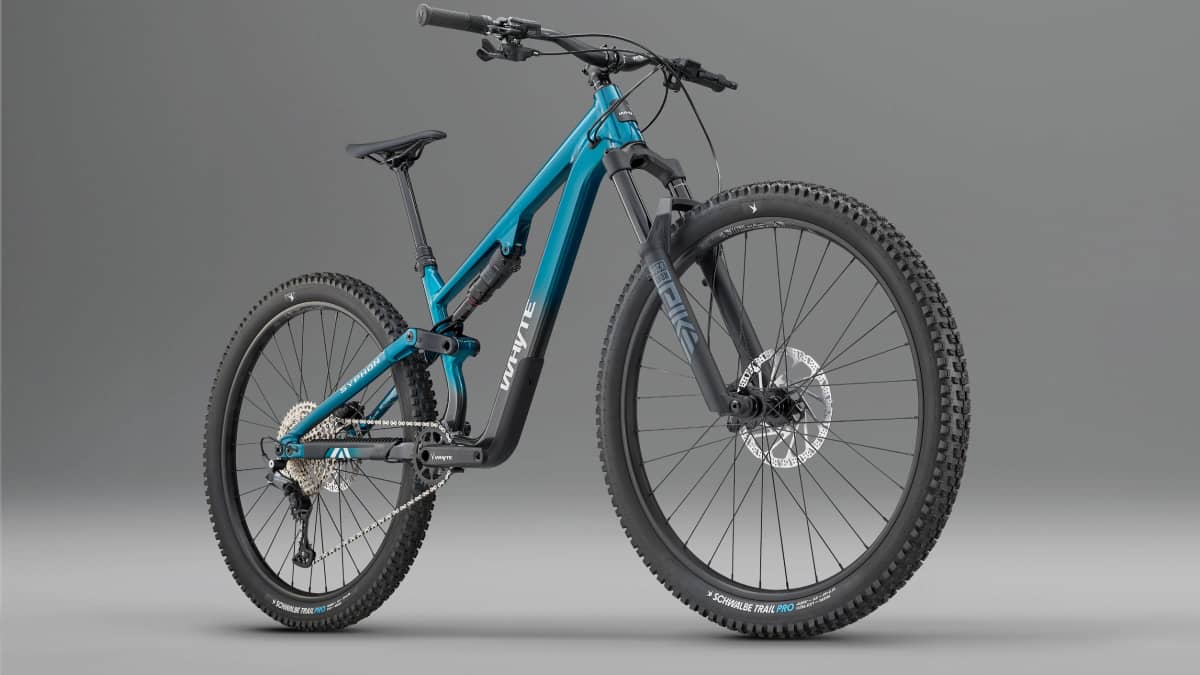
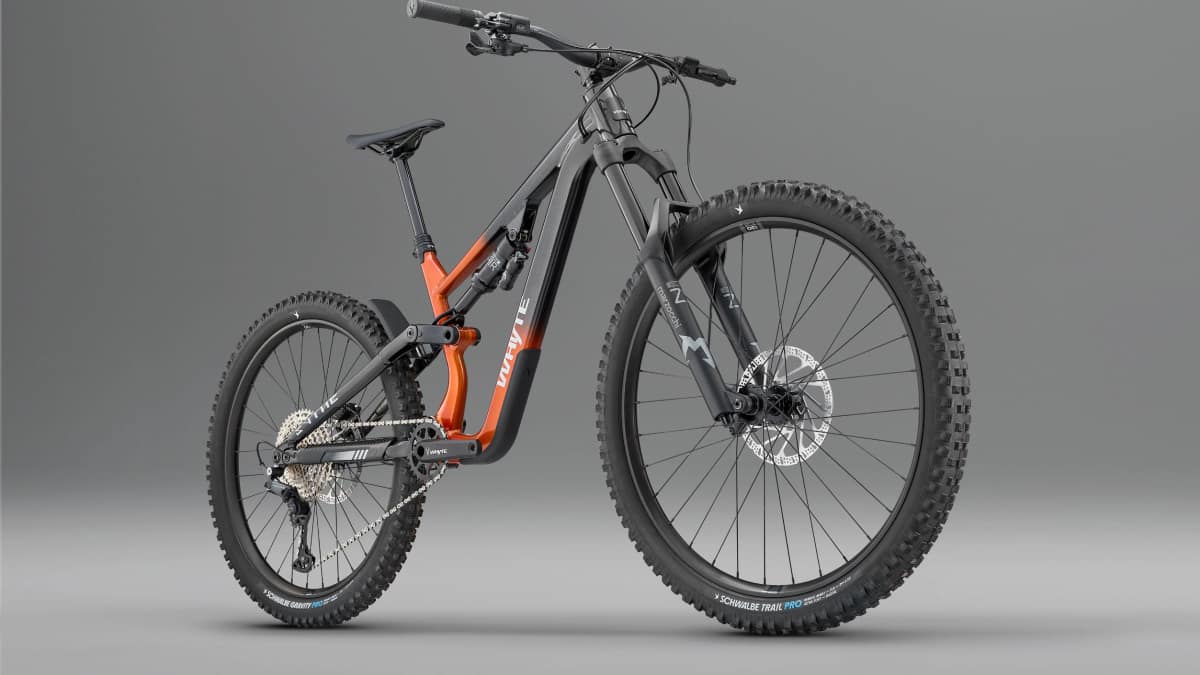
Whyte positions the standard Karve as an aggressive trail/enduro e-mountain bike – with 160 millimetres of suspension travel at both the front and rear for riders who want to combine a lightweight overall package with good durability. The Karve EVO is the longer-travel gravity variant with 180 millimetres of suspension travel. Designed for self-shuttle rides, bike parks and high-speed downhill action, this model has been uncompromisingly optimised for the descent. Both models feature the same Quad-Link-4 kinematics, though Whyte has tuned them differently: according to the manufacturer, the Karve delivers a more responsive, trail-focused ride, whilst the Karve EVO offers greater shock absorption.
| Model | Price | Frame | Suspension travel (front/rear) | Training wheels | Battery/charger |
| Karve RS | €6,499 (UK £5,650) | Carbon front / aluminium rear | 160/160 mm | 29" (MX optional) | 800 Wh, 4A charger |
| Karve RSX | €8,699 (UK £7,799) | Full carbon | 160/160 mm | 29" (MX optional) | 800 Wh, 12A charger |
| Karve EVO RS | UK £5,650 (EUR n/a) | Carbon/aluminium | 180/180 mm | MX (29" optional) | 800 Wh, 4A charger |
| Karve EVO RSX | UK £7,299 (EUR n/a) | Carbon/aluminium | 180/180 mm | MX (29" optional) | 800 Wh, 12A charger |
1,300 watts from the Avinox M2S
At the heart of both bikes is Avinox’s latest M2S drive: up to 150 Newton-metres of torque and 1,300 watts of peak power, combined with the permanently fitted 800-watt-hour battery (FS800). According to Whyte, it could have achieved 1,500 watts of peak power with the smaller 700 battery – as some competitors have done – but deliberately opted for greater range instead. Those looking to save weight can optionally switch to the smaller FS600 battery (600 watt-hours). Control is via a handlebar remote and the Avinox display on the top tube, which connects to the Avinox app via Bluetooth and supports navigation and heart rate monitoring – a SIM-enabled upgrade to mobile connectivity is available, and Apple’s ‘Find My’support is set to follow.

Frame, geometry and wheels
The shorter-travel Karve is available in two versions: as the Karve RS, with a carbon main frame and aluminium rear triangle, and as the Karve RSX, made entirely from carbon. The Karve EVO frame is available exclusively in a hybrid construction, with an aluminium rear triangle and a carbon main frame. Whyte offers a lifetime guarantee on the frames and bearings of both model ranges. The geometry can be fine-tuned using a flip chip – the low position flattens the head angle by 0.6 degrees and lowers the bottom bracket by 8 millimetres for a smoother ride downhill. In addition, Whyte fits ZS56 headsets, making the bikes compatible with angled headsets to fine-tune the geometry even further. The Karve comes fitted with 29er wheels, but can also be retrofitted with a 27.5er rear wheel to create a mullet setup. With the Karve EVO, it’s exactly the other way round: here, the mullet setup is standard and the 29er configuration can be retrofitted.
Charging, protection and extras
There is a significant difference in charging time between the RS and RSX models: The more expensive RSX versions of the Karve and Karve EVO come with a 12-amp fast charger and, according to Whyte, reach 80 per cent charge in around 1 hour 45 minutes and are fully charged in approximately 2 hours 23 minutes. The more affordable RS versions come with a 4-amp charger – taking around 4 hours 54 minutes to reach 80 per cent and about 6 hours 11 minutes to reach 100 per cent; the 12-amp charger is available as a retrofit option. The RSX models in both ranges also come factory-fitted with a RideWrap film covering 85 per cent of the frame (excluding the fork) to protect against scuffs and scratches; RideWrap offers matching retrofit kits for the RS versions. Another exciting feature: the Karve EVO is also compatible with coil shock absorbers.

Max Fuchs
Editor