


Why everyone’s buying e-bikes these days: Mountain bikes without motors are just too good
Jan Timmermann
· 20.07.2026

The figures leave no room for doubt: fewer and fewer Germans are keen to buy non-electric mountain bikes. According to data from the German Bicycle Industry Association (ZIV), a total of 741,000 e-MTBs were sold in 2025. In contrast, just 52,500 non-electric mountain bikes were sold. Regardless of the popularity of electric bikes, customers are all looking for the same thing. In surveys, mountain bikers – whether with or without an electric drive – consistently cite the same reasons: experiencing nature and relieving stress, fun and adventure, fitness and health. So how can it be that, out of 15 people, only one opts for a bike without a motor?
Conclusion
Professionally, I’m fascinated by the rapid developments in e-MTBs. In my spare time, however, I ride exclusively without a motor. In my opinion, cyclists shouldn’t let themselves be thrown off course by comparisons between a good conventional bike and the craze for the latest e-bike innovations. Meanwhile, the industry urgently needs to come up with something to save the mountain bike from economic extinction. - Jan Timmermann, BIKE editor
The Opportunist: Progress through Electrification
The extra motor power allows you to cover more elevation gain in less time. Leisure time, in particular, is something that people in Germany generally feel they never have enough of. So, press a button, switch to turbo mode, and in a few minutes you’re at the top of the mountain. This means more trails, more viewpoints and more variety per unit of time. The e-MTB is perfectly in line with the logic of constant improvement that characterises our times. Added to this is a cumulative effect. If two out of three cycling mates already own a motorised model, they may not want to wait for the third to join them. Sociologists refer to this as the modern ‘results- and experience-oriented society’. People want to experience, document and share as much as possible within their limited lifetime.

The critic: People are becoming lazy
Everything used to be better! Relations between e-bike riders and ‘organic’ cyclists have always been strained. A common criticism, often couched in conservative rhetoric, is that people no longer want to make an effort. They find sweating and panting too unpleasant. They’d much rather let the motor push them up to the summit for a refreshment stop, where they snap a selfie, as fresh as the morning dew. Is convenience the turbo-charger behind the e-bike boom? Perhaps there’s a grain of truth in this theory. But it’s also true that nobody should have to push themselves to the limit. The need for physical exertion is highly individual. The ongoing gravel bike trend shows that young people, in particular, thoroughly enjoy sporty, fast-paced cycling without motor assistance.
The Insider: Bikes without motors are just too good
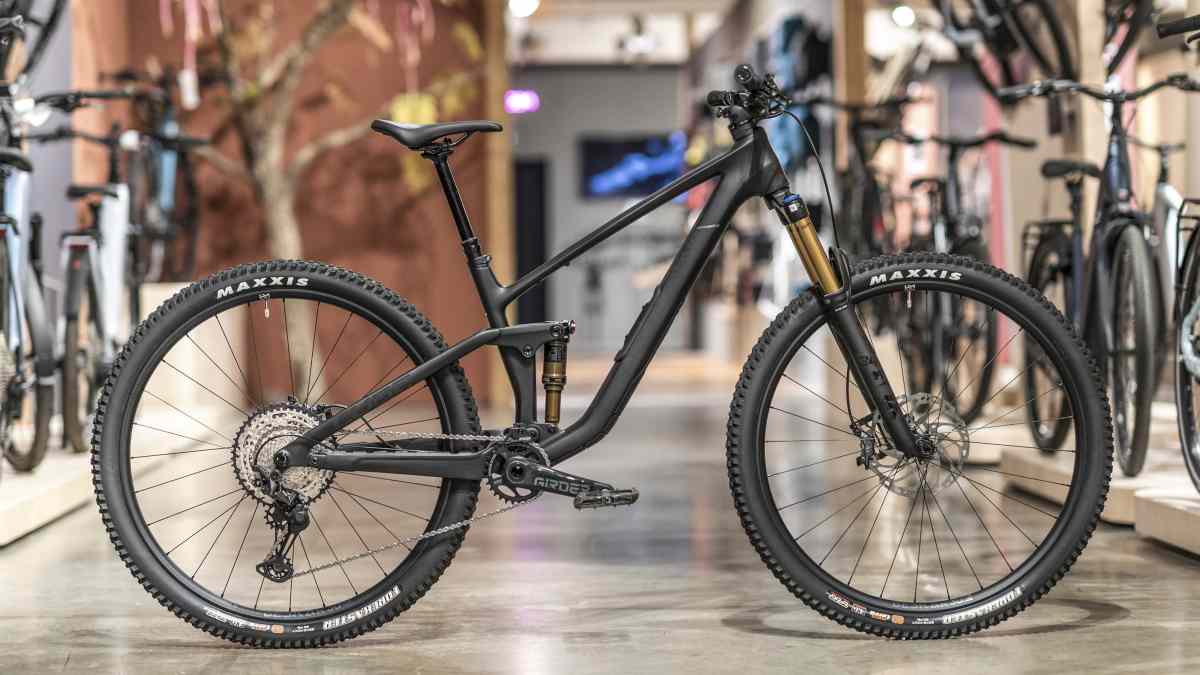
Experts also see the declining market significance of the classic mountain bike as a problem of their own making. 1981 is regarded as the year the mass-produced mountain bike was born. The off-road bike without a motor has had 45 years to evolve. Thanks to advances in suspension systems and geometry, modern mountain bikes are better than ever. Powerful brakes, high-grip tyres and dropper seatposts are now standard features on high-end models. For manufacturers, this also means that leaps in development are becoming increasingly small. To make an existing bike even better, a great deal of resources must be invested. In the end, a few grams have been saved here and a few angles corrected to values behind the decimal point there. Ultimately, it is difficult to market a product as a ‘must-have’ when the customer already has something very similar sitting in their garage.
Many industry insiders see the peak of mountain bike development as having occurred between 2020 and 2022. A bike that is four to six years old is still perfectly suitable today – with a bit of care – for having a great time without having to make major compromises. Coincidentally, this period also overlaps with the global COVID-19 pandemic, during which Germans are known to have bought a particularly large number of bikes. In other words: German households are full of good mountain bikes. So why buy a new one in times of economic uncertainty? The market for non-electric bikes lacks compelling selling points. Perhaps that is also one reason why manufacturers are so keen to launch innovations such as 32-inch wheels.
Ever ridden a six-year-old e-MTB? The world of electric mountain bikes has undergone a completely different transformation over the same period. Unlike conventional bikes, e-bikes have improved considerably in recent years. More torque, greater battery capacity, better system integration: things are changing here on a daily basis. Bike manufacturers can make great strides with their products with minimal investment. They’re picking the ‘low-hanging fruit’, updating their e-bikes faster than customers can keep up, and thereby driving up demand. The entry of large tech firms – many of which have no background in mountain biking, such as DJI – is further accelerating this process. E-MTBs are constantly generating new incentives to buy, whilst classic mountain bikes seem to have reached their limits.
Opinion: I wouldn’t buy an e-bike
Despite his professional expertise and curiosity, BIKE test editor Jan Timmermann admits: ‘At the moment, it wouldn’t even occur to me to buy an e-mountain bike. I’m reasonably young and fit, I go cycling regularly, I’ve had good training in riding technique, I enjoy working up a sweat and I appreciate the handling of lighter bikes. From this privileged position, I’d rather not add an e-bike to my personal fleet right now. The prices for the latest models are too high, and the risk is too great that the complex technology isn’t fully developed yet, might play up, or could be obsolete in two years’ time and no longer worth anything. Which bike would I buy instead? Probably a cross-country full-suspension bike that’s two or three years old. This is where the biggest leaps in development have been made recently, and you can find some really great bargains on the second-hand market every day.

Jan Timmermann
Editor