


Interview with Max Hartenstern: “If everything falls into place, anything is possible”
Laurin Lehner
· 16.09.2026

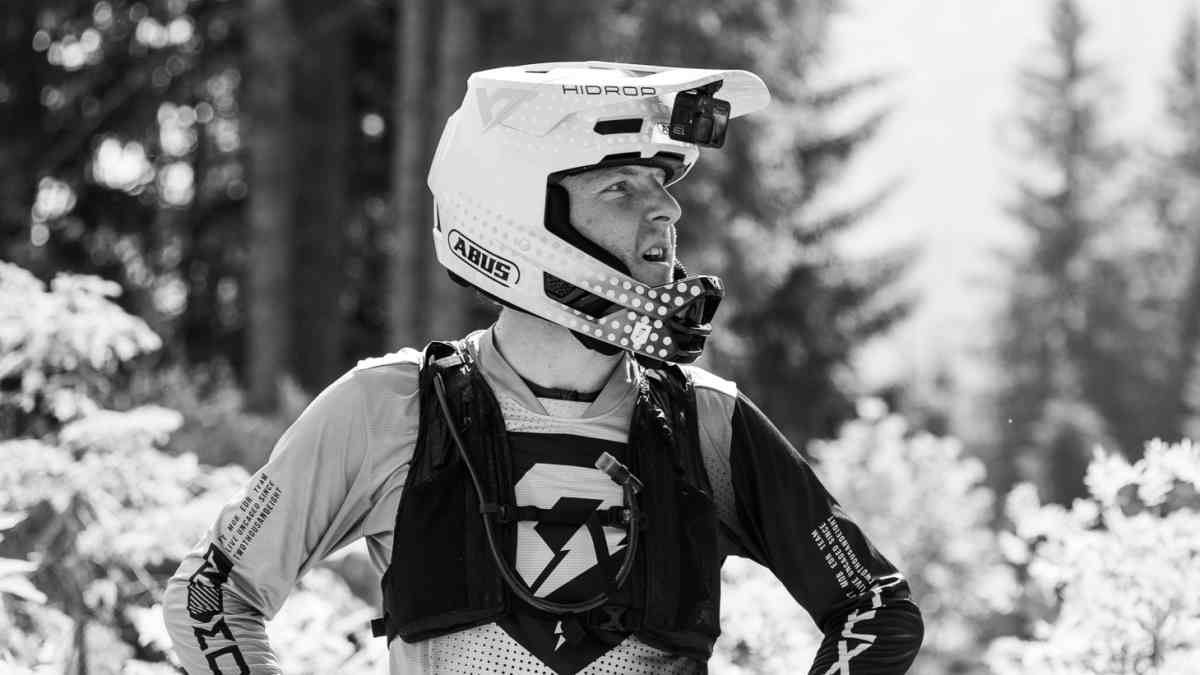
The DH World Cup, together with its XCO counterpart, is the equivalent of Formula 1 in mountain biking. Max Hartenstern (27) is one of Germany’s best riders, alongside Henri Kiefer. Unlike Henri Kiefer, however, Max has yet to achieve any major international success – at least not so far. This season hasn’t gone well at all for the six-time German downhill champion. Time to have a chat with Max – about speed, frustration and the determination to make it onto the World Cup podium after all.
Interview with Max Hartenstern: “Anything is possible in the final”
You had a crash at the World Championships in Val di Sole. Your injury sounds absolutely horrific.
It sounds worse than it actually is. The kneecap has simply cracked clean through – nothing’s dislocated, nothing’s out of place. There are worse injuries, especially when it comes to pain. I’m not in any pain at all right now. Not a bit.
The season is drawing to a close. You won’t be satisfied with your season.
No, my season was pretty lacklustre in terms of good moments. Lots of struggles. I’ve got a new bike and I’ve been searching for a certain feel that I just never really found – no matter what we tried. That’s why my best moment was probably during the summer break, when we started from scratch again. That’s when the feeling slowly came back. I started riding the bike again – rather than the bike riding me.

What exactly does that mean?
It was too big. We decided to go for a large bike. 490 mm reach – and that just didn’t suit my riding style. It was fine up to a certain speed, but then at some point the bike just started carrying me along. Passenger rather than rider. I’ve now got 10 mm less reach, riding a 480 mm – and straight away the speed came back.
Was that the only problem?
Yes, it felt good in winter. There are just some things you only realise when you’re actually racing. You can’t blame anyone for that. With a new bike, it’s easy to get led down the wrong path. The important thing is that we sorted it out in the end. I’m happy now. Things still weren’t going smoothly after that, but it wasn’t down to the bike any more.
What have you set out to do?
My aim was to reach the final in every World Cup event and, ideally, to get through Q1. Last year that worked out quite well, but not this year. But sometimes you just don’t get into the groove. Sometimes things happen that are beyond your control.
Let’s talk about speed. The World Cup is incredibly competitive – if you’re in the top 30, you’re one of the best in the world. What does it take to be really fast?
That great feeling on a bike. You’ve got to be at one with your bike and have complete confidence in the equipment. Once that clicked, the speed just came naturally. And then the good results followed.
What percentage does the bike account for?
It’s hard to put into figures – but it’s a lot. You’re riding so close to the limit that you absolutely have to be in tune with your bike. Otherwise, it just won’t work.
And what about the mindset?
It’s just as crucial. You’ve got to be relaxed and at ease. There are so many factors at play – the bike, your mindset, your sleep, your recovery, your self-confidence. When everything clicks, you’re on a roll. When it doesn’t, you’re fighting against yourself.
You’re 27. The term ‘up-and-coming talent’ doesn’t really apply anymore. How do you cope mentally with the fact that you know you want to reach the top – but up there, it’s the French who call the shots?
Everyone wants to win. I’d be lying if I said I didn’t. But you can’t set yourself a specific target in the final. You simply have to ride at the limit, read the conditions and give it your all. In the qualifying rounds, you’ve got to get it right – everything has to fall into place. And if you manage that, anything is possible in the final. We’ve seen that time and time again.
You’ve been trying to make it onto the podium for almost a decade, but so far you haven’t managed it. Do you sometimes find it hard to believe in yourself anymore?
No. If everything falls into place on a single day – then it’s possible. It’s not a pipe dream. People have shown time and again that it can be done (Editor’s note: e.g. Oisin O’Callaghan). And once the puzzle is complete, then anything is possible. Take a look at the times – it’s all so close.
There are people who are surprised by racers who are still competing in World Cups well into their thirties, even though they’ve only finished in the top 40 over the past ten years or no longer qualify for the final at all. Can you understand that point of view?
No, because as a racer, you never give up. Outsiders probably can’t understand that. If you’re a racer and believe in yourself, then you also feel that you can still make it to the very top. In short: as long as you don’t lose faith in yourself, and you know what you’re capable of, are motivated and are having fun – why should you stop?
How difficult or easy is it for you to cope with situations like the one we’re currently facing?
It’s all part of the sport, and you learn to deal with it. It’s certainly frustrating. It’s never put me to the test quite like it has this year. But I’ve never completely lost the enjoyment of it. I simply love cycling too much for that. I love going fast too much. I love racing too much.

Do you have a mental coach?
Yes. Otherwise, I might have given up by now this year.
That’s interesting – how exactly does it help you?
(laughs) A lot of people ask that. Some think he’s just a mate you have a chat with. But it’s different. He helps you identify mental blocks. How not to lose your sense of fun when things aren’t working out. How to stay relaxed when the material isn’t quite right. How to avoid falling into a slump. It always depends on the situation – whatever the problem is at the time, that’s where he comes in.
Could you give me a specific example of a situation and how he helped you?
Phew, that’s a tricky one. It’s actually quite hard to explain why talking to him helps me make progress.
Why not give it a go?
(Thinks for a moment) I can't right now. Maybe I'll draw it out for you sometime (laughs).
How often do you speak to him on the phone?
Often several times during a race week. When I’m at home, perhaps once a month. A lot of it also happens via chat, depending on what’s urgent at the time.
Do you feel pressure from outside? Even from your sponsor, Cube. They’d certainly be delighted to see World Cup successes with the new downhill bike.
Sure, but no. I’ve been with the people who support me for long enough. They understand that you can have a bad year now and then. I don’t feel any pressure.
Stuttgart Cerro Abajo – nearly 100,000 spectators. You were invited, but couldn’t compete because the team was focusing on the World Cup. Do you regret that?
In hindsight? Yes, I’d have absolutely loved to have taken part. I’m a massive fan of City Downhill, ever since the old Lisbon days. The format is simple, the spectators turn up, and the coverage is incredible. Red Bull is really pushing it, there are millions of views, and the prize money’s good. That gives the sport a massive boost.
Would you say that competing in Stuttgart gets more media coverage than competing in a World Cup event?
Perhaps, yes. It’s a huge talking point – even here in the World Cup paddock. The scale is simply on a whole other level.
But the World Cup is still the heart and soul of the sport, isn’t it?
Definitely. Mountain biking is all about off-road riding. That’s never going to change. But if city downhill keeps growing and the level of competition gets tougher, you’ll have to make a choice – you can’t just do it on the side. I reckon it’s all going to get much bigger.
What’s your view on the DH World Cup under Warner Bros. Discovery – did they get it all right?
On the whole, yes. Perhaps the field of riders could be expanded a little further, especially with so many strong juniors coming through. But the format is brilliant. It’s incredibly tough – like Formula 1 in mountain biking. It’s just right.
Whistler is new, Korea was new – but many complain that it’s always the same stops. I get that. But it seems hosting a World Cup is incredibly expensive. New venues are being added, which is great. There could definitely be more.
One last question: when you’re back on your bike in a few weeks’ time – what’s the plan?
Tinker with your bike less. Make fewer changes. Focus more on line choice, have more fun. And when it all comes together – then anything is possible.
At this point, you will find external content that complements the article. You can display and hide it with a click.
Laurin Lehner
Editor