


It’s always this tiresome issue of size. Not just with wheels, but in general. It’s the wheels in particular that cause the problems. All cyclists who ride outside the norm are familiar with them. Small frames for little ones: The frame is too long, the handlebars aren’t low enough, the steering angle is too flat resulting in sluggish steering, and my foot hits the front wheel. Large frames for tall people: Insufficient reach, unstable handling, poor centre of gravity, feeling of instability. Frame builders regularly find themselves pushing the limits of specified tyre dimensions when working with non-standard sizes.
It would only be logical and sensible for not only handlebar widths and crank lengths to increase in line with frame height, but also wheel diameters. In fact, it would be far more important. A common excuse given by manufacturers for this is the lack of available components. Older cyclists will still remember 26-inch road bikes, which made shorter riders very happy. That is, until the size died out due to UCI bans and, subsequently, a shortage of components.
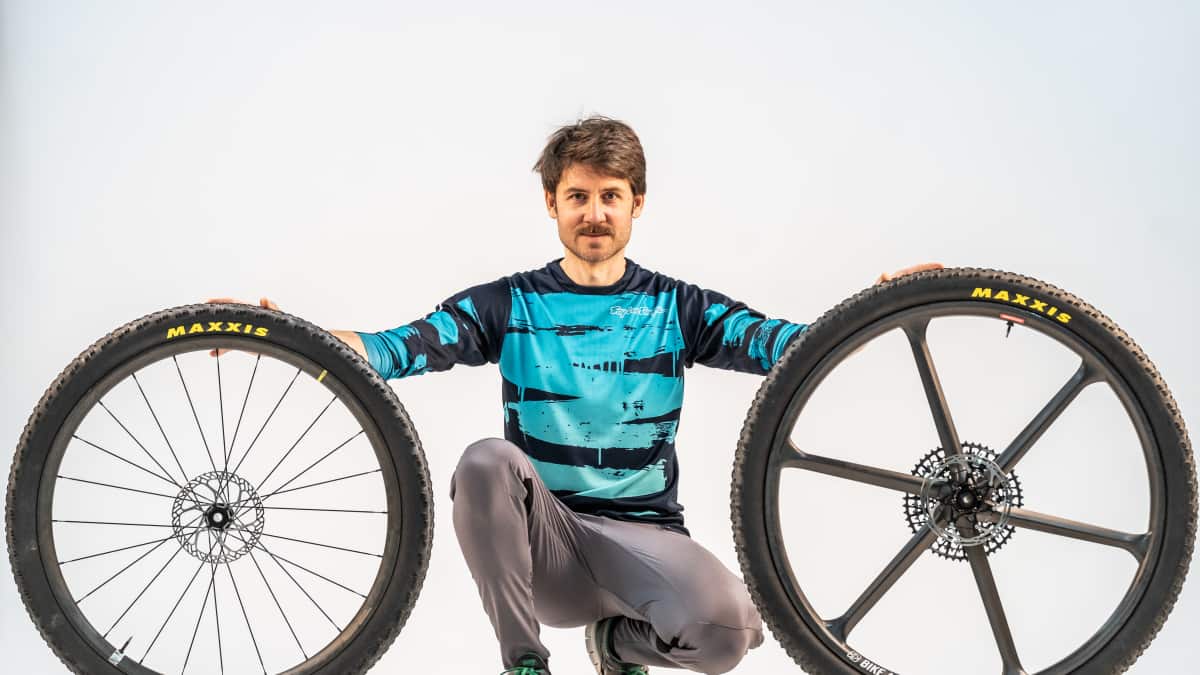
So, 32 inches then. It’s definitely on the way, they say. Certainly in racing first – the world’s most prestigious gravel race has just been won on a 32-inch prototype. Yet instead of seizing the opportunity to design sports equipment that is equally suitable for everyone, the industry lumps everyone together and argues that Roll behaviour, comfort and smoothness for everyone. It will only be a matter of a few years before the first flagship bikes, then mid-range models, and finally entry-level models follow suit. We’ve seen it all before.
However, only tall people standing at 180 centimetres or more will really benefit from this. All shorter cyclists are left out in the cold or end up being talked into buying bikes that require new compromises. Yet taking this step would be so easy right now, as the situation in the gravel bike segment is more favourable than ever. Soon there will be wheels and tyres available in various sizes and quality grades – that’s a first. Now all that’s missing is someone to build frames that really fit them:
- Sizes XS and S: 27.5 inches
- Sizes M and L: 28 and 29 inches respectively
- XL and above: 32 inches
That would really help everyone. This may be a once-in-a-lifetime opportunity, and the industry should make the most of it.


Jens Klötzer
Editor
