


Specialized Crux 5 S-Level review: The high-end gravel bike for sensible riders
Jan Timmermann
· 26.07.2026


In this article, we use so-called affiliate links. With every purchase through these links, we receive a commission from the merchant. All relevant referral links are marked with . Learn more.
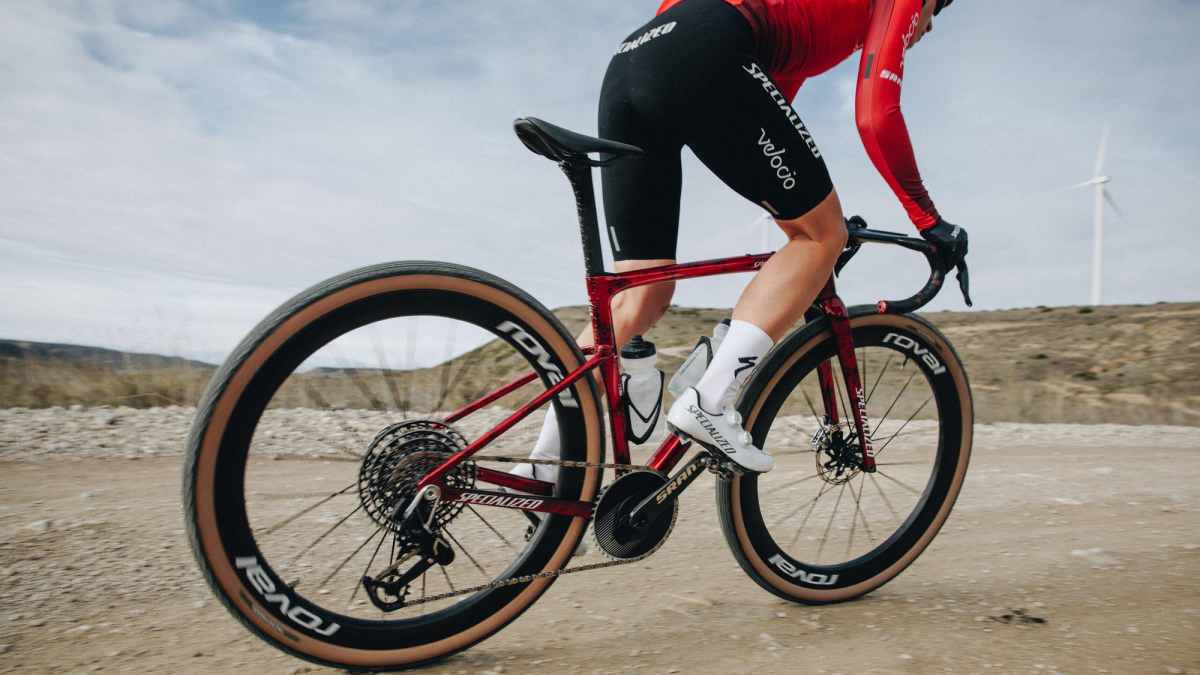
The Specialized Crux 5 takes no prisoners. This new race gravel bike aims to be nothing less than the fastest gravel bike in the world. Naturally, with such a superlative, many will be eyeing the top-of-the-range model with the S-Works label. But a model one tier below could well be a real hidden gem when it comes to performance. The S-Level option is brand new and replaces the Pro model in the range. It’s designed to let ambitious racers enjoy a high-end Crux 5 without the price soaring into territory that remains out of reach for unsupported athletes.
Conclusion
It doesn’t have to be an S-Works! The Specialized Crux 5 S-Level It falls short of its role model in only a few respects and is a thoroughbred race gravel bike: light, aerodynamic and fast. The sporty riding position and slightly improved ride comfort make it ideal for long gravel races. So anyone who can do without that last bit of prestige and is committed to racing should snap up the S-Level. - Jan Timmermann, BIKE editor
The Specialized Crux 5 S-Level in detail
- Intended use: Race gravel
- Tyre width: 45 mm
- Maximum tyre clearance: 29 x 2.2”
- Frame material: carbon
- Frame weight: 897 g (manufacturer’s specification)
- Weight: 8.0 kg (BIKE measurement, excluding pedals, for frame size 56)
- Price: 10,499 euros >> available here
- Special features: aerodynamic optimisation, third bottle cage, lifetime guarantee
Facilities
- Drivetrain: SRAM Red AXS XPLR, 1 x 13
- Brakes: SRAM Red
- Wheels: Roval Terra Aero CL
- Tyres: Specialized Pathfinder, 45 mm
S-Works? No, S-Level!
There’s no question about it: at €10,499, the Specialized Crux 5 S-Level is, and remains, a ridiculously expensive bike in the eyes of most gravel cyclists. Compared to the €13,999 S-Works, however, it might even be a bargain. According to Specialized, the FACT 10r carbon frame weighs just 98 grams more than the FACT 12 frame of its more expensive sibling. The S-Level shares the key technologies with the Crux 5 S-Works, but is designed to appeal to a slightly wider audience. Anyone looking to compete in top-level gravel races should also be happy with the S-Level.

Uncompromisingly light
For Specialized, a race gravel bike must be one thing above all else: fast! For the fifth generation of the Crux, the Californian brand therefore set out to tackle the legendary Unbound Gravel course to find out what could make the bike even faster there. The frame shape is reminiscent of a Tarmac SL8 – and for good reason. Aerodynamics played a crucial role in the redesign of the Crux. Specialized is one of the very few bike manufacturers worldwide to operate its own aerodynamic wind tunnel. Compared to its predecessor, the Crux 5 is said to have an aerodynamic advantage of 12 watts at 45 km/h.
Specialized has tweaked the seat angle slightly; it is now half a degree steeper. The reach has also increased by a few millimetres. Overall, the Crux 5 offers a fairly sporty riding position – even sportier than many endurance road bikes. Of course, the Crux is a race gravel bike and uncompromisingly designed for racing. Its inspiration from road racers is undeniable. Weighing eight kilos, this S-Level bike is around 700 grams heavier than our S-Works comparison model, but is still super-light. Apart from the third bottle cage under the down tube, Specialized has essentially spared the Crux anything that might add even a single gram of extra weight.
Uncompromisingly fast
The Specialized Crux 5 S-Level shoots forward like a rocket. The acceleration brings tears to your eyes. Especially on terrain where there are frequent changes in speed, this saves energy in the long run. Specialized’s own Pathfinder tyres also play their part. They have a shallow tread pattern and roll along as quietly as a whisper, even on tarmac. The rubber compound doesn’t waste a single watt, but it isn’t the right choice in wet conditions. Under load, traction can be lost quickly, even when climbing over coarse gravel.
A heavier wheel-tyre combination might improve the Crux’s handling stability, but that was never the aim with this bike. Overall, the Crux 5 – even in the S-Level version – is designed for a very specific purpose. As a touring gravel bike for amateur riders, or even an adventure bikepacking machine, it is quite simply too uncompromising. That’s why Specialised also has the Diverge model in its range. However, the Crux has also been given a bit more stability as part of the update. This is achieved through a 0.5-degree flatter head angle and a slightly lower bottom bracket. The result is – relative to its weight – stable straight-line tracking at high speeds. Once you’ve got up to speed, the bike is almost impossible to unsettle and holds its line confidently. Great for long-distance riding, especially if you’re perhaps a bit distracted after 300 kilometres in the saddle.
Strengths and weaknesses
Pro
- extremely light weight and powerful acceleration
- sporty, aerodynamic riding position
Cons
- As an uncompromising high-end competition bike, even without the S-Works label, it’s not a bike for everyone
What do you think: is the Crux 5 S-Works a must-have in the high-end segment, or would you be happy with the S-Level as well? Let us know your thoughts in the comments!

Jan Timmermann
Editor