


Mondraker Dusty now with a TQ motor: E-gravel bike with a whisper-quiet HPR 60 motor
Florentin Vesenbeckh
· 30.07.2026


Editor’s conclusion
This is far more than just a facelift! By switching from the Mahle X20 hub motor to the high-quality TQ HPR 60 mid-drive motor, Mondraker is putting its e-gravel bike on a completely new footing. This makes the bike more powerful and, thanks to the large batteries, gives it greater range. This is a key upgrade for long mountain rides or bikepacking. However, the prices for the carbon bike are rather steep.
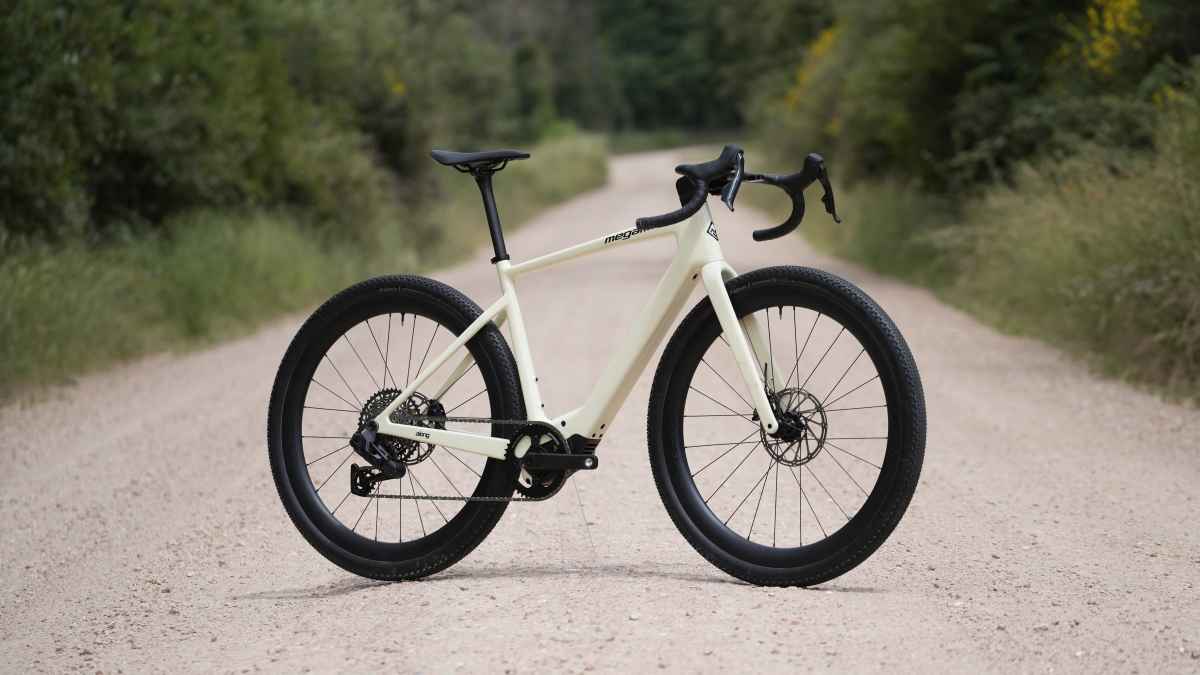
When Mondraker launched the first Dusty in 2023 When it made its debut in the e-gravel segment, this was uncharted territory for the Spanish mountain bike manufacturer. The bike caused quite a stir at the time – not least because it differed significantly from what other manufacturers understood by an e-gravel bike back then. Four years on, Mondraker is following up with a completely revamped second generation. The new Dusty is no longer intended to be merely an e-gravel bike, but rather to cater to a broader category which the manufacturer itself simply calls ‘All-Round’. At the heart of the new Dusty is the TQ HPR 60 motor (reviewed here), which replaces Mahle’s X20 in-hub motor.
A new framework, a new foundation
The new model is based on a completely newly developed carbon frame. According to the manufacturer, it was not derived from an existing platform but designed from scratch – with the aim of combining stiffness and riding stability with riding comfort. Mondraker states that the frame weighs 1,710 grams, whilst the matching carbon fork adds a further 490 grams. Together, this results in a system weight of 2,200 grams in size M/L – a figure that is certainly remarkable in the motorised all-road bike segment.

Practical design: The fork has been designed with the same installation length as a suspension fork with 40 mm of travel (sag). Anyone wishing to upgrade to a suspension fork at a later date will not need to make any changes to the geometry. The bike also features a centre stand mount and is compatible with mudguards – the latter are available separately and are designed exclusively for Mondraker’s own products.
Facts about the Mondraker Dusty 2027
- Frame/Fork: Stealth Air Carbon, total weight 2,200 g (size M/L)
- Engine: TQ HPR60, 60 Nm, 350 W peak power, up to 200% assistance
- Battery: 580 Wh or 360 Wh, permanently fitted
- Range Extender: 160 Wh (optional), Fidlock bottle cage mount
- Ground clearance: up to 50 mm
- Drive: 1×12 mullet setup, 42T chainring
- Cable routing: Hidden Housing Guide (HHG) by tax bracket
- Handlebar options: Drop bars and flat bars, depending on the model
- derailleur hanger: UDH standard
- Side stand: KSA40 mount
- Mudguards: compatible (sold separately, Mondraker exclusive)
- Sizes: S, M, M/L, L, XL
- Prices: between 5,499 and 8,999 euros
Drive: TQ HPR60
Mondraker has opted for the TQ HPR60 as the drive unit for the new Dusty. The motor delivers up to 60 Nm of torque, a peak power output of 350 watts and provides up to 200 per cent assistance. Weighing 1.9 kilos and featuring a very compact design, it is one of the lightest and slimmest mid-drive motors on the market. Even more discreet, lighter and less powerful is the HPR 40 from TQ ... but Mondraker opts for a little more motor assistance rather than maximum minimalism.
Battery and range
Depending on the model variant, the Dusty is fitted with either a 580 Wh or a 360 Wh battery. The larger variant is rather generously sized for an e-gravel bike. On mountainous rides or even when bikepacking with plenty of luggage, it provides a decent reserve of power. Both battery variants are fully integrated into the down tube. There is no provision for quick removal for storage or charging. Due to the high battery capacity, the down tube is bulkier than on the previous model. Anyone needing even more range can retrofit a 160 Wh range extender in the Fidlock bottle cage format, which slots into one of the bottle cage mounts and integrates seamlessly into the system.
Facilities and Prices
The Dusty is available in a total of four versions. As well as three classic drop-bar versions, the entry-level Dusty S is also available in a flat-bar variant – fitted with flat-bar handlebars and a dropper seatpost. This configuration is aimed at riders who prefer an upright riding position or who want to use the bike off traditional gravel routes and for everyday use.
Prices start at 5,499 euros – for the Dusty S with the smaller 360 Wh battery. The price remains the same regardless of whether you choose drop bars or flat bars. With the 580 battery, the Dusty S costs 5,999 euros. The more expensive R and RR variants always come with the large battery, priced at 6,999 and 8,999 euros respectively.
On the higher-spec RR and R models, the rear derailleur is connected directly to the main battery via an integrated power cable, so no separate AXS battery is required on the rear derailleur. The Dusty RR also utilises the SRAM Force HRD shifting system, in which the motor’s mode is switched via ANT+ and the integrated bonus buttons on the shifter – without the need for additional remote hardware. The new Dusty is available now.

Florentin Vesenbeckh
Editor CvD