


7 tips for buying a hardtail mountain bike: How can I tell if a hardtail MTB is a good one?
Jan Timmermann
· 16.06.2026


Hardtails are the purists of the mountain bike world. Whilst full-suspension bikes struggle for traction and comfort with increasingly complex suspension setups, additional bearings and elaborate damping systems, hardtails rely on a simple principle: less technology, more directness. This reduces complexity and weight, cuts down on maintenance and often saves you money too. At the same time, hardtails deliver a particularly immediate riding experience – every bump, every root and every clean line choice is transmitted directly to the rider via the unsuspended rear end. That is precisely why many mountain bikers still swear by the unfiltered experience of a hardtail today.
But not every hardtail is automatically a good hardtail. A good MTB isn’t defined solely by the brand name or the number of gears. What matters most are the geometry, specifications, intended use and how well-balanced the overall package is. If you know the key criteria, you can avoid many bad buys simply by looking at the spec sheet. This guide shows you what really matters when buying a bike.
1. Geometry is more important than equipment
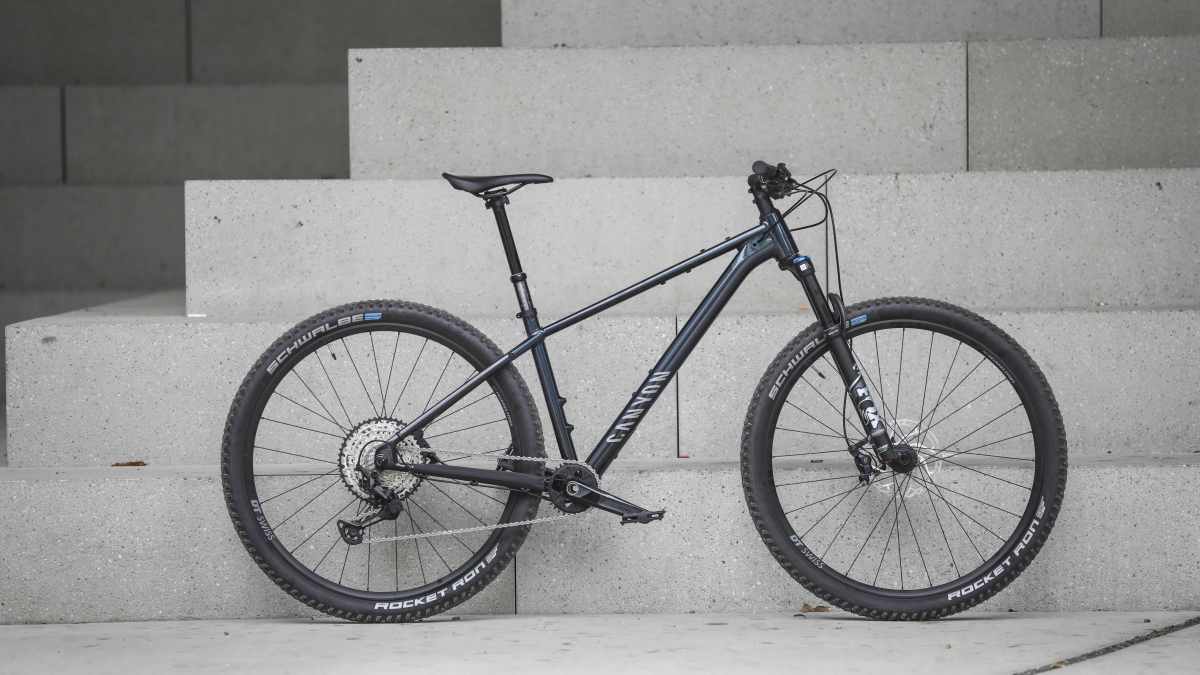
The same principle applies to MTB hardtails as to any other bike: a good frame will ride well for ten years. A gear system, for example, can be replaced at any time. Many buyers initially compare the drivetrain, brakes or wheels. However, the geometry largely determines how a hardtail rides in practice. The cycling community has also learned a lot about bikes with a rigid rear triangle, and today’s hardtail geometries are often far superior to their predecessors. Modern hardtails generally have longer main frames, a steeper seat angle and shorter seat tubes to accommodate long dropper posts. This combination ensures greater safety on descents and better control on technical trails.

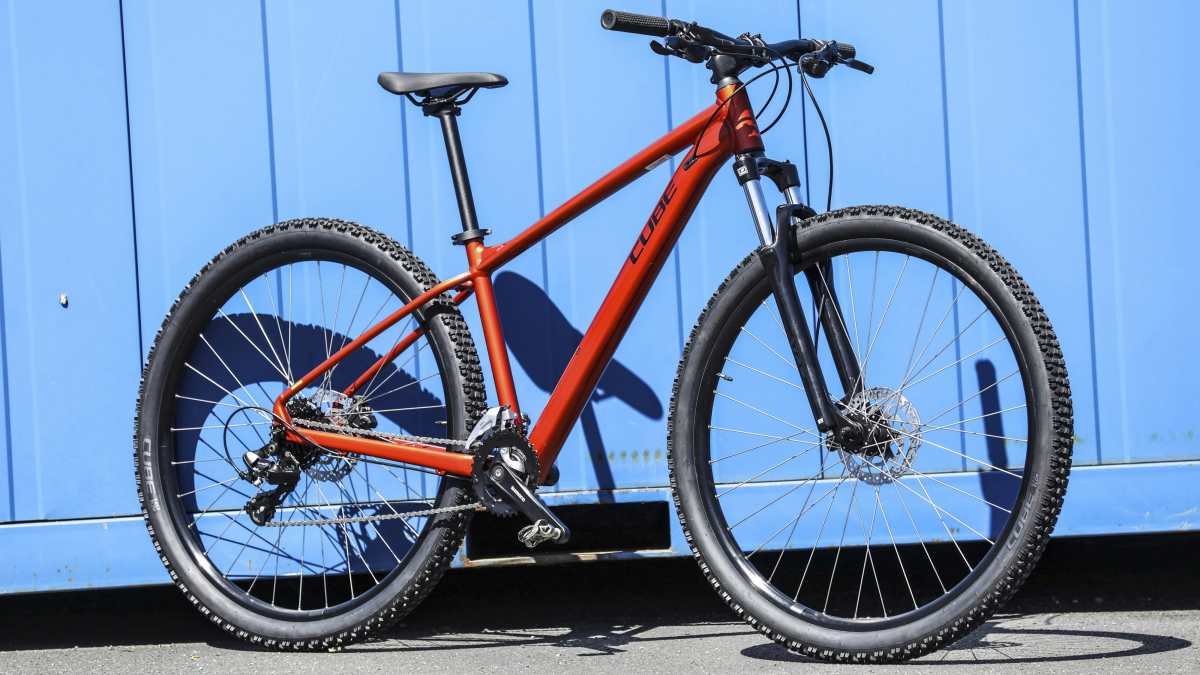
The head angle is also generally more relaxed today than it used to be. The more relaxed the head angle, the smoother the bike rides downhill. Steeper angles, on the other hand, provide more direct and agile handling. Modern XC hardtails have settled on head angles of around 68 degrees. Specialised trail hardtails are flatter, at around 65 to 67 degrees. There is also a niche market for freeride or hardcore hardtails with head angles of around 63 to 65 degrees. Important: Very cheap hardtails in particular often come with outdated geometry, which can slow you down when riding off-road. For example, a 70-degree head angle is no longer considered up to date and is likely to give the bike twitchy handling. It’s always worth taking a look at the geometry table before buying a hardtail!
That said, of course, we mustn’t lose sight of the components either. A suspension fork, tyres and a dropper post are the key criteria for a good hardtail – more on that in a moment. As for the rest of the parts, the same applies as with the geometry: modern technology is more fun than old technology. Unfortunately, very cheap models in particular are often fitted with technology that is over 20 years old. A wide-range 12-speed drivetrain with a single chainring, powerful hydraulic disc brakes and ergonomic contact points are definitely essential for a good hardtail.
2. The hardtail must be suitable for the intended use
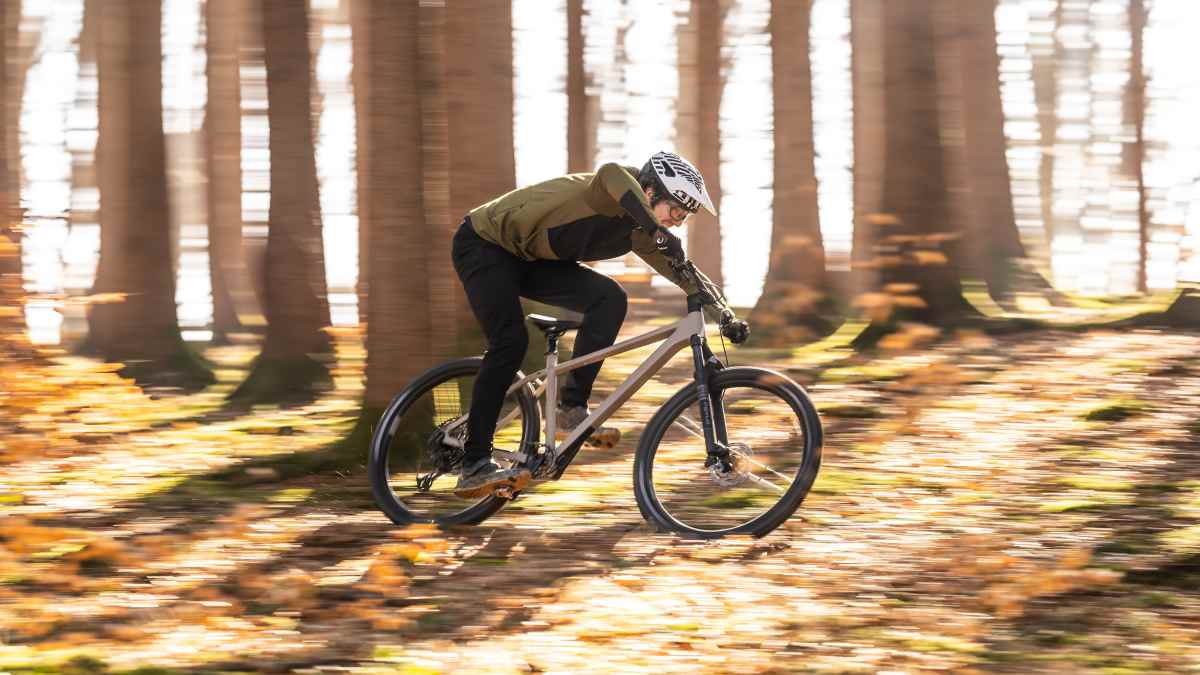
A good hardtail isn’t necessarily the most expensive or the most modern model. It needs to suit the routes you ride. Overly aggressive geometry can be a disadvantage on simple routes. If you mainly ride on forest tracks, go on tours and tackle easy trails, you’ll usually benefit from a lightweight touring or cross-country hardtail. For technical trails, root-covered sections and steep descents, modern trail hardtails offer more reserves. The most important question is therefore: where do I actually ride – and not where would I like to ride one day? A good hardtail never feels extreme. It climbs efficiently, inspires confidence on descents and still feels comfortable even after several hours. Modern hardtails achieve this balance through well-thought-out geometry, appropriate suspension travel and a sensible choice of components.
3. A good suspension fork is essential
On a hardtail, the front fork does most of the suspension work. That’s why it’s worth paying particular attention to it. For touring and cross-country bikes, 100 to 120 millimetres of travel is standard. Trail hardtails usually feature 130 to 140 millimetres. It is not just the travel that matters, but also the quality of the damping. Air suspension forks offer significantly more adjustment options and better performance at a lower weight than simple steel spring models, which are now only found on very cheap budget bikes. Fox and RockShox are among the most widely used suspension fork manufacturers. Most of these manufacturers’ products perform well in the mountain bike sector. Here is a list of the suspension technologies they use, in descending order of quality:
- Fox: Factory / Performance Elite / Performance / Rhythm
- Rockshox: Ultimate / Select+ / Select / Base
4. Tyres: The number one tuning part
On a hardtail MTB, the choice of tyres is particularly important, as it fundamentally determines the bike’s intended use and handling characteristics. Since hardtails do not have a rear suspension, the tyres play an even more crucial role in providing shock absorption and traction. What many people don’t realise is that wide tyres not only offer more grip, they also roll more easily on all surfaces. That’s why tyres with a width of at least 2.3 inches – or better still, 2.4 inches – are now a must on hardtails. The tread pattern should be chosen according to the intended use. A combination of a low-rolling-resistance rear tyre and a slightly more aggressive front tyre has proven to be effective.
The quality of the tyre compound also determines grip and rolling performance. Hardtail buyers shouldn’t skimp on this. However, switching to high-quality tyres is also a recommended upgrade even after purchase. 29-inch wheels have become the norm across the board for MTB hardtails. This diameter promises better rolling characteristics than is the case with smaller wheels. On wide rims, tyres can spread out more and thus fully exploit their advantages. Even on hardtails, a 30-millimetre inner rim width is now considered the optimal standard.
5. A Vario seatpost is now a standard feature
Just a few years ago, a dropper seatpost was still considered a luxury feature. Today, it’s almost standard equipment on sporty hardtails. The reason: on descents, the rider gains significantly more freedom of movement, safety and control. A dropper post should be part of the standard equipment on every hardtail mountain bike, whether it’s a cross-country or trail hardtail. The only exception: hardtails intended exclusively for hill sprints or as an alternative to a gravel bike. In these cases, the dropper post can be omitted in favour of a lighter weight. If a dropper post is missing when buying a new bike, it should at least be possible to retrofit one without any problems.
6. It’s all about the weight
From our testing experience here at BIKE, we know that a heavy hardtail is a real killjoy. A heavy weight not only limits your range on a ride, but also your riding dynamics. Ambitious mountain bikers should therefore steer clear of hardtail behemoths weighing around 15 kilos. In the cross-country sector, the fun usually starts at under eleven kilos. By way of comparison: high-end hardtails can be tuned to weigh under eight kilos with a suspension fork and dropper post. Even with trail hardtails, the total weight shouldn’t exceed 13.5 kilos, otherwise the advantage over a full-suspension bike is quickly lost. A lightweight aluminium or carbon frame can lay the foundation. Lightweight steel or titanium frames are rare and often expensive, but they score points for a robust yet responsive ride feel. The weight of the wheels also has a significant influence on agility and responsiveness.
7. Prize question
Last but not least, a good hardtail must also meet your personal budget requirements. Hardtails are particularly popular with price-conscious cyclists, as they offer more affordable entry-level prices. The price range for MTB hardtails extends from a few hundred euros to well over 10,000 euros. On average, Germans spend between 1,000 and 2,500 euros. Unfortunately, new hardtails for 1,000 euros today can hardly meet the demands of discerning cyclists. Based on our testing experience, we can broadly conclude that a good MTB hardtail combining a reasonable weight, up-to-date geometry and adequate spec is available from most manufacturers from around €2,000.
Conclusion
Hardtails are the most underrated type of mountain bike. A good bike can perform superbly off-road even with a rigid rear end. To achieve this, in addition to modern geometry and a modest weight, it needs the right components – particularly when it comes to the suspension fork, tyres and dropper post. Equipped in this way, a good hardtail has a wide range of uses and can keep its owner happy for a long time. - Jan Timmermann, BIKE editor

Jan Timmermann
Editor