


From the trail to everyday life: If you want to ride your mountain bike safely and legally on roads or forest tracks, you have to comply with regulations that are a pain for style-conscious bikers. Otherwise you could face fines or worse.
Anyone who directs their mountain bike from the trails to the tarmac is making a tough role change: from fearless summiteer to well-behaved road user. Because be careful: anyone who believes that the German Road Traffic Act (StVO) reverently stops at mountain bikes is mistaken. If you want to navigate safely and legally between commuters and the police, you have to follow a few rules - otherwise you could be fined.
The MTB in the legal sense: bike remains bike
No matter how much suspension travel and how wide the tyres may be: legally speaking, a mountain bike is a normal bicycle. At least as long as there is no motor installed that supports you at more than 25 km/h. This means that with a mountain bike we are just as mercilessly at the mercy of the StVO and StVZO (Road Traffic Licensing Regulations) as Uncle Hans and Aunt Erna on their step-through Dutch bikes.
So worlds collide here: while designers do everything they can to make the bike cleaner, cooler and lighter, legislators demand equipment features that feel as harmonious on a mountain bike as a towbar on a sports convertible. Although the dynamo requirement was fortunately retired in 2013/2017, other regulations are stricter than most people realise.

Performance on the tarmac: rules and show acts
In principle, we are allowed to ride our MTBs on almost any public road as long as there is no explicit prohibition sign prohibiting the fun from the outset. The classics apply: ride on the right, show consideration and keep your arm out when turning. In addition, be careful with show acts: wheelies, manuals and other two-wheeled acrobatics should not be performed directly in front of a police patrol. Although there is no explicit "wheelie ban" in the legal code, the German Road Traffic Act requires that you must be able to control your vehicle "safely at all times". No reports about your heroic deeds on your last bike park outing will help - because if the front wheel is pointing skywards, your steering and braking ability will demonstrably suffer considerably. So if a law enforcement officer is in a bad mood, or you anger a passer-by, the artistic performance becomes a disdainful misdemeanour for lack of vehicle control. This also applies to simple hands-free driving, and not just when the show ends in a fruit or vegetable stall.
Cycle paths: constraint or freedom?
The cycle path is a chapter in itself. You only have to use it if the round blue sign with the white bicycle greets you. If the sign is missing, you can choose between the road and the cycle path. But be careful which direction you take: not only is ghost cycling frowned upon, it is also a real liability killer in the event of an accident.
Forest and woodland: Unlimited driving fun?
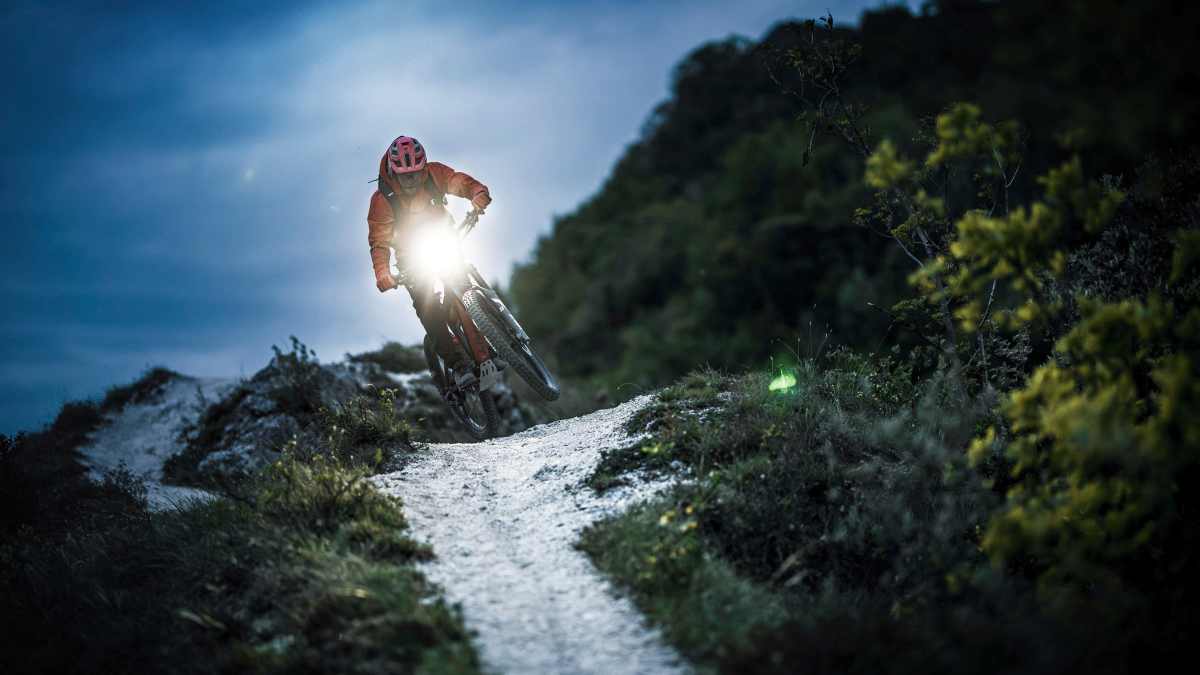
In Germany, cycling in the forest is generally permitted as long as you cycle on paths. Our neighbours in Austria take a much more restrictive view: there, forest paths are often taboo without the explicit permission of the owner. The Swiss, on the other hand, are more relaxed and usually let you go ahead. But no matter where: anyone who knocks hikers off the path at 50 kilometres an hour will be in trouble with their fellow human beings and the law.
The forgotten doorbell and the light dilemma
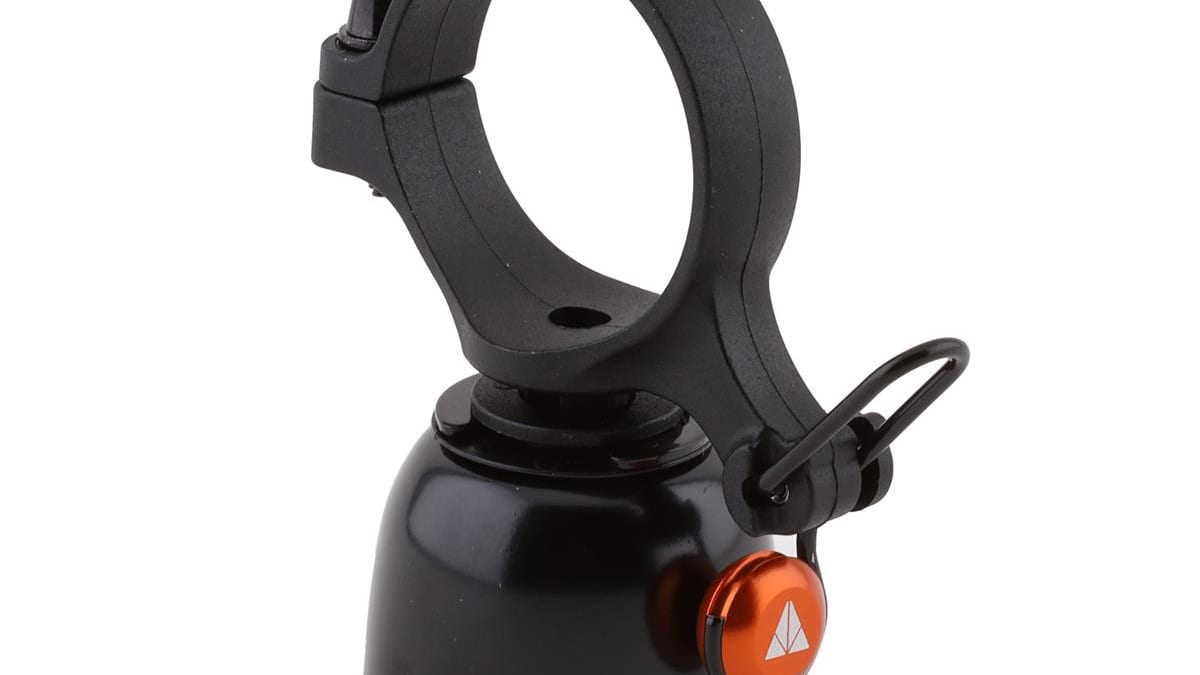
A mountain bike without a bell is a matter of honour for purists, but for the law it is an invitation to a fine. A "bright bell" is mandatory - electronic horns or even a friendly shout of "Watch out!" (still better than: "Get away!") unfortunately do not count as legal substitutes.
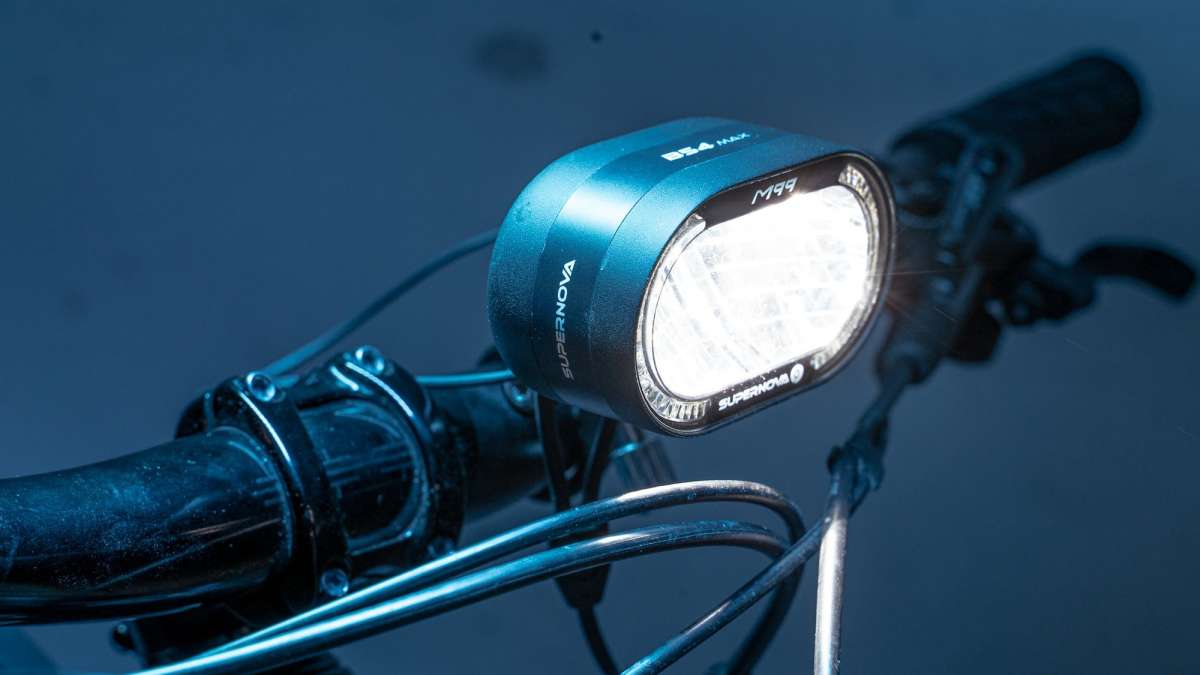
Things get even more complicated when it comes to light. In bright sunshine, the bell is sufficient, but as soon as dusk sets in, rain clouds the view or the fog rolls in, the bike needs a light:
- A red tail light
- one fixed white front light
- Various reflectors
And no, the €5 bulb from the discounter is often not enough. The lights need the official test mark of the Federal Motor Transport Authority (the famous wavy line with the "K" number). Battery-powered lights are now permitted, but they must be firmly attached and must not dazzle anyone. Also important: Indicator lights on bikes are prohibited. If you want to flash, you can hang the lights on your helmet or rucksack - permanent lights are mandatory on the frame itself. Your favourite 2000-lumen helmet light for night riding is only an "add-on" in road traffic and never replaces the light on the handlebars.
Reflectors: The true "final boss"
The subject of reflectors is the point at which many mountain bikers get nauseous. After all, you don't put hubcaps on the 285 tyres of a 911 Porsche. But it is what it is - if you want to pedal through the urban jungle in 100 per cent compliance with the law, you need:
- A white reflector at the front
- One red rear reflector (Z marking)
- Yellow reflectors on the pedals (front and rear)
Alternatively, spoke reflectors (two per wheel), reflective tyre sidewalls or spoke sticks would also do the trick each Spoke. Decide for yourself which solution looks more like a fairground cart. You could say: screw it, it's worth the 20 euros to me before I roll through the city centre like a Christmas tree. But in the worst-case scenario, a small fine is not enough. Because what costs just the equivalent of two Dürüm doner kebabs in Munich city centre can lead to financial bankruptcy if there's a crash. Insurance companies love to construe contributory negligence because you were less visible without the conspicuous up and down movement of the pedal reflectors. Tip: If you don't want to completely ruin your style, use discreet reflective tape with a test mark - it's better than nothing at all.
What the fun costs: A small catalogue of fines
If you are really caught by the long arm of the law, the following sentences will be due:
- No bell: 15 Euro
- Light broken or missing: 20 to 60 Euro
- Wrong direction on the cycle path: 15 to 25 Euro
- Wheelie with danger: Can lead to charges being brought (expensive!)
Conclusion
Mountain biking in public spaces is a legal balancing act. It's best to have a compact set of rechargeable lights and reflectors in your rucksack in case the tour takes longer than planned. And the risky show manoeuvres? These are best enjoyed where the audience is made up of hedgehogs, hares and squirrels. Even if for some bike acrobats this is perhaps not the real purpose of their performance.
Josh Welz
Editor-in-Chief