


E-motor tuning - Interview Lutz Scheffer: "That's why e-tuning concerns us all!"
Laurin Lehner
· 14.05.2026

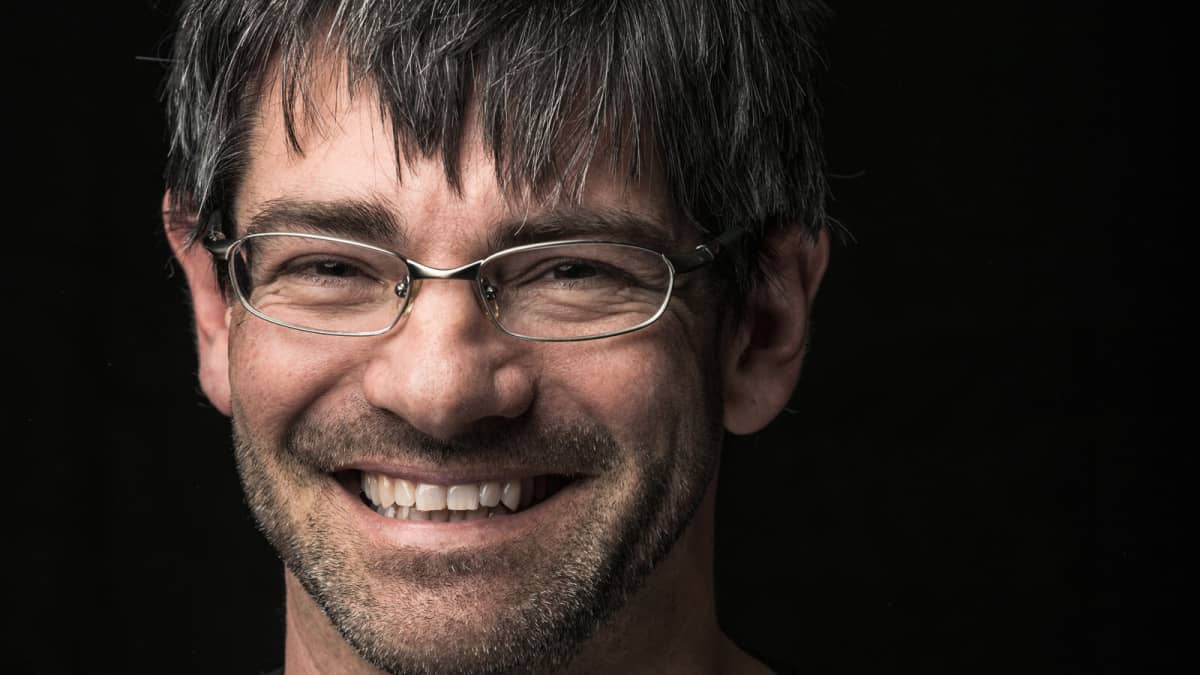
Lutz Scheffer is a veteran of the bike industry. He is one of the best-known bike designers in Europe. The engineer has helped develop numerous mountain bikes and e-bikes over the decades and is a recognised expert in suspension and drive technology.
As an independent industry expert, he not only brings technical expertise, but also a clear stance to current debates on electric motors, regulation and the future of mountain biking. Lutz worked for Canyon for a long time and has been developing bikes for Rotwild for several years.
We met Lutz at the Bike Festival in Riva on Lake Garda and talked about his claim.
E-MTB tuning: An interview with bike designer Lutz Scheffer
BIKE: Let's start with the core problem: How big is the tuning problem really in practice? I hardly ever see bikers riding around in the forest at 40 km/h.
Lutz Scheffer: The data is sparse, but it is estimated that 5 to 10 per cent of all e-bikers tune. That doesn't sound dramatic at first, but from a legal point of view it is huge: e-tuning is not an administrative offence, but a criminal offence. As soon as a pedelec supports more than 25 km/h, it is no longer a bicycle, but a motor vehicle without a licence.

But the problem should be manageable for E-MTBs on trails, right?
Less pronounced in the mountains. You don't usually reach 25 km/h on steep climbs, nor on the trail. 25 km/h really is a heap of wood. And even 1,500 watts is not enough to thunder uphill at a constant 25 km/h - you need two or three kilowatts. The fewest accidents happen uphill anyway.
So what is the problem?
You can't just assume you're in your bubble. E-tuning videos are clicked thousands of times online, of course people do it. And it doesn't have to be thousands of people who actually do it. A few people are enough to jeopardise the acceptance of us in the forest. Besides, it's not just about speed tuning - it's about peak performance tuning.
After all, our sanctuary is the trail access. Motor vehicles mustThere may beWe don't know how to ride - forests and trails are taboo. If we lose our status as a bike or slip into an intermediate status, we lose all our access. That would be the end of e-mountain biking as we know it today. If 10 per cent are justiciable, that puts everyone at risk, do you understand?
The manufacturers are already doing something about tuning. Isn't that enough?
It's still too simple. There is a 7-stage system: Stage 1 is pure minimum protection - a warning on the sales slip. Level 7 is highly automated driving with maximum safety, as with self-driving taxis. Hackers have virtually no chance here. Bosch's electric motor is at level 4, in some cases 5, which is too low. But it's not just Bosch - you can manipulate any motor. You can find a list of all the motors in the world on the relevant websites - previously via hardware, now electronically.
Why don't manufacturers make it more complex?
There are economic reasons for this. From level 5, it becomes so expensive that only three or four major manufacturers can afford it. For cars, 500 or 1000 euros for electronic safety can be digested - not so for bicycles. Incidentally, this is one of many reasons why small cars are twice as expensive today as they were ten years ago.
But your suggestion is not software, but hardware. How does that work?
I don't want to expand the field of manipulation by regulating even more with software. The 25 km/h limit is relatively easy to detect - a police officer sits on it and notices that it is travelling faster. All other performance parameters can only be determined forensically on a laboratory test bench. My suggestion: limit engine weight, not wattage.
How exactly is this supposed to work?
An electric motor is limited by physics. You can install the best magnets in the world, the densest windings - at some point, it will come to an end. A 2.5-kilo motor can develop around 1,300 watts peak and 130 to 140 newton metres. More is not possible, it is electromagnetically saturated. Even the best tuner can't get any more out of it. If we say: a maximum motor weight of 2.2 kilos, then the power is automatically physically limited.
But speed tuning would still be possible.
Yes, you'll never get rid of it. But speed tuning has been around for 15 years and is comparatively easy to control. I don't want to open up the performance field, which we can't realise at all. Otherwise we'll have 30-kilo monster e-bikes with 5-kilo motors from China that can be tuned up to 5 kW at the touch of a button - then we'll have real mopeds on the trails.
By the way, the bikes you've developed use Avinox motors - you can ride them up trails in the forest at almost 20 kilometres an hour. Isn't that also a problem when it comes to acceptance in the forest?
This is a speed that was previously unthinkable. With other engines you were travelling at 16 km/h, now you're travelling at 20 km/h. That sounds like a difference of only 4 km/h, other forest users are not used to that. I actually see this as an acceptance problem. We really have reached the limit. People will get used to it - but there has to be an end to the performance somewhere.

Wouldn't such a weight limit be an innovation killer? What about new drive systems like MGU?
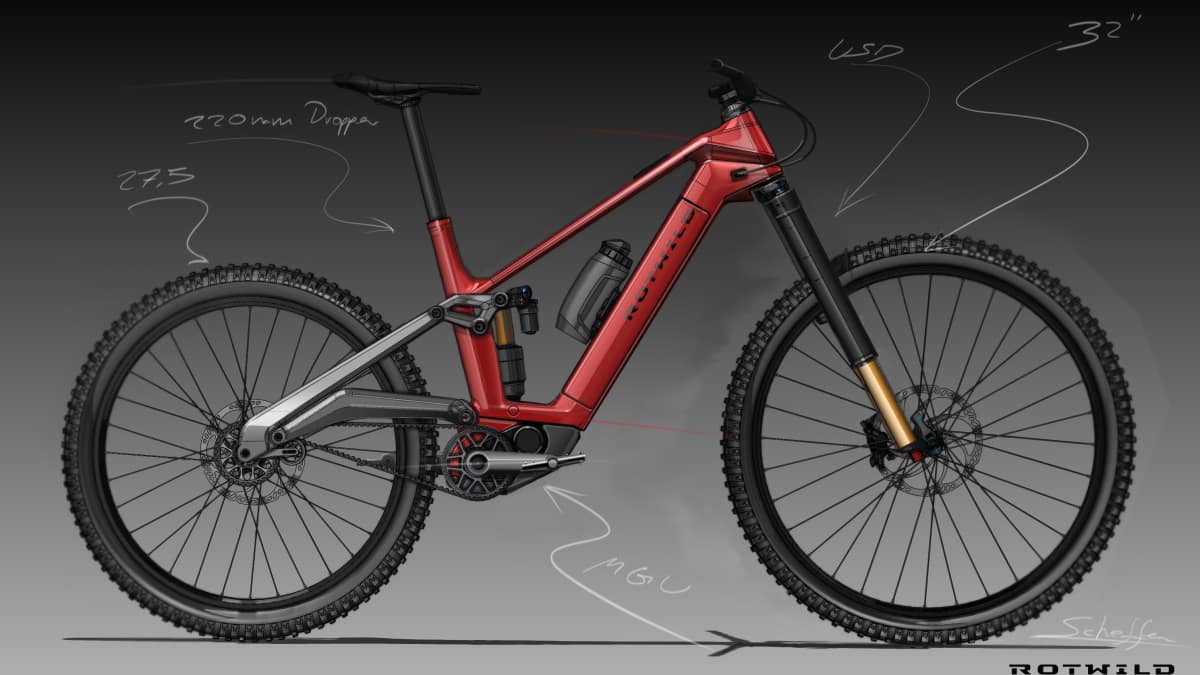
That's why exceptions are needed. With MGU (motor-gearbox unit) or Rohloff rear hubs, the gearbox is integrated, which weighs an additional 1.5 to 2 kilos. I would give them a weight bonus. I don't want to kill innovation, I want to promote it.
In addition to engine weight, you are also demanding a total weight limit.
Yes, the current regulation says: pedelec plus rider maximum 250 kilos. My suggestion: maximum bike weight of 25 kilos. This prevents monster bikes with 5-kilo motors from being legally sold as pedelecs, which are then only throttled by software - which in turn can be manipulated. Besides, let's be honest: a 30-kilo bike no longer has anything to do with "bike-like riding behaviour". That's riding a moped.
Which manufacturers need to make improvements?
All of them. The heavy engines must become lighter, the light ones must deliver a little more power. But these are positive development incentives in the interests of the customer. Customers want light, powerful bikes - not too much, not too little.
Why do you think the 750 watt limit demanded by the ZIV is rubbish?
Because it is a completely invented value. You could also use 699 or 1112 watts. The 25 km/h has evolved historically and is a hard cut-off value that can be measured. Setting a point value for power that you can't control, execute or understand is absolute rubbish.
Would your suggestions make e-bikes more expensive - after all, many manufacturers would have to react?
I don't think so. Engines that are lighter develop less torque and need components that have to withstand less. The upward price spiral would be stopped. It also creates free competition: every engineer tries to get as much power as possible out of two kilos of engine - that's innovation.
How did you proceed politically?
I have realised that the German two-wheeler lobby is not necessarily acting in the interests of us trail riders. I didn't even get a response from the ZIV. That's why I went to the European level - to the European Cycnling Industry (formerly CONEBI) in Brussels. I received positive feedback there. They are taking on board the ideas.
On the one hand, you are an opponent of ABS and on the other, you are in favour of maximum safety for cyclists. How does that fit together? Anti-lock braking systems protect inexperienced cyclists in particular, who can apply the brakes unchecked on gravel bends.
Yes, ABS can prevent sudden braking and rollover accidents - that's a positive thing. It becomes critical when riders rely on it to blast down trails that they were previously unable to ride. The rider should be riding within the limits of their ability, not relying on electronics. Also: I don't want ABS to become mandatory in regulation. In short: I'm not demonising ABS, but if bureaucrats were to stipulate that all pedelecs have to have ABS, I'd be deadly unhappy.
You are accused of Bosch bashing. Because they have an electronic limit of 750 watts, which you think is rubbish.
That's too easy. As the market leader, Bosch has a special responsibility. You can't simply brush aside highly differentiated arguments and say: "We're not interested, we're going down the path of electronic limitation." That's exactly where the criticism comes in. You are relying on a system that we have proven for 15 years does not work - and will not get any better in the next 15 years.
Electronic power limitation is a dead end and a huge danger for the bike community. I'm not saying this because I'm anti-company, but because I have a proven track record of developing bikes for all motor manufacturers. I don't represent any particular company interest - that predestines me to keep an eye on the industry from above.


Laurin Lehner
Editor