


In the past: one bike for everything
What is freeride or what is mountain biking? Not an easy question to answer. It could be a short answer: "fun", but most probably it won't be a short answer to describe the word freeride, although the quintessence is: "fun".
In the past, when someone mentioned the word mountain bike, all of us fat tyre freaks listened up. We were all one big family and we were all mountain bikers. But things have changed over the years. Today there are many different types of mountain bikers and many subcultures. For each subculture there are different bikes and even a different fashion and slang.
There are now many different strains in mountain biking. I think that's great and I think it's great that you can't describe a mountain biker as a monotonous figure in one sentence. I'm sure every sport has its subcultures, but not many are as diverse as bikers.
The garage as an identity crisis
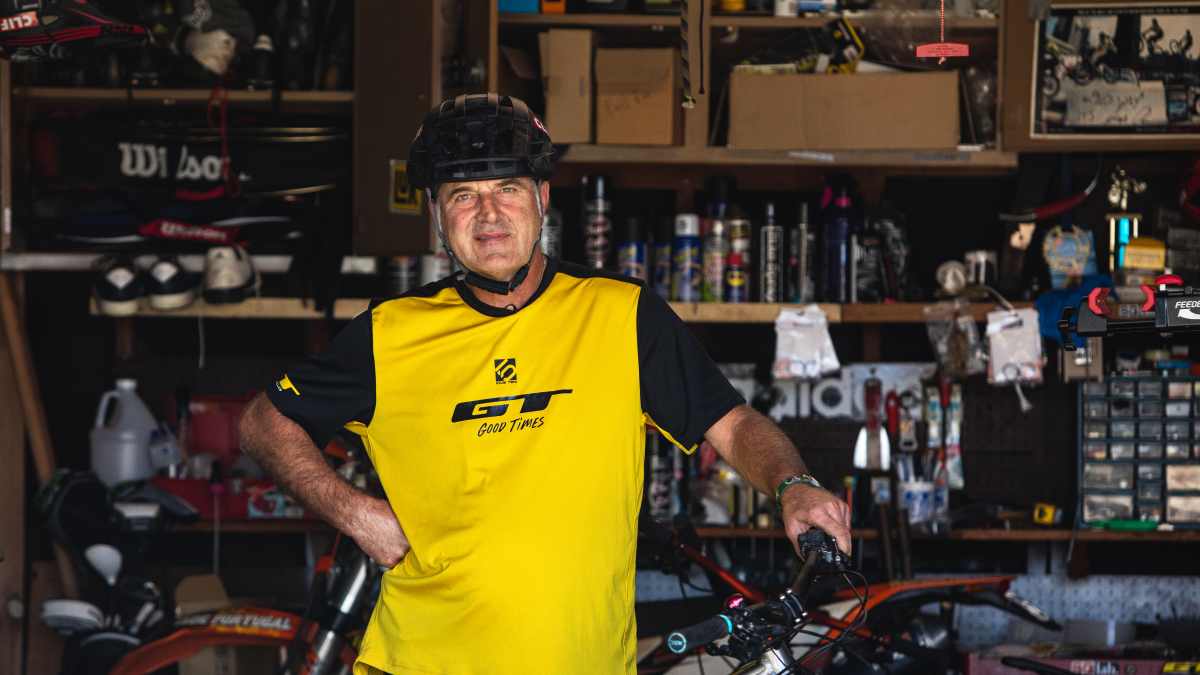
Personally, I like all the different disciplines and cultures, from trials to freeriding to cross country and everything in between. E-bikes anyway. And that's also what my garage looks like: I have at least seven different mountain bikes so that I always have the right bike for the right occasion. It's a good thing I'm sponsored, otherwise it would be difficult to afford all these bikes.

It used to be very simple - you had one bike for everything. Sometimes I miss that simplicity. You took part in the old stage races where every rider had to ride XC, DH and trials - most people rode it all on the same bike. Imagine that today!
The GT Zaskar is the only bike that has ever won a World Cup race in XC, DH, trials and slalom. And I'm sure that there will never be another model that can do it.
Back to my garage: I have a 26-inch trials bike, a 20-inch trials bike, a dirt jump bike, a freeride bike, a downhill bike, a hardtail XC, a 3.5-inch full XC, a 4.5-inch full XC and a freeride XC. And now, of course, e-bikes too. To be honest, e-mountain biking has expanded the idea of freeriding even further. Suddenly it's not just downhill riding that's fun, but also going uphill. You look for creative lines uphill and downhill. You play with the terrain in both directions. Sometimes I don't even know what I enjoy more.
There are also many different motivations and types of riders when it comes to e-biking. A big plus point: the fun factor often starts on the uphill, which for me is just as important and entertaining as the downhill. If you want, you can easily avoid the classic "torture" thanks to motorised assistance. At the same time, I also know and appreciate the other side - the rewarding feeling of having conquered a sweat-inducing, tough climb under your own steam.
Too many bikes, too many drawers?
Just as it is confusing for the consumer, it is also difficult for the manufacturers and bike shops. Now they have to build many different bikes for specific purposes, and often there are no big markets for certain specialised bikes.
Bike shops have the same problem: they can't keep all the different models in stock. That's why there are already some bike shops that specialise only in freeride or comfort and transit bikes.
It's also difficult for the bike media as they try to cover all aspects of the sport. Chances are they are overlooking many of their readers and users and not writing enough about each subculture to satisfy everyone.
The many trunks from the mountain
We not only have a big difference between XC riders and freeriders, but also extreme differences within these categories. The XC racer is different from a marathon rider or a touring rider.
Or take a look at the freeride segment, at least a few years ago there were: Northshore riders, urban riders, dirt jumpers, trial riders, big drop freeriders, mega avalanche riders, freeride tourers, downhill racers, free racers - and each of these subcultures has further subcultures.
But what the heck: it's all mountain biking
Mountain biking was invented and categorised as an individual sport - so everyone can interpret it in their own way. Everyone is different and everyone can practise mountain biking the way they want. That's why we are an individual sport - and that's the great thing about it.
It doesn't matter whether you prefer tattoos or shaved legs, whether you like lycra or jeans, whether you click in or click out. It's all good. The core remains the same.
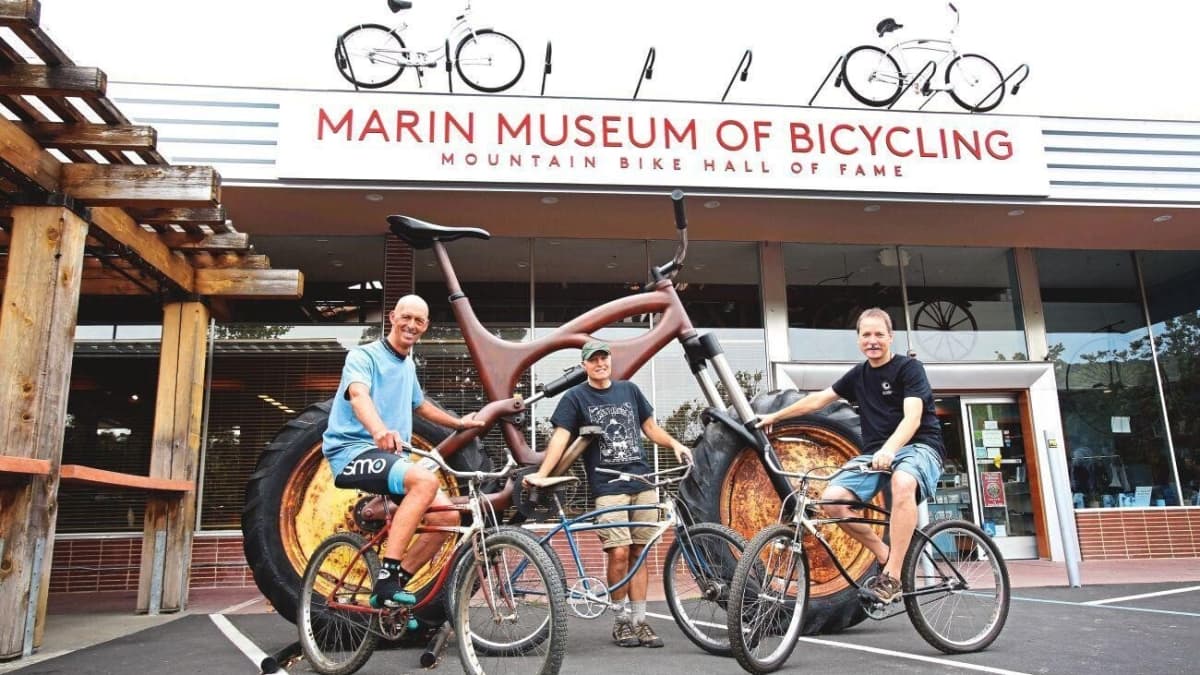
Gary Fisher and the original riders from Marin County, who are credited with inventing the sport, weren't all that different from modern freeride kids.
One thing has never changed:
They had fun. And hopefully we still do too.
Best regards, Your Hans Rey
Who is Hans Rey?
Hans Rey (born on 4 June 1966 as Hansjörg Rey in Kenzingen, Baden-Württemberg) is a living legend of mountain biking. Hans is considered one of the most important pioneers of trial and freeride mountain biking worldwide.
Known by his nickname "No Way" Reyhe had a decisive influence on the mountain bike scene in the early 1980s and 1990s with his extreme stunts, show performances and adventure expeditions.
Career and sporting successes
Hans Rey began his career in classic bike trials (riding technique competitions on special 20-inch bikes) and later switched to mountain bikes.
- Success in competition: He is a multiple trial world champion (victory at the 1989 UCI World Championships) and multiple US and Swiss champion.
- Pioneer of freeride: Together with other riders from the early days, he invented "extreme mountain biking" (now freeride). He showed that you can jump, climb or balance over almost any obstacle on a mountain bike.
- Hall of Fame: In 1999, he was honoured for his services and influence on the sport in the Mountain Bike Hall of Fame recorded.
Social commitment: Wheels 4 Life
In 2005, Hans Rey and his wife Carmen founded the charitable aid organisation "Wheels 4 Life".
The non-profit organisation donates bicycles to people in developing countries (primarily in Africa, Central America and Asia). The aim is to give people in remote regions mobility so that they can reach schools, access medical care or transport goods to market.
Hans Rey today
Hans Rey holds both German and US citizenship and has lived in Laguna Beach, California, for many years. He is still active as an ambassador for the sport of mountain biking and is committed to the construction of mountain bike trails and so-called "flow trails" worldwide. Hans Rey was sponsored by GT Bikes for over 30 years. Following the bankruptcy of the US brand, Hans now rides for Santa Cruz.

Dimitri Lehner
Editor