


Pressure point on the brake lever
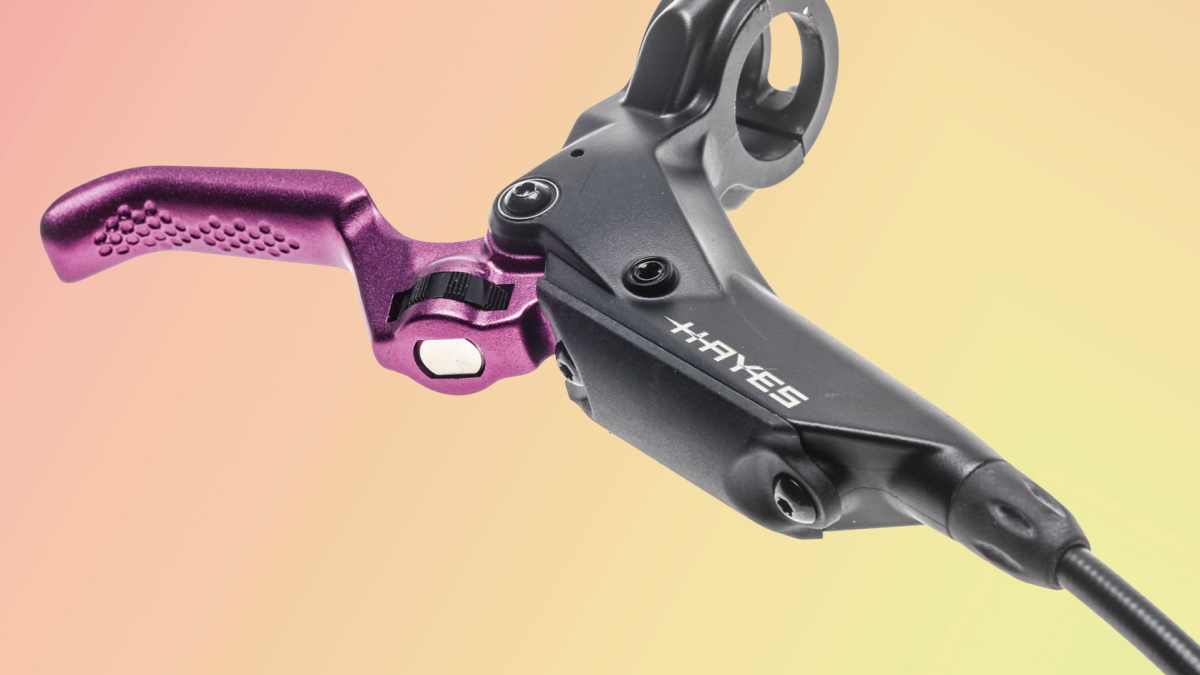
The pressure point on the brake lever should be applied early and then harden evenly and in a defined manner. If the lever feels spongy, moves a long way towards the handlebars or only builds up pressure late, there may be air in the system or the pads are worn. A precise pressure point indicates that the system is in order. DOT brake fluid should be changed every two years; this is not necessary with mineral oil-based brake fluid.
Condition of the coverings
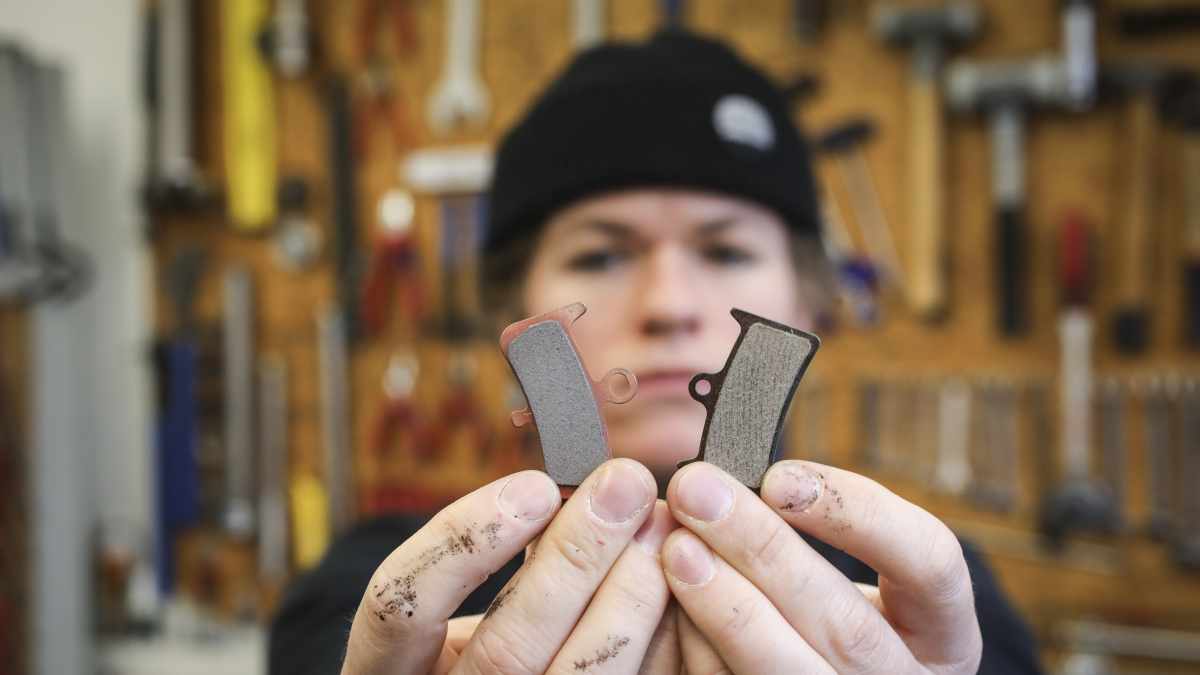
The condition of the decking can be assessed from the outside in good light. Sufficient lining (at least 1 mm) must be visible on the backing plate. With the pads removed, this can be measured precisely; at the same time, foreign bodies such as metal shavings can be removed to prevent scoring on the brake disc.
Brake caliper
After riding off-road or in the rain, dirt accumulates in the brake calliper, which impairs braking performance, accelerates wear or causes squeaking. The gentlest way to clean is with a cloth or compressed air. Avoiding brake cleaner containing solvents preserves the lubricating film on the pistons and protects the rubber seals.
Brake disc
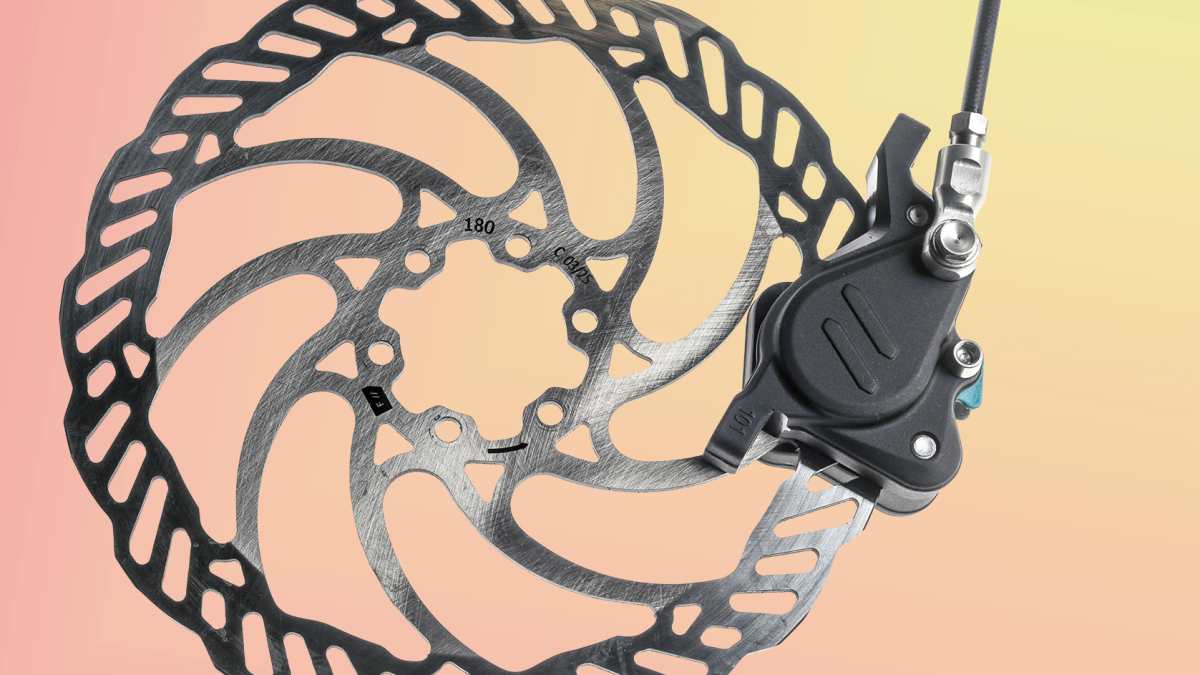
If you mainly ride on flat terrain and don't brake much, disc wear is not an issue. However, if you ride a lot of mountain passes, you should routinely check with a caliper gauge and fit new brake discs when the minimum thickness - indicated on each disc - is reached. On this Shimano model (photo in the gallery), it is 1.55 millimetres.
Side impacts
Lateral run-out in the brake disc is caused, for example, by continuous braking on a long downhill run, especially if the disc is already thinly braked. With a little skill and the right straightening tool, rough impacts can be bent back until the disc no longer grinds in the pads.
Brake flanks
The flanks of aluminium rims should be free of grooves, edges and brake pad deposits. The inspection holes in the rim flank are wear indicators. If the small indentations are levelled, the rim is worn and must be replaced.
Rim brake pads
Rim brake pads are considerably thicker and softer than those of disc brakes. They should be replaced at the latest when the grooves between the blocks have worn away. Aluminium particles that have torn out of the rim and are stuck in the brake pad must be removed with a needle or screwdriver, otherwise they will dig grooves into the rim flanks.
Bowden cable
With mechanical rim brakes, a protected wire cable transmits the manual force to the brake callipers. It must be possible to move the Bowden cable without much resistance, it must be neatly mounted in the slotted cable clamp on the brake lever arm and the cable end must be secured against splicing with a cable end cap.

Matthias Borchers
Editor
