


In this article, we use so-called affiliate links. With every purchase through these links, we receive a commission from the merchant. All relevant referral links are marked with . Learn more.
Many cyclists underestimate the effect of heat on the body. When cycling, the muscles generate a considerable amount of heat even at a moderate pace – and this is compounded by the sun’s rays from outside. The result can be a dangerous build-up of heat, which creeps up on you gradually: with dizziness, headaches, nausea or sudden exhaustion. In the worst-case scenario, there is a risk of heatstroke, which requires emergency medical treatment. The good news is that, with the right preparation, you can cycle safely and even enjoyably in high temperatures.
Tip 1: Choose the right time
The most important tip doesn’t cost a penny and just requires a slight adjustment: avoid the midday hours. Between 11 am and 4 pm, the sun is at its highest, UV radiation is at its strongest, and the tarmac heats up to as much as 60 degrees – which makes it feel even hotter. Plan longer rides for the early morning. If you set off at 6 or 7 am, you’ll enjoy cool temperatures, light traffic and often a special kind of light. Alternatively, evening rides from 6 pm onwards are a good option, once the heat has subsided.

Tip 2: Drink – more than you think
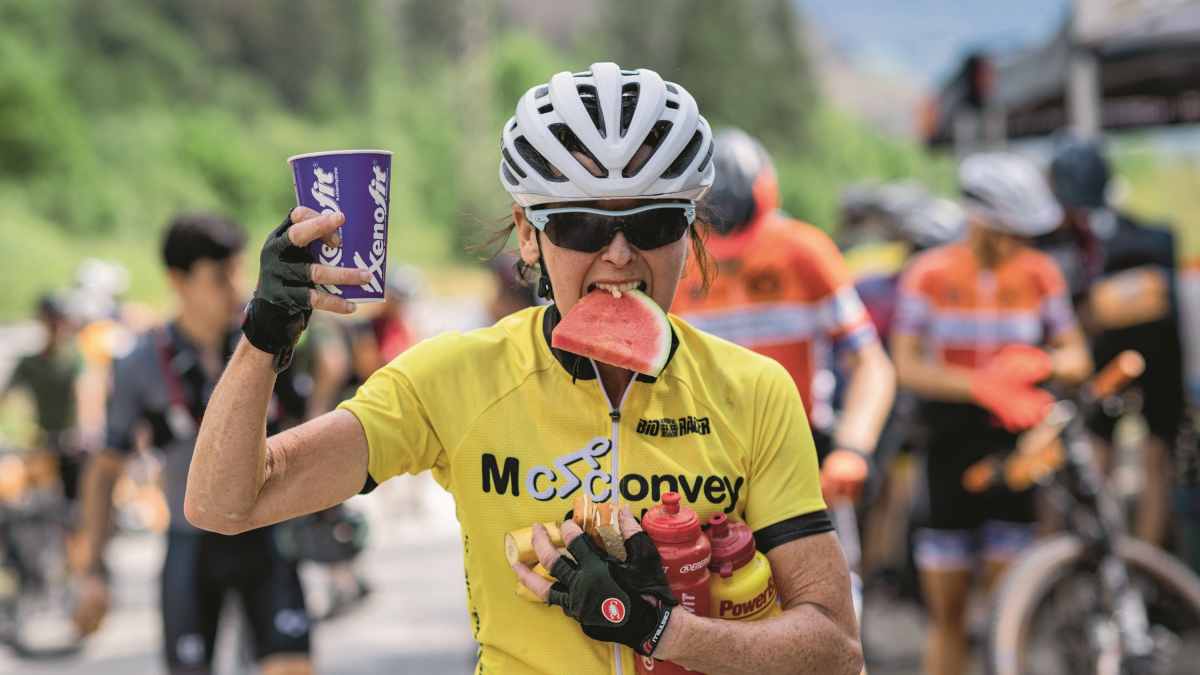
When cycling in the heat, the body loses up to one litre of fluid per hour through sweating – and even more during high-intensity exercise. Dehydration of just two per cent of body weight is already enough to noticeably impair concentration and performance. The rule is: drink before you feel thirsty. If you only drink when you feel thirsty, you are already slightly dehydrated.
- Take a good swig every 15 to 20 minutes – around 150 to 200 millilitres.
- Take at least 750 ml of fluid for every hour of driving.
- For rides lasting more than 90 minutes, electrolyte drinks or lightly salted water are recommended, as sweat depletes not only water but also sodium, potassium and magnesium. Anyone who drinks only water risks developing hyponatraemia (low sodium levels). -
- Avoid ice-cold drinks straight from the fridge – they can irritate the stomach. Chilled to room temperature is ideal.
- No alcohol before or during the tour. Alcohol increases urine production and leads to dehydration.
Practical tip: Insulated water bottles* keep water cool for longer. Two-litre hydration packs are recommended for longer hikes.
Tip 3: The right clothing – light-coloured, lightweight, functional
Cotton T-shirts are a bad choice in hot weather: they soak up sweat, become heavy and stick uncomfortably to your body.
Modern functional underwear made from polyester or merino wool wicks moisture away from the skin and cools the body through evaporation.
- Wear light-coloured clothing (white, light grey, pastel shades) that reflects the sun’s rays rather than absorbing them.
- Paradoxically, a long-sleeved sun-protective top (UPF 50+) offers better protection against overheating than a bare arm in the blazing sun.
- Protect your hands and forearms with sun cream or thin gloves.
- A light scarf or buff protects your neck and throat – particularly sensitive areas.
- Make sure there are enough ventilation slots at the back of the helmet. A helmet without ventilation is not an option in summer.
Tip 4: Always use sun protection
Cyclists are often exposed to the sun for hours on end – and frequently forget that clouds also let UV radiation through.
- Apply sun cream with an SPF of at least 30, or preferably SPF 50, apply to all exposed areas of skin – particularly the face, ears, neck and backs of the hands.
- Reapply your sun cream every two hours, even if you’re sweating.
- Sunglasses with UV 400 protection are essential. Not only do they protect your eyes, but they also prevent the tiring squinting in the sun that can affect your concentration.
- A visor on the helmet (worn over a cycling cap) provides extra protection for the forehead and face.
Tip 5: Slow down
In hot weather, the body is already busy regulating its core temperature. This leaves less energy for peak sporting performance. Anyone who ignores this and cycles at their usual pace risks hitting a wall.
- Reduce your usual pace by 10 to 20 per cent.
- When cycling uphill, use a lower gear and make a conscious effort to keep your heart rate low.
- Take more frequent breaks – ideally in the shade, such as under trees or at covered bus stops.
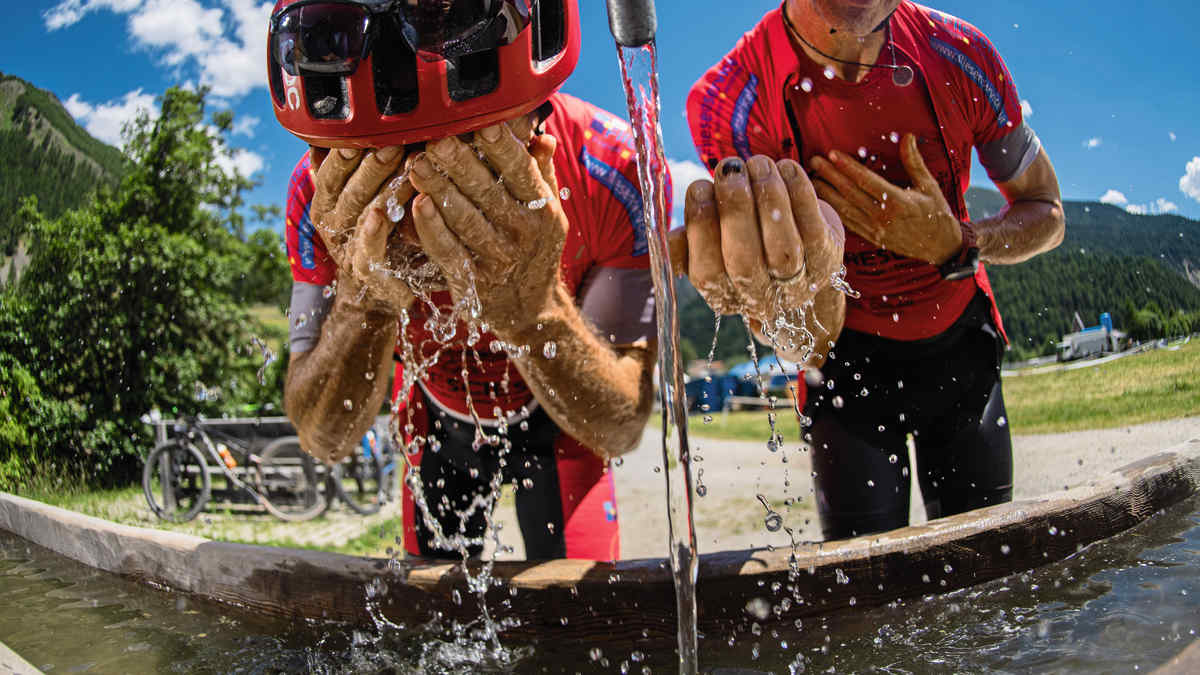
- Make the most of your breaks to cool down: splash cold water on your neck and wrists – major blood vessels run through these areas, so the cooling effect is immediate.
Tip 6: Plan your route wisely
Not every route is equally suitable for summer rides.
- Choose shaded routes along woodland edges, rivers or through parks rather than wide country roads with no trees.
- Plan to stop off at fountains, streams or cafés – and make sure you know where they are beforehand. Apps such as Komoot or Outdooractive show rest areas and drinking water points.
- Do not go on rides in exposed areas (open plateaus, mountain roads with no shade) during periods of extreme heat. -
- Let someone know your planned route and when you expect to return
Tip 7: Take warning signs seriously
The most important thing of all: listen to your body. Heat cramps, heat exhaustion and heatstroke are three different stages of a dangerous escalation.
| Symptom | Possible cause | Measure |
| Muscle cramps | Electrolyte deficiency | Break, electrolytes, water |
| Dizziness, nausea, pale skin | Heat exhaustion | Stop immediately, find some shade, cool down |
| Confusion, hot, red skin, loss of consciousness | Heatstroke | Call 112 immediately, cool the area straight away |
Stop what you are doing as soon as you feel light-headed, unusually weak or confused. Find some shade, have a drink and wait until you feel better. Heatstroke is a medical emergency – do not hesitate to call the emergency services.
Don’t forget your bike
Bicycles suffer from the heat too:
- Check your tyre pressure: Heat increases the air pressure in your tyres. In summer, inflate them to a slightly lower pressure than recommended.
- Oiling the chain: Heat and dust cause the chain to dry out.
- Carbon bikes: Never leave carbon bikes in direct sunlight – especially not in a locked car. The high temperatures can cause permanent damage to the resins in the carbon.
Conclusion
Heat demands respect, not sacrifice. Cycling in the heat doesn’t mean leaving your bike at home. It means cycling more sensibly: getting up earlier, slowing down, drinking more often and listening to your body. Anyone who takes these rules to heart will find that those quiet summer mornings spent on a bike are among the season’s most wonderful experiences.

Barbara Merz-Weigandt
Editor-in-Chief