


Competition nutrition in cycling: Expert tips for peak performance on race day
Jan Timmermann
· 01.06.2026


Food is the body’s fuel. Without the right nutrition, cyclists won’t get anywhere – let alone onto the podium at a race. Cyclists who want to compete this season should start thinking now, at the very latest, about their nutritional needs before, during and after the Challenge.
In this article, nutritionist Tanja Opitz reveals the key tips for a competition-ready diet. She works as a senior data analyst at Yazio, an app designed to help people lose or gain weight healthily. Her tips can help cyclists achieve success in competition.
Breakfast takes a bit of practice
Many cyclists spend weeks or even months training their endurance and speed, but only give their race nutrition any thought on the day of the race. This is precisely where problems can arise: anyone who suddenly eats a different breakfast on the morning of the race, chooses unfamiliar portion sizes or eats at a different time risks suffering from stomach problems whilst exercising.
That is why breakfast should be just as much a part of your preparation as any training session. Ideally, you should test the time, quantity and food choices during training, exactly as you plan to do on the day of the competition.

It is also worth having breakfast at a similar time to that of the subsequent competition – ideally with the same foods – in the run-up to important training sessions. It is also helpful to record these experiences in a plan. This allows athletes to quickly identify which combinations work well and which are more likely to cause problems.
Classic toast with jam is by no means the only sensible option. Rice pudding with berries provides readily available carbohydrates and is well tolerated by many endurance athletes. Even rather unusual options such as sushi with cucumber can work well before long training sessions: the rice provides the body with easily digestible energy, whilst the fat content remains low.
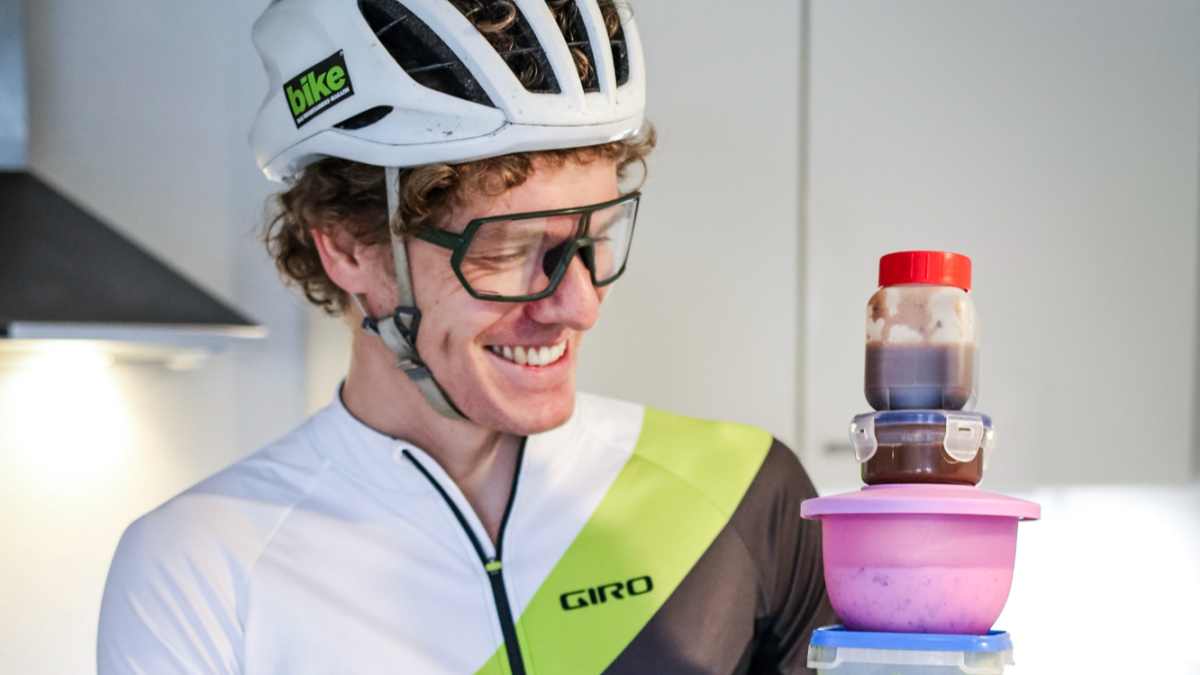
On the other hand, meals that are very high in fat or fibre – such as smoothie bowls with nut butter – are less than ideal. Although they are considered healthy, they can sit heavily in the stomach just before intense physical activity.
Nutrition whilst cycling: more than just energy gels
For rides lasting between about 60 and 90 minutes, you should replenish your energy regularly. However, many athletes find that, after a while, sweet gels and sports drinks become unpleasant in the long run or simply no longer taste good.
Salted potatoes are a practical alternative. They provide readily available carbohydrates, are easy to carry and, at the same time, help to replenish some of the salt lost through sweating. Fruit purées and baby food pouches are also popular: they’re compact, easy to digest and readily available.
As a general rule, the best catering is the kind that works well. If certain products do not taste good or are not well tolerated, they should be replaced – regardless of how popular they are.
I’ve already tried out the salted potato snack trick myself during a marathon race. Compared to sweet energy bars and the like, this real food can be a welcome change. When cooked thoroughly, the potato is still easy to chew even during strenuous exercise. The downside is that it takes up quite a lot of space – Jan Timmermann, BIKE editor
After the race: Targeted recovery support
After long or intense periods of physical exertion, the body needs three things above all else: fresh carbohydrates, plenty of fluids and protein to help repair the muscles. A simple but effective meal for this is mashed potato with scrambled eggs and cucumber salad. The potatoes replenish your energy stores, the eggs provide high-quality protein and the cucumber helps to keep you hydrated.
Even a little more butter than usual is perfectly fine after a tough session. If you prefer savoury to sweet after the race, you could also opt for a savoury porridge with mushrooms and a source of protein such as meat or pulses. The most important thing is to provide your body with fresh energy and nutrients as soon as possible.
A brief overview: Nutrition before, during and after the ride
Pre-Ride
- Focus on carbohydrates: Even the evening meal before the competition should be rich in carbohydrates, for example with rice, pasta or potatoes
- Cut down on fat and fibre: eating large amounts just before the start can put a strain on your digestion
- Drink in good time: Hydration begins the evening before
- Test everything in advance: breakfast, timing and portion sizes should be tried out during training
- Suitable meals: rice pudding with berries, sushi with cucumber or toast with jam
Intra-Ride
- Consume carbohydrates regularly: keep your energy levels topped up, especially on longer rides
- Replenish electrolytes: Sodium, in particular, is lost through sweating
- For a bit of variety: if you’ve had enough of sweet gels, you can opt for savoury alternatives
- Suitable snacks: Salted potatoes or fruit purées
Post-Ride
- Replenishing energy stores: carbohydrates are now the priority
- Getting enough protein: The combination of carbohydrates and protein aids recovery
- Replenishing fluids and electrolytes: It is best to start immediately after exercise
- Reintroducing fibre: Vegetables and other high-fibre foods are now well tolerated
- Suitable meals: Mashed potato with scrambled eggs and cucumber salad, or savoury porridge with mushrooms and a source of protein
Conclusion
Nutrition is a very personal matter. However, the nutritionist’s basic advice applies to all cyclists. In particular, many athletes still underestimate the importance of carbohydrate intake during competition. It doesn’t always have to be sugary and sweet, though. But whatever your current taste preferences, it’s essential to practise your competition nutrition in advance! - Jan Timmermann, BIKE editor


Jan Timmermann
Editor