


The blind spot under the jersey
Anyone who spends five hours cycling over Alpine passes is quite rightly proud of their fitness. However, endurance isn’t everything. Road bikes, gravel bikes and mountain bikes mainly work the heart, circulation and legs. The chest, shoulders, back and deep core muscles, on the other hand, are often left to tag along.
This comes back to haunt you. When your upper body gets tired, your pelvis tilts, your shoulders rise up towards your ears, and your hands bear too much of the load. On the trail, your bike control suffers; on the road, your posture does. A strong core keeps the body stable whilst the legs are working. It is the rider’s chassis.
The push-up is more than just a pose
Push-ups work the chest, shoulders and arms – but above all, they build core strength. The abdomen, back and buttocks must stabilise the body so that it forms a straight line. Anyone who sags in the middle isn’t doing a push-up – they’re simply collapsing. According to sports medicine specialist Dr Tobias Weigl, no fewer than 20 muscles are involved in a push-up: understandably, the pectoralis major, the triceps and the front part of the deltoid muscle (shoulder) are the most heavily involved, as they generate the pushing motion and lift the body upwards. As Tobias Weigl explains, since the push-up is essentially a dynamic ‘plank’, the whole body must be stabilised. This is why the so-called core muscles are also engaged: the back extensors, abdominal muscles, thighs, legs and buttocks.

Its implications are also fascinating: in a ten-year study involving 1,104 male firefighters, those who could do more than 40 push-ups had significantly fewer cardiovascular events than those who could do ten or fewer. The often-cited difference in risk was 96 per cent. But be careful: this was an observational study involving a very specific group. Forty push-ups are not a discount code for eternal life. Rather, they demonstrate just how closely strength, body weight and general fitness are linked.
The key point is this: strength training complements endurance training. It does not replace it. A large meta-analysis found that people who did strength training had an approximately 15 per cent lower overall risk of death. The greatest benefit was seen in the combination of endurance and strength training – which is pretty much exactly what many cyclists are still missing
More strength, not more mass
The fear shared by many road cyclists: strength training makes you heavy and slow. But that’s just an excuse. Two short sessions a week won’t turn anyone into a bodybuilder.
On the contrary: a recent meta-analysis involving endurance cyclists found that heavy strength training led to improvements in efficiency, anaerobic performance and riding performance – without increasing maximum oxygen uptake. In other words: the engine doesn’t get any bigger, but the power is transferred more effectively to the road. However, the body of research is not yet substantial enough to derive a single, perfect programme from it
The World Health Organisation also recommends that, in addition to endurance training, adults should do exercises targeting the major muscle groups on at least two days a week. Running kilometres alone does not fulfil this part of the recommendation.
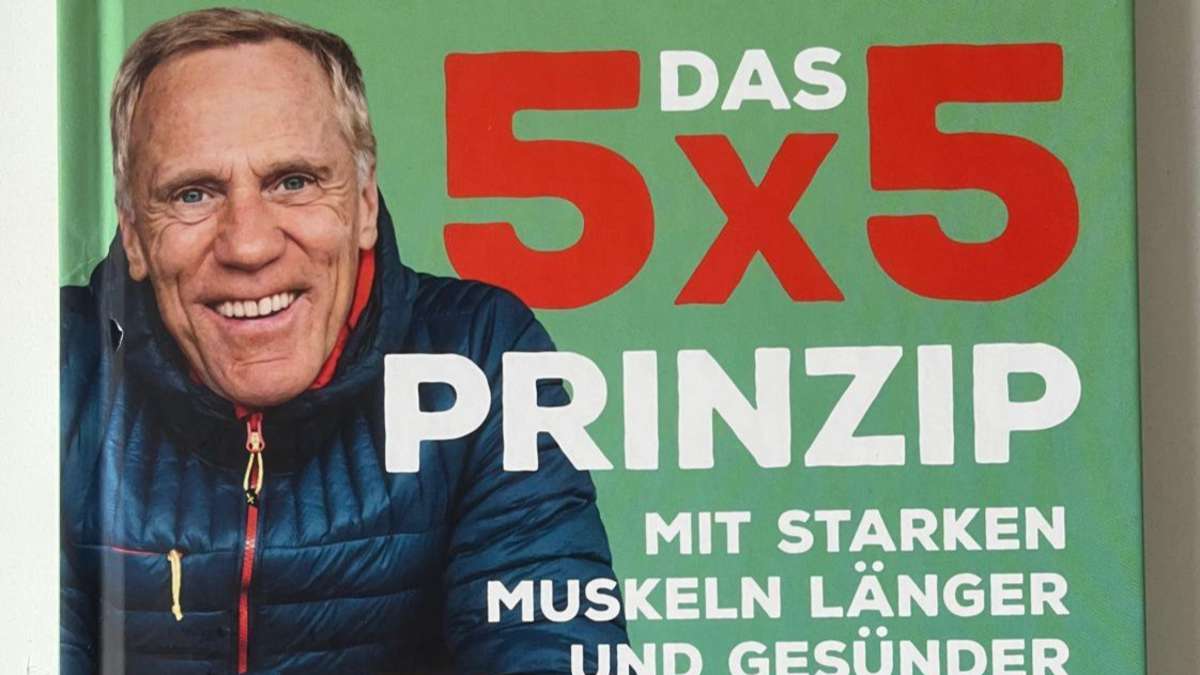
Germany’s ‘fitness guru’, Prof. Dr Ingo Froböse of the German Sport University Cologne, has written a bestseller about this underestimated organ: ‘Muscles’ – not without good reason, to highlight how important consistent muscle training is for quality of life. Prof. Dr Ingo Froböse’s SPIEGEL bestseller on the subject of muscles is entitled ‘Muscles – the Health-Boosters: How to Stay Fit, Slim and Mentally Balanced’“.
In his book *Muscles – The Health-Boosters*, Prof. Dr Ingo Froböse dispels the misconception that muscles are only there for aesthetic reasons or for the sake of movement. The key messages of the book can be summarised in the following central theses: [1, 2, 3]
| Key message | Details and background information according to Froböse |
| The largest metabolic organ | Skeletal muscle is not just tissue; it is the body’s largest metabolic organ. It plays a key role in regulating fat and sugar metabolism, as well as the immune system. |
| The ‘Myokine Pharmacy’ | When we exercise, our muscles release hormone-like messenger substances known as myokines. These have anti-inflammatory effects, protect our organs and even boost mental well-being and brain function. |
| Muscle loss as a trigger for disease | The natural loss of muscle mass in the second half of life is not inevitable, but depends on how much the muscles are used. From the age of 60 onwards, insufficient muscle mass is considered the main cause of lifestyle-related diseases such as diabetes, heart attacks and obesity. |
| Slim through muscle | Anyone who tries to lose fat by starving themselves loses muscle mass and risks the yo-yo effect. Greater muscle mass permanently increases your basal metabolic rate, meaning your body burns more energy even when at rest. |
| Measurable benchmarks | A healthy body should consist largely of muscle. Froböse cites target values of 25–30 per cent muscle mass for women and 35–40 per cent for men, relative to total body weight. |
Back to push-ups: Tip: Instead of setting your sights too high, you should take the advice of sports physician Tobias Weigl to heart and start with a routine of 30 push-ups a day. For example, 15 before brushing your teeth in the morning and 15 in the evening. Tips on how to do push-ups correctly can be found in the clips below. Push-ups are most effective when performed with proper form and at a slow pace. You should stop just 1–2 repetitions before muscle failure to achieve the greatest benefit. Important: Keep your arms pointing backwards in an arrow shape; this protects your shoulder joints.
Can’t do a proper push-up yet? Rest your hands on a table, bench or at handlebar height. Once this becomes easy, move your hands lower. Quality beats quantity: keep your body straight, your core tight, and don’t let your elbows splay out too far. Eight good repetitions are better than twenty that require help.
Core training does not mean torturing your stomach every day. The core is designed to transfer force and stabilise unwanted movement. That is why pushing, pulling, side planks and hip work all go hand in hand.
The conclusion: A cyclist needs a strong heart and strong legs. A good cyclist uses the rest of their body as well. If you set aside twelve minutes twice a week, you’ll sit more securely in the saddle, feel more confident off-road – and finally turn good endurance into all-round fitness.

Dimitri Lehner
Editor