


Losing weight through cycling?: Why the right diet is more important than clocking up the kilometres
Tim Farin
· 02.06.2026


Anyone looking to lose weight or achieve a healthy body weight quickly turns their thoughts to exercise. But the issues involved are more complex than that. One thing is certain: too little energy is detrimental to performance and health.
You come across this line of thinking quite often: someone wants to lose weight – and, alongside a diet, exercise is also brought into the equation as a key means to this end. This applies particularly to cycling, which also has to do with the appearance of professional cyclists: The image of MTB riders, gravel bikers and road racers is that of ascetic, sinewy athletes. This creates expectations, and sometimes even hopes. However, there is a misconception that needs to be corrected. Exercise, including cycling, is not a strategy for rapid weight loss!
First and foremost, it’s about eating habits
This has been scientifically proven and can be explained, first and foremost, by the fact that the energy expenditure involved in cycling is rather unfavourable when compared to the energy density of, for example, sweets. If you want to ‘burn off’ 100 grams of chocolate, you’d have to cycle at a brisk pace for at least an hour (roughly estimated). “We’ve lost touch with how much energy is contained in food and how much we’d actually have to exercise to burn it off,” said Christine Joisten from the German Sport University, speaking to *Apotheken Umschau*. It is also a fact that overeating is a far greater factor in being overweight than a lack of exercise. And: “Whilst exercise does support weight loss, eating habits are more crucial to success,” said Joisten. And, as a general rule, people who build muscle tend to gain rather than lose weight. But that is by no means unhealthy – quite the opposite, in fact.

So is cycling pointless when it comes to weight? No: it’s a matter of perspective. It is important to make a scientific distinction between weight loss and weight management. This is because a long-term healthy strategy does not focus primarily on losing kilograms, but rather on avoiding significant fluctuations in weight and building a healthy body composition.
Why cycling is good for weight management
Cycling is gentle on the joints, so it is also suitable for people who are heavier and can be done without any health risks. It can be incorporated into daily life (commuting), can be done in all weather conditions (some cycle in the rain, others on a trainer or exercise bike) and – this is probably the most important point – most of us simply enjoy it. If you enjoy something, you’ll stick with it. Consistency is the key to long-term weight management: small, sustainable changes to your diet and exercise routine. No crash diets, no 20-hour training weeks.
What’s more, regular cycling helps optimise your body composition: muscle mass increases, fat mass decreases, and your metabolism becomes more efficient. A comprehensive review published in 2022 showed that the combination of endurance and strength training has the greatest effect on cardiovascular and metabolic parameters – including body composition. Endurance training at varying intensities (which is exactly what we do on a bike) came in a close second.
The dangerous fallacy: eat less, cycle more
However, this isn’t just a matter of eating a little more or less; it’s about genuine health consequences and a decline in physical performance. The following line of thinking is relatively common: ‘I cycle a lot and eat very little, so I’ll lose weight.’ We’re familiar with this line of thinking from running and gym contexts too. But this can not only undermine your training progress – it can also cause damage to your health.
Coach Andrea Jeschke from the ‘Asphalt und Köpfchen’ network of experts describes two cases that clearly illustrate this. Firstly, there was a young woman who was preparing for an ultra-distance event. Her training had come to a complete standstill. During our conversation, it emerged that she had lost ten kilos over two years – she was under 1.60 m tall and now weighed less than 50 kilos. She had not had a period for two years. This is a typical sign of RED-S (Relative Energy Deficit in Sport) – a syndrome in which the body chronically receives too little energy and shuts down non-vital functions.
The second case: a man in his mid-30s, a commuter who cycled to work for nearly an hour every day. His goal: significant weight loss. His method: cycling on an empty stomach in the morning, often doing intense sessions, then keeping going until lunchtime. “Completely the wrong approach,” says Jeschke. Because if you starve yourself yet still train intensively, you put your body into a ‘survival mode’ that actually tends to block fat loss.
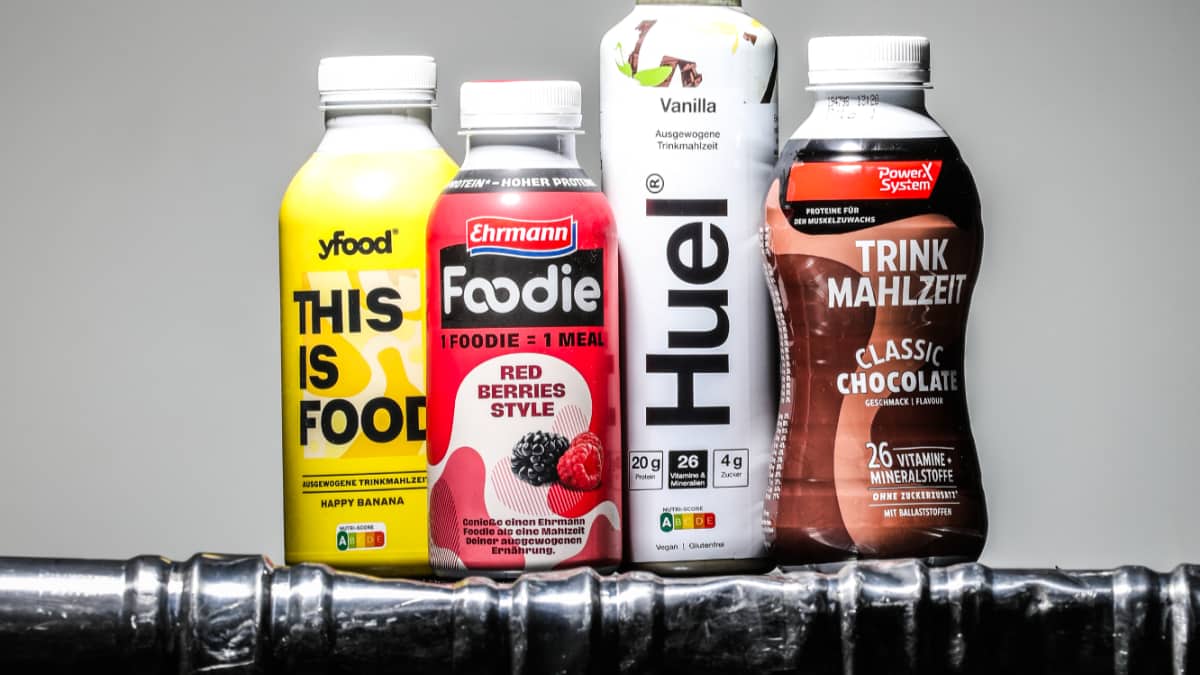
Together with our sports nutrition expert Katja Mangold, Jeschke optimised his diet: breakfast before his ride, snacks on the go, and a recovery shake afterwards. The result? At our next meeting, he reported that he had lost ten kilos, even though he was eating significantly more.
The bottom line in both cases is this: anyone who doesn’t eat enough when doing sport is doing themselves a disservice. They are either putting their health at risk or preventing themselves from improving their performance – and, thanks to the body’s ‘survival mode’, they don’t even lose weight. Incidentally, this isn’t a given even in professional sport. There, experts have to check time and again whether the riders have met their energy requirements – in terms of calories, not micronutrients. Even among the pros, the primary focus is on macronutrient intake and energy balance, not on exotic supplements.
How cycling can help you maintain a healthy weight
- Body composition rather than the scales: Muscle weighs more than fat. If you cycle regularly and do strength training, you’ll transform your body – without the number on the scales going down. Your body will therefore become healthier, your basal metabolic rate will increase, and so will your protection against future fat accumulation.
- Variety beats monotony: Long endurance sessions, short intervals, hill work, shuttle runs – by varying your rides, you activate different energy systems and avoid plateauing.
- Food as part of training: Have a main meal before your ride, refuel during the ride (after about 60–90 minutes), then have another main meal afterwards with plenty of protein and carbohydrates. Anyone who ‘rushes through’ their training on an empty stomach risks overeating in the evening – or worse.
If you want to lose weight, you can still achieve this through a calorie deficit – but the deficit shouldn’t be created solely through exercise; instead, it should be managed through your overall daily diet. You should also proceed with caution here; if you exercise regularly, you should only reduce a relatively small proportion of your basal metabolic rate. And, once again: avoid a calorie deficit whilst exercising, as this can hinder your progress.
The afterburn effect is significant, as is the improved metabolic efficiency (our training increases mitochondrial density): in the long term, this means better energy utilisation.
- Complementing strength training: 2–3 sessions a week. More muscle mass = higher basal metabolic rate = more flexibility with your diet. You can do this at home too; you don’t need much.
- Don’t neglect your sleep: At least seven hours. Poor sleep has been shown to undermine any weight management strategy (International Journal of Obesity, 2020).
- Taking low energy levels seriously: A missed period, persistent tiredness, or a plateau in performance despite training – these are warning signs. Talk to your doctor.
The conclusion
Cycling isn’t a weight-loss tool – it’s a health tool. If you want to manage your weight in the long term, cycling is the ideal partner: it’s gentle on the joints, suitable for everyday use, and adaptable to everything from commuting to crossing the Alps. But only if your energy balance is right. It’s not about ‘eating less and cycling more’ – but ‘eating right and cycling smart’. That’s the formula the pros use too. And it works for us as well.


Tim Farin
Editor