




Co-author/expert: PD Dr Daniel A. Bizjak
Alongside running, cycling is the most popular form of exercise amongst the general public for improving cardiovascular fitness. The advantage over running is that it puts less strain on the joints – particularly in the legs – as there is no weight-bearing component.
However, there is a catch. Anyone who limits their physical activity exclusively to cycling may be missing out on important training stimuli for building bone structure. This is often not the case for frequent runners. However, depending on their running shoes, the intensity of their training, their weight and the surface they run on, they may well develop problems with their knees and other joints.
What does this sport have to do with bone density?
Bone tissue adapts to mechanical stress, and weight-bearing activities in particular are important stimuli for bone formation. Consequently, some studies show that athletes who take part in high-impact sports have higher bone density than non-athletes, whilst those who participate in non-weight-bearing sports such as cycling often have lower bone density levels.
This is quite evident in elite athletes. Several cross-sectional studies (measurements taken at a single point in time) have found lower bone density in competitive cyclists compared with runners or physically active control groups. For example, research carried out by one research group showed significantly lower bone density throughout the body and in the lumbar spine among athletes involved in non-weight-bearing sports compared with those involved in weight-bearing sports such as running, as well as a significantly higher prevalence of osteopenia (a precursor to osteoporosis).

Significant decline in the number of cyclists aged 35 and over
Findings from longitudinal studies (measurements taken at several points in time) also suggest that these differences may become more pronounced over time; in a small study, the research team led by Nichols and Rauh, amongst others, found greater declines in bone density over a seven-year period among cyclists aged over 35 compared with non-athletes.
Among professionals, who not only train very ambitiously but also earn their living from it, the effects are even more pronounced: recent research suggests that even a single competitive season in professional cycling can have a negative impact on bone density and bone mineral content. As maximum bone density is generally reached by the age of 30 on average, and further natural bone build-up is unlikely to occur thereafter, caution is advised here to avoid osteoporosis or an increased risk of (fatigue) fractures later in life.
Professional cyclists fall regularly – in the peloton, on descents, in wet conditions. If someone already has reduced bone density as a result of years of cycling exclusively (particularly in the spine and hips), their bones are more likely to break in a fall than those of someone with normal or high bone density.
What do the studies mean for amateur sportspeople?
Firstly: The studies focus on people who spend a great deal of time on their bikes. And don’t panic: there are effective measures for frequent cyclists, even without having to become a gymnast (who often have relatively high bone density levels). Countermeasures include strength training, sports or exercises involving jumping, and cross-training. Cross-training means specifically incorporating other sports or forms of exercise to complement your main sport (in this case, cycling). So feel free to regularly incorporate running sessions and/or strength training into your training plan – provided your health allows it. These are suitable for maintaining bone health in cyclists. In general, however, the same principles apply here: ensure you’re getting enough energy, don’t overdo it (if you’re not a professional, you don’t need to train like one) and simply give an alternative sport a go. It’s also important to ensure an adequate intake of calcium. That way, your skeleton won’t let you down, even in old age.
How much does this affect you?
If you cycle for three to five hours a week and also go for the occasional walk, climb stairs or do some gardening – then you’re already providing your bones with some stimulation. The World Health Organisation also recommends strength training on at least two days a week. The risk of training in an unbalanced way is particularly relevant for ‘single-sport’ athletes: people who cycle almost exclusively, train for long periods and spend a lot of time sitting in between (office job). The more hours spent in the saddle and the less other physical activity you do, the more relevant this issue becomes.
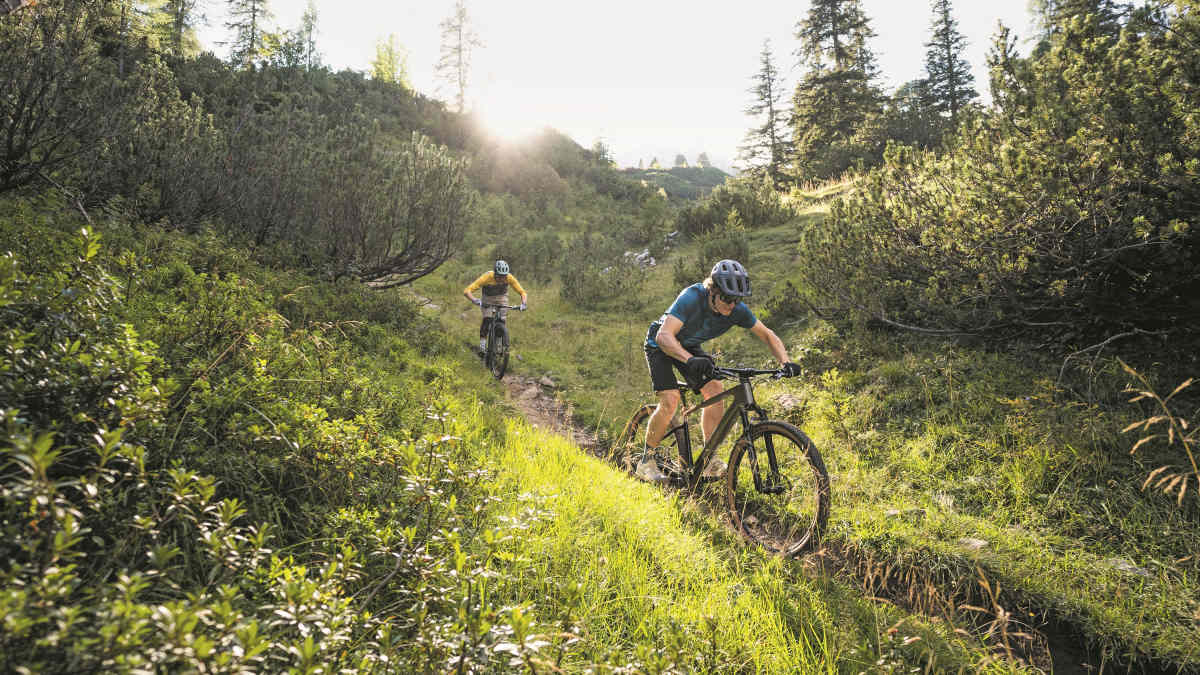
Whether mountain biking mitigates this effect has not been conclusively established by science. An older, small-scale study found that cross-country mountain bikers had higher bone density than road cyclists – presumably due to impact loads and vibrations on uneven terrain, as well as standing on the pedals more frequently. However, a more recent study was unable to confirm this benefit in the lumbar spine: in this area, both road cyclists and mountain bikers scored below the level of an untrained control group. No data is currently available for recreational mountain bikers, women or other disciplines such as downhill or enduro.
Three rules of thumb for you
Do you cycle for less than six hours a week and do other sports as well? Just make sure you eat a healthy, balanced diet and, in line with WHO recommendations, try to do strength training on at least two days a week. Just keep it varied.
Do you cycle for more than this number of hours a week and otherwise do little exercise or weight training? If so, make sure to include at least two strength training sessions a week. For example, lunges, squats and jumps. Also, make sure you eat a healthy and balanced diet.
Are you over 50 and have you been cycling almost exclusively for decades? If so, bring up the subject of bone density at your next check-up with your doctor. A DXA scan can provide clarity if necessary.
Expert analysis: How different sports affect bone density
High-intensity, high-impact sports (gymnastics, basketball, football, volleyball): maximum bone density. High levels of impact from various directions promote bone formation particularly effectively.
Low-impact endurance sports (running, walking, cross-country skiing): moderate benefits. With every movement, your own body weight puts stress on your bones. Runners have significantly higher bone density than cyclists.
Low-impact endurance sports (cycling, swimming): minimal stress on the skeleton, minimal stimulation of the bones. Competitive cyclists often show reduced bone density in the lumbar spine and hips.
Elite road cycling: high prevalence of low bone density. Long training sessions spent in a seated position provide the bones with little stimulus for growth.
Long-term exposure to cycling: Among keen cyclists aged 35 and over, bone density may continue to decline over the years
Daniel advises: What you can do for your bones
Please note! You should always consult your GP beforehand to discuss whether these measures are suitable for you as an individual or if there are any reasons why you should not follow them, particularly if you have any medical conditions!
Strength training: Muscle contractions place mechanical stress on the bones and stimulate bone growth. Studies show higher bone density in the spine and hips among cyclists who do strength training.
Jumping training (plyometrics): High impact loads stimulate bone formation. Even short jumping sessions significantly increased bone mass in cyclists.
Cross-training with other suitable sports: for example, running, walking, ball sports – any additional physical exertion using your own body weight provides the kind of stimulation that cycling lacks.
Eat enough: calcium and, above all, enough calories. If you don’t eat enough, you’re making it easier for your body to break down muscle – regardless of how much you train.



Tim Farin
Editor