


In this article, we use so-called affiliate links. With every purchase through these links, we receive a commission from the merchant. All relevant referral links are marked with . Learn more.
As the days grow shorter, temperatures drop and the streets are shrouded in damp greyness, road cyclists and gravel enthusiasts face a fundamental decision: head to the warmth of the living room and hop on the smart trainer, or brave the wind and weather on local trails? Both worlds have undergone a technical revolution in recent years. But which option offers the most efficient training, is easy on the wallet and keeps you motivated throughout the dark months?
Our conclusion: It’s all in the mix
Neither the roller nor the winter ride takes the crown on its own. For targeted interval training during the week, the smart trainer is unbeatable in terms of efficiency. However, to maintain mental freshness, ensure you don’t lose your riding technique and experience that genuine cycling sensation, a long, leisurely ride outdoors at the weekend remains irreplaceable. The best winter strategy is therefore often a hybrid approach.
Power-focused or weatherproof: where do you train more effectively?The winter blues or cabin fever: what keeps you in good spirits?
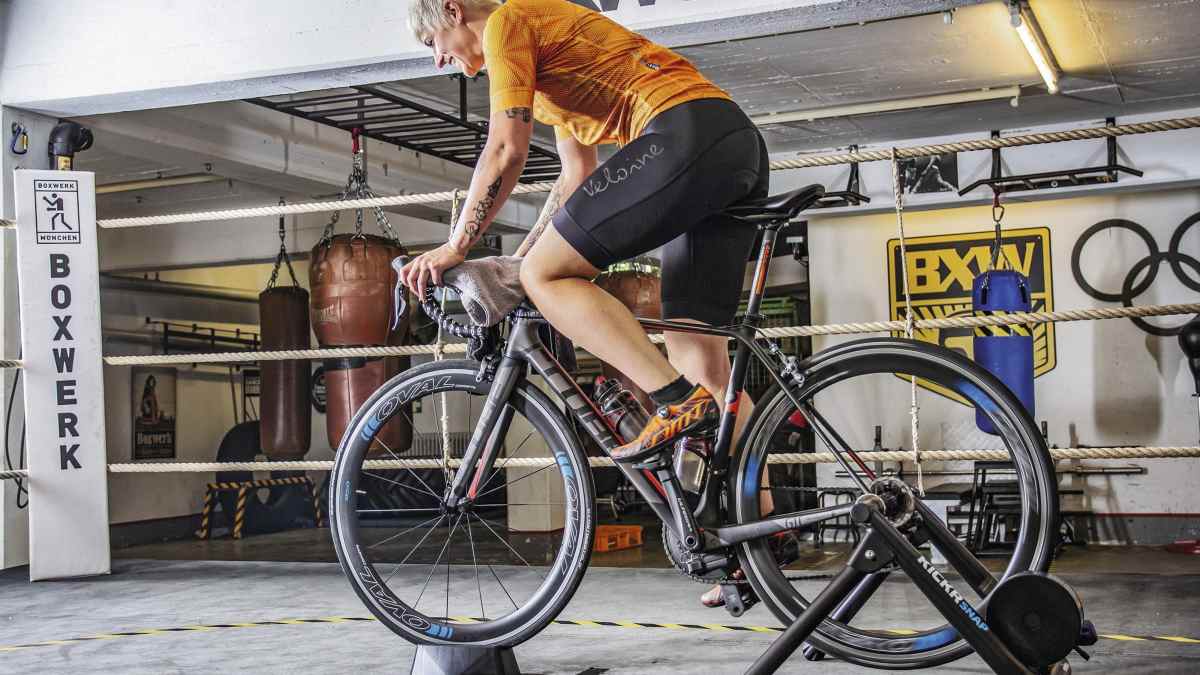
When it comes to training control, the trainer has revolutionised winter cycling. On platforms such as Zwift, TrainerRoad or Rouvy, every interval session can be controlled down to the watt – without red lights, distracting traffic or sudden patches of black ice. What’s more, there’s no free-wheel torque: 90 minutes on a smart trainer often equates to two hours on the road, thanks to the continuous chain tension.
Outdoor enthusiasts, on the other hand, excel when it comes to the overall experience and riding technique. Anyone who rides a gravel bike in winter over slippery leaves, mud or snow trains their reflexes, core stability and cornering technique. On a trainer, the physical aspects of cycling are largely lost; movements become rigid, which over time can place different strains on tendons and joints.
When it comes to time management, the indoor trainer is undoubtedly the winner: get changed, set up the bike, launch the app – and within five minutes you’re in the saddle. There’s no need for the faff of putting on layers of clothing for multi-day rides, nor for spending hours cleaning a bike corroded by road salt.

The winter blues or cabin fever: what keeps you in good spirits?
The cold, fresh air is good for the soul and boosts the immune system – provided you dress in layers and avoid getting chilled during breaks. Daylight is also an effective remedy for the winter blues.
Indoors, there are other pitfalls: without powerful fans, there is a risk of the body overheating, which artificially raises the heart rate and reduces performance. Psychologically, the role is a double-edged sword: gamification elements, virtual rides and races are great fun, but they require mental resilience to cope with the monotonous backdrop. Outdoors, every ride is an adventure, but it takes a bit of effort to look out of the window.
Thermojacket Trainer subscription: Which costs more?
The assumption that outdoor cycling is free and indoor cycling is expensive is too simplistic. A detailed look at the initial and running costs reveals a more nuanced picture.
| Initial purchase | 400–1,200 euros (direct-drive smart trainer) | 300–700 euros (high-quality winter clothing) |
| Accessories & Peripherals | 100–300 euros (powerful fan, sweat guard, mat) | 200–500 euros (lights, mudguards, winter tyres) |
| Ongoing costs (per annum) | 150–240 euros (software subscriptions such as Zwift) | 100–250 euros (wear and tear caused by salt and dirt: chain, brake pads) |
| Total costs (Year 1) | approx. 650–1,740 euros | approx. 600–1,450 euros |
Conclusion: Costs: The initial investment costs are surprisingly balanced. Whilst the technology indoors is costly, outdoors it is the combination of functional clothing, safety equipment (lights) and increased wear and tear on materials that adds up.
4. A comparison of the pros and cons
Pro Indoor
- Maximum time efficiency: No need to get ready, get dressed or clean your bike.
- Perfect training control: Precise wattage intervals without any interruptions caused by traffic.
- Safety: No risk from black ice, darkness or road traffic accidents.
Contra Indoor
- Heat build-up & sweat: High thermal stress without a natural draught.
- Monotonicity: Despite virtual worlds, the real sense of nature and the thrill of driving are missing.
- Recurring fixed costs: Monthly subscription fees for training platforms.
Pro Outdoor
- Nature & the Immune System: Fresh air, serotonin release triggered by daylight, and hardening.
- Handling & Chassis: Training in balance and bike control on slippery surfaces.
- No subscriptions: There are no fixed monthly charges once the equipment has been purchased.
Contra Outdoor
- High maintenance: Road salt and mud mean you need to give your car a thorough clean after every journey.
- Risk of catching a cold: If you’re not dressed appropriately or break down in the cold, you risk getting chilled very quickly.
- Security risks: Poor visibility and slippery roads.
5. The equipment list
Indoor: Hardware
- Direct-drive smart trainers (e.g. Wahoo KICKR, Tacx NEO)
- Underlay mat (Sound insulation and floor protection)
- Sweat-proof mesh for the bicycle frame
Indoors: Climate & Comfort
Indoors: Digital
- Tablet, PC or Apple TV with a stable internet connection
- Chest strap for heart rate monitoring (Bluetooth/ANT+)
Outdoor: Clothing
- Thermal functional undershirt (Merino wool recommended)
- Windproof softshell winter jacket and padded cycling tights (bib tights)
- Waterproof and windproof overshoes (or special winter shoes)
- Lobster gloves as well as windproof helmet cap
Outdoor: Hardware
- High-performance StVZO-compliant battery-powered light (at least 80 lux at the front, bright rear light)
- Clip-on mudguards (e.g. SKS Speedrocker for gravel)
- Wider, high-tread winter tyres with puncture protection (tubeless where applicable)

Josh Welz
Editor-in-Chief