


Kinesio tape in cycling: What are the real benefits of these colourful strips?
Tim Farin
· 13.08.2026


In this article, we use so-called affiliate links. With every purchase through these links, we receive a commission from the merchant. All relevant referral links are marked with . Learn more.
The colourful adhesive strips have become an integral part of cycling. Sports medicine specialist Dr Lutz Graumann uses them in his daily work, though exclusively as part of a comprehensive treatment plan. He is opposed to their use in isolation.
Mechanism of action and research evidence
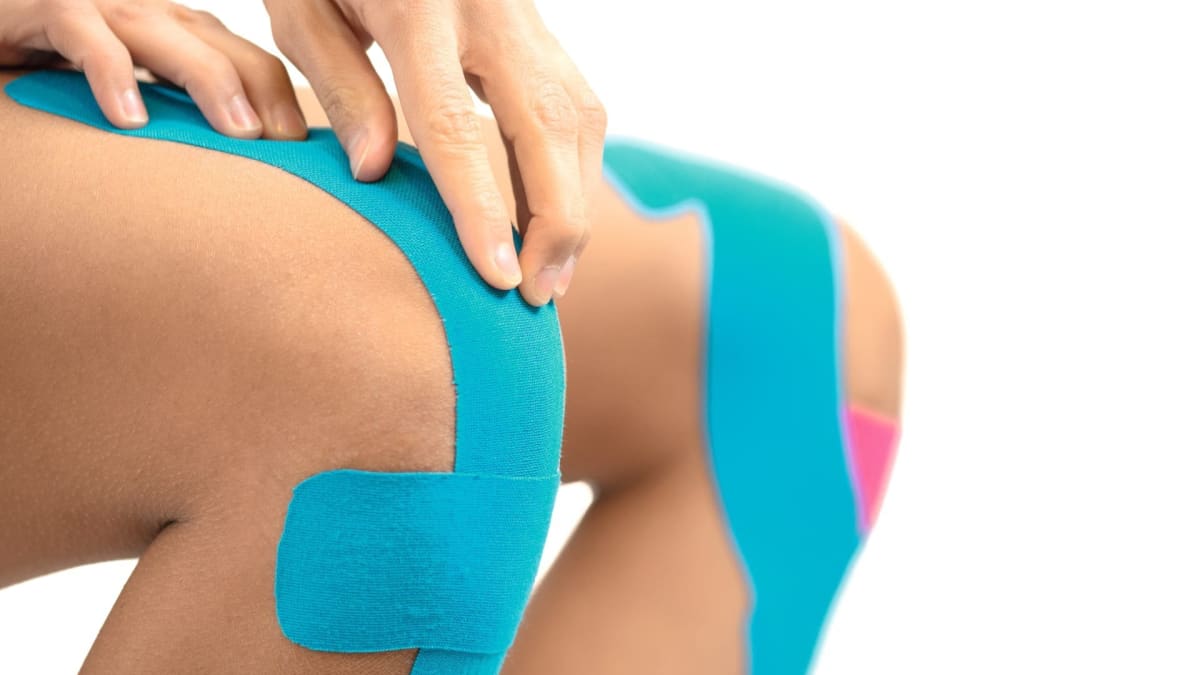
The elastic band is designed to create a kind of micro-massage in the tissue, thereby stimulating blood circulation and metabolism. The theory behind this is that movement stimuli are transmitted to the brain via skin receptors more quickly than pain stimuli, and thus override them. This mechanism has not yet been scientifically proven. A comprehensive review from China analysed 128 studies. The findings are sobering: an effect on pain and mobility is possible, but remains minimal and is short-lived.
Use whilst cycling
For cyclists, the tape can help make tension in the neck, lower back or knee more bearable during a ride. However, Graumann emphasises: first identify the cause. Applying tape to unexplained pain is like covering up a warning light. If there is no effect after 48 hours, the tape should be removed. The colour is irrelevant – the original tapes were all white. The Tape It remains a tool in your kit, but is no substitute for a professional bike fitting, mobility training or a visit to the doctor.



Tim Farin
Editor
