


A common problem among bikers: Lean forward! Why you need pressure on the front wheel.
Laurin Lehner
· 27.07.2026

Leaning back instead of forward. “That’s perfectly natural,” says riding technique guru Stefan Herrmann. It’s a classic defensive reaction. When things get dangerous, you instinctively move backwards. Cyclists know, however, that attack is the best form of defence. Determination counts for a lot, especially on tricky sections.
If you’re leaning too far back, you’ll lose control due to a lack of traction on the front tyre and an inability to make compensatory movements because your arms are outstretched. This means the likelihood of a crash increases dramatically. Only by sitting centrally on the bike and applying pressure to the front tyre can you control it.
That’s easier said than done. You can’t just switch off that kind of instinct at the flick of a switch. Expert Herrmann advises: “Keep reminding yourself: ‘Move forward.’ Many cyclists tend to do this, especially on bends.” Note: Your chin should hover above the stem – only then is your body positioned centrally on the bike.

Interview with Stefan Herrmann: “It’s instinct”


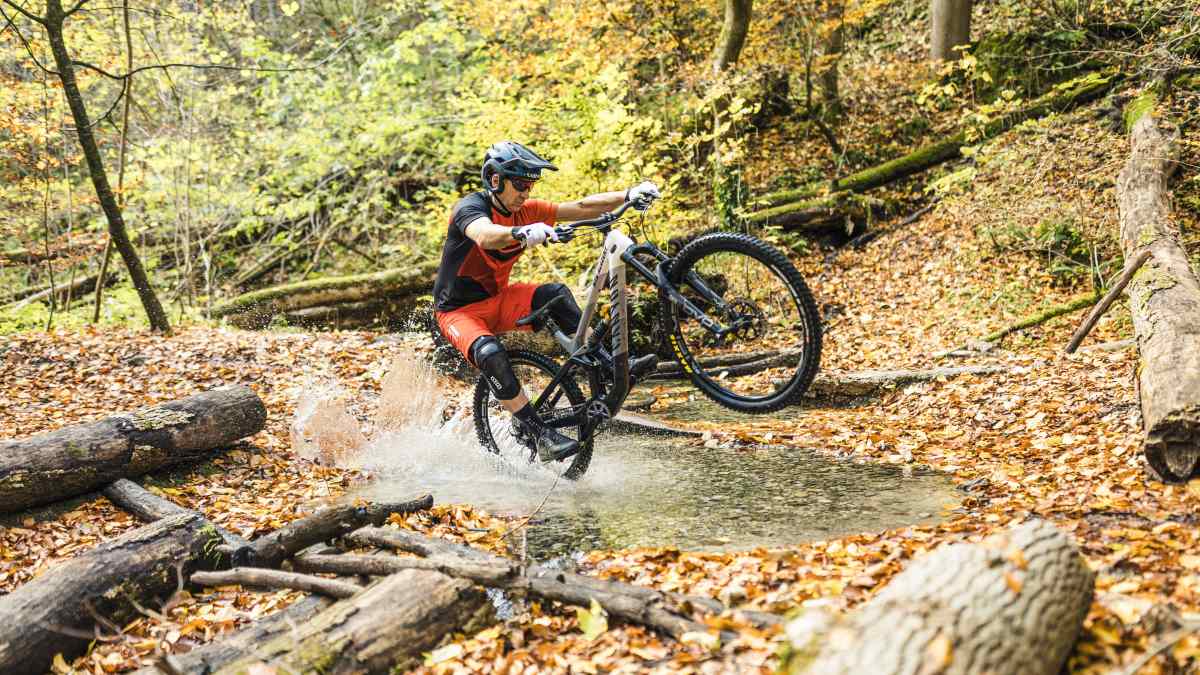
Extreme. Especially on bends and tricky sections. It’s an instinct – when fear sets in, you swerve backwards. Your brain thinks it’s safer. But it isn’t. Everyone wants to Wheelies learn, Move the rear wheel, Yet that is actually the technique one should learn first and foremost.
What can be done about it?
Ride more slowly. Choose easier routes. Stay in the middle of the track. Relaxation takes precedence over distance. That sounds rather dull. Surely the appeal lies in riding fast. That may be true, but the problem is that people want to do too much in too little time. That’s simply unrealistic. All learning processes take time – in other words, repetition. And then people see clips of the pros and think, ‘Easy, I can do that too’ – but that’s just not the case. The pros have perfected it. Their movements look minimalist, but they’re highly efficient. Many people underestimate that.
So, should you learn how to position your body first before attempting any real manoeuvres?
Exactly. I have to rein people in and tell them: if you really want to improve, slow down and ride smoothly – the speed will come naturally. Why is pressure on the front wheel so important? In a bend, you need pressure on the front wheel so that it guides you over bumps. And so that your arms can work in the same direction of movement – effectively as an extension of the suspension fork – and provide optimal support. If you lean back, your torso shifts out of position. But your weight must remain over the suspension wheels. In other words: over the front wheel.
And what if you’re lagging behind?
Then you lose control precisely when you need it most. Do people believe you when you say ‘slow down’? Very few do straight away. It only really clicks after you’ve said it a certain number of times. But then the movement becomes second nature – and that’s healthier. Fall prevention included.
You’ve got an interesting theory about female drivers...
Yes. Women tend to lean even more towards the rear. My theory is that they don’t want to lag behind their husbands, and don’t want to be seen as a hindrance. So they just make sure they get down the slope somehow – and that ends up compromising their technique.
And what about experienced drivers? Surely they can’t get it wrong?
Actually, yes. I have two regular customers who’ve been cycling together for 15 years. One is very aggressive, the other rather cautious. The cautious one’s technique is significantly better. Because he takes his time. He allows his muscles to develop at their own pace. No rushing. Can even someone who’s been cycling for years have poor posture? Absolutely. If you do it wrong for years on end, it becomes your personal norm. You don’t even notice it anymore.
What’s your specific tip?
Ride slowly and carefully through technical sections. And as you do so, focus on the inner surfaces – when the front wheel crosses a root, or when the ground gets a bit stony or loose. This lays the foundations for later, when things really get going. If you can sense this, you’ll be ready to make the necessary adjustments.

Laurin Lehner
Editor