


Road bike vs. gravel bike: Where a gravel bike is slower than a road bike - and where not
Maik Schröder
· 06.06.2026

A gravel bike can even be the better - and sometimes faster - choice under certain conditions. It depends on where you ride and how the bike is used. We have worked out a few points where the gravel bike actually comes out on top.
Why is the road bike considered faster?
The classic road bike was developed for speed on smooth tarmac. It is lightweight, aerodynamically built and has narrow tyres with low rolling resistance. On perfect roads and with a sporty riding style, the racing bike is therefore usually ahead.
The road bike shows its advantages especially on long tarmac routes, high average speeds, races or fast training rides and flat roads without many obstacles. If you are only travelling on good asphalt and want to go as fast as possible, you will usually reach higher speeds on a road bike.
Why a gravel bike can still often be faster
In real life, however, roads don't always look perfect. Bad tarmac, cobblestones, country lanes or forest passages quickly cost speed - and nerves - on a road bike. This is where the gravel bike comes into play.

Thanks to wider tyres, more comfort and better control, you can often ride consistently for longer on a gravel bike. Instead of constantly braking or dodging potholes, the bike rolls on confidently. This means that although a gravel bike is theoretically a little slower, in practice it can often give you a better cut.
When a gravel bike can be faster
1. on bad roads
As soon as the tarmac becomes bumpy, the road bike loses some of its advantage. The narrow, hard-packed tyres transmit bumps more strongly, which often slows riders down.
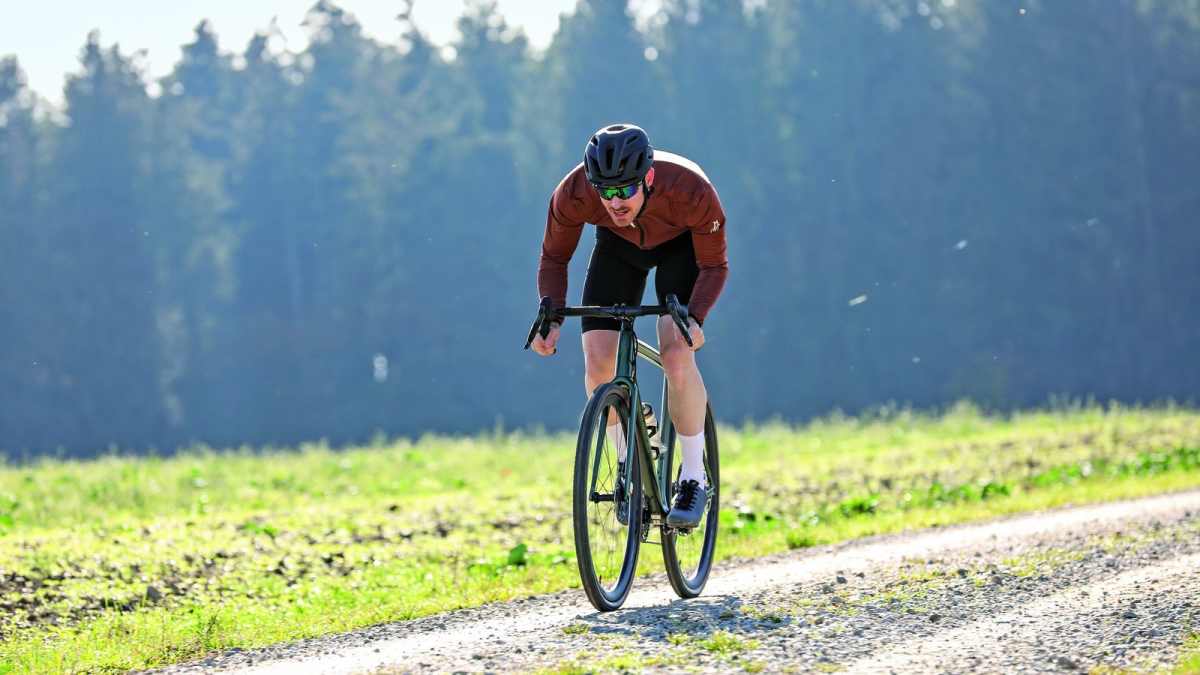
A gravel bike glides much more relaxed over bad country roads, cobblestones, cracks and potholes and gravel paths. As a result, the speed often remains more constant.
2. on mixed routes
Many tours today do not only consist of tarmac. Field paths, forest tracks or gravel passages are often included. With a road bike, you often have to ride carefully or even dismount. A gravel bike can easily master such sections - and thus saves time. Gravel bikes are often more efficient on bikepacking tours or long rides with varying surfaces.
3. for long journeys
Comfort plays a bigger role than many people think. Anyone who sits in the saddle for several hours will quickly notice the difference. The more relaxed riding position and wider tyres of a gravel bike ensure that riders tire less. This can mean that you stay faster over longer distances, even though your top speed is lower.
4. in bad weather
Rain, wet roads or dirt often make a road bike more difficult to control. A gravel bike offers more grip and safety thanks to its wider tyres. This means: less braking, more confidence when cornering and often a smoother pace.
When the road bike is clearly faster
Of course, there are situations in which the road bike clearly wins. Especially on smooth tarmac, at high speeds, on sporty group rides or races and on long, flat roads. This is where weight, aerodynamics and the narrow tyres make the difference. A trained rider will almost always be faster on tarmac with a road bike than with a gravel bike.
The biggest difference: versatility
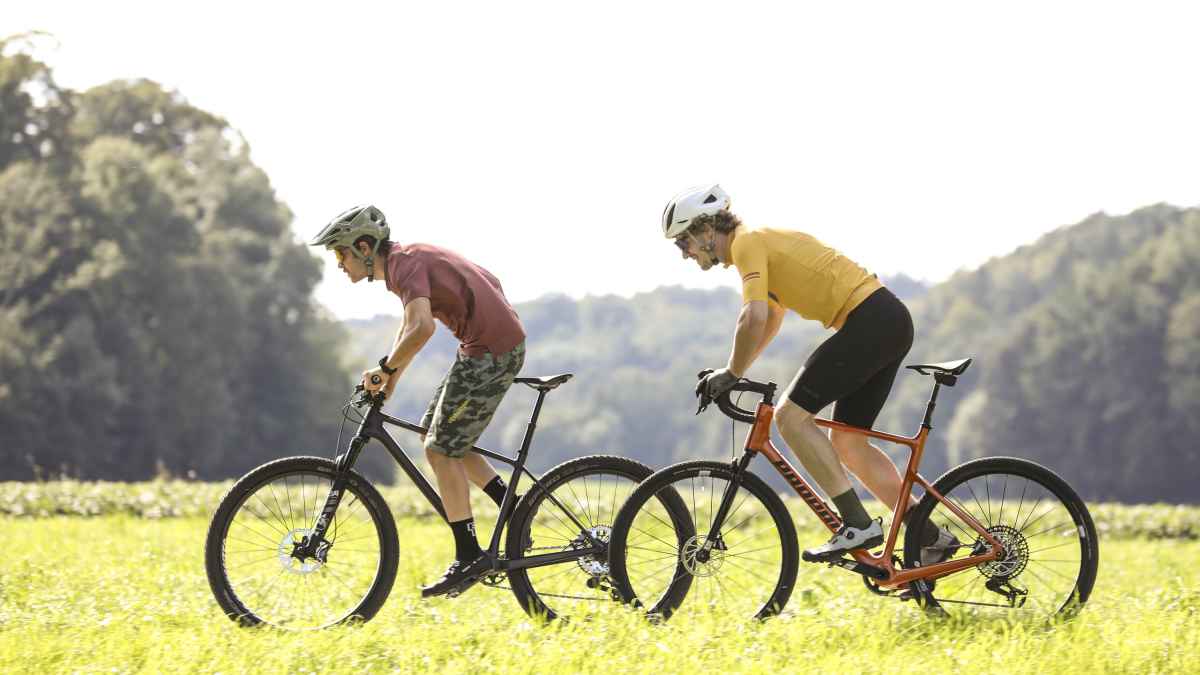
Compared to the road bike, the gravel bike is something of an all-rounder. It is fast enough for the road, but can also cope with bad roads. The road bike, on the other hand, is specialised - and that is precisely where its strength lies. You could say that the road bike is the sports bike for maximum speed on tarmac. In comparison, the gravel bike is the more flexible adventure bike for almost any route.
Conclusion: Is a gravel bike slower?
Yes - a road bike is usually faster on perfect tarmac. But: In real everyday life, things often look different. As soon as roads get worse, routes are more varied or comfort plays a greater role, a gravel bike can even be the faster and more efficient choice.
For many hobby riders, it is therefore less important which bike is theoretically faster - but which bike they ride longer, more relaxed and more often. And this is exactly where the gravel bike scores.

Maik Schröder
Editor