


Interview with Steffi Marth: You said: “You didn’t have to have children, after all”
Laurin Lehner
· 21.09.2026

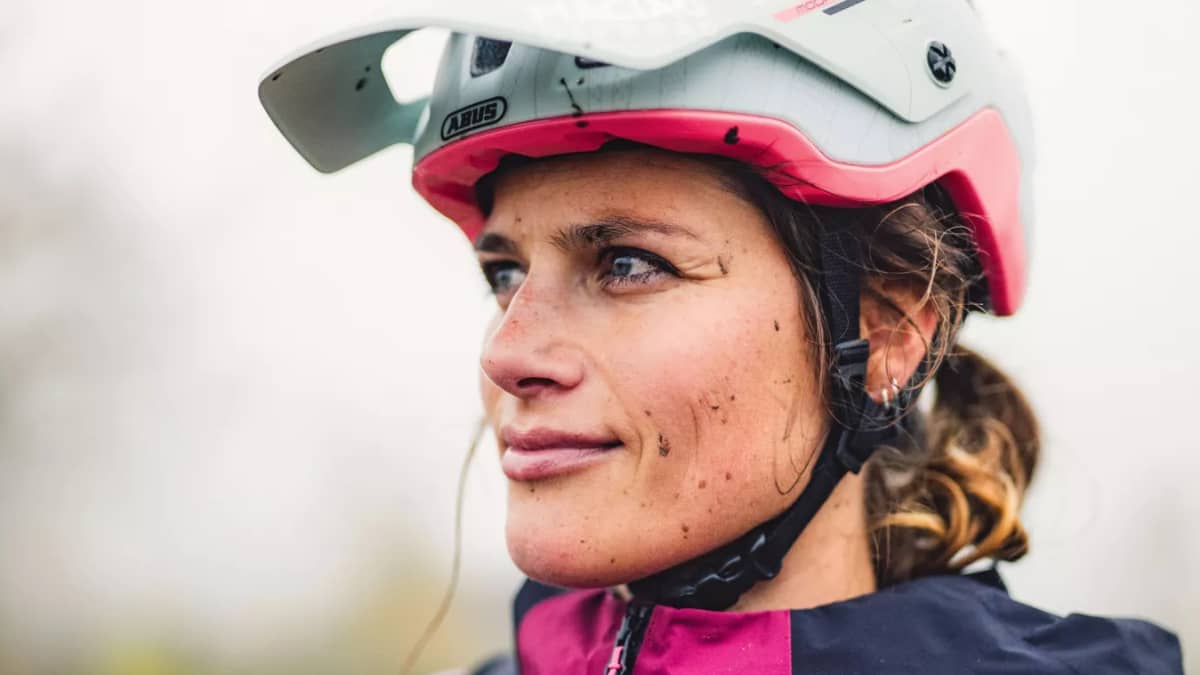
Steffi Marth is one of Germany’s best-known female mountain bikers. After her racing career, the five-time German Fourcross champion travelled the world as a freerider. With her open and approachable nature, she has made a name for herself in the MTB scene – not only as an athlete, but also as someone who inspires others to take up the sport. Steffi is now a mum of two.
Interview with Steffi Marth

BIKE: Steffi, you spent years travelling round the world for your sponsor, then you became a mum and suddenly everything changed. Do you still consider yourself a professional cyclist?
Steffi: Yes, as long as I’m earning my living from it, I suppose I’m still a professional cyclist. I’ve never had any other job. But yes, it was really tough for a while. I had to completely reorient myself. And the contrast between always being on the road and suddenly being stuck at home was stark.
What do you mean by ‘realign’?

There were partners who took the attitude: ‘I get something, I give something.’ And when the first child came along, everyone went along with it to some extent – ‘Oh yes, cool, a family, lovely.’ But by the time the second child came along, things had really gone downhill.
That was probably because you can no longer provide the quid pro quo.
At first glance, that makes sense. For me, my relationship with my professional partners has always been, to a certain extent, a personal one. In some cases, this has led to long-standing friendships and a sense of achieving something together in cycling.
You can also reorient your content, reach out to new audiences and thus continue to be of value to the partner. Sometimes I would have liked a little more flexibility. Of course, I can’t demand that, and I respect a partner’s commercial or strategic decision if they do not wish to do so.
Unfortunately, however, some things were said that I still find very disturbing to this day.
What exactly was said?
“You didn’t have to have children if you’re going to complain about it now.” – That’s exactly what I was told.
Was that the inspiration for the film you’re currently working on?
Not exactly. The same team eI told them about the project beforehand and asked if they’d like to be part of it. But they didn’t like the idea of the documentary at all. That, in turn, gave me all the more reason to make the film ‘now more than ever’. I increasingly got the feeling that I’d stirred up a hornet’s nest. Perfect for a film, then.
What’s it all about?
The gender care gap. In other words: the difference between women and men when it comes to childcare, caregiving and housework. The unequal distribution of care work. It’s not just the time spent with the children – but the entire mental load. Everything you plan, organise and keep in your head. On average, this is simply distributed unequally between men and women. And you see this in cycling just as much as anywhere else.
A rather niche topic. Wouldn’t prize money and the pay gap have been a more topical issue, one more in keeping with the spirit of the times?
Perhaps, but we’re focusing on motherhood as a professional cyclist. Hanka Kupfernagel and Ines Thoma also feature in the film. We all cope with it in different ways. And it’s about how that affects you. I broke down several times during filming, both mentally and physically. Because I find myself saying: ‘I can’t do this any more.’ Cycling is in every fibre of my being. And I’m seriously considering giving it up so I can look after the children better. It’s an emotionally difficult situation.
Socially speaking, it’s acceptable for a male racer to continue competing in the World Cup, but it’s rather rare for a woman to do so. Is that specifically what you mean?
Many of her male colleagues simply carry on with their cycling careers just as they did before they had children. They compete in races and go on cycling trips around the world lasting days or even weeks. Ines Thoma has only been away for a single night in five years. That’s crazy, isn’t it? Five years. One night away.
I get the feeling you’re secretly jealous of those who just carry on.
(short pause) I’m envious of my old life. On the one hand. On the other hand, children are way cooler than anything that came before. But sometimes I feel the balance is off. I’d just love to go on an exotic cycling trip every now and then. But it’s just not possible. And I think that’s unfair. After all, you decide together to have a child.
But your husband is completely different, isn’t he?
Yes, absolutely. He’s sensitive to the issue; he doesn’t insist on anything, and he uses up all his holiday entitlement and took a lot of parental leave so that I can carry on with my job to some extent. But even so – he works full-time. And so I can’t do my job as well as I did before we had the children. He says: ‘If you can earn the money, you can do the work too.’ That makes sense. But I can’t do that, because I’d have to be away 250 days a year. That’s not possible. My job simply involves too much travelling.
At this point, you will find external content that complements the article. You can display and hide it with a click.
Would you describe yourself as a feminist?
No. Not at all. I’ve always rejected that. The film might come across that way at certain points. But I’ve never felt that sense of solidarity amongst women – and that, after all, is what feminism is all about.
As a woman in cycling, have you ever felt disadvantaged?
Quite the opposite, actually. I had an advantage, partly because there simply weren’t that many of them. If you’re not swimming in a pond with a million other fish, you stand a better chance.
Do you think it’s fair that female Rampage winners receive the same prize money as the male winners? Bear in mind that men have to take far greater risks to secure a place in the prize-money rankings.
Yes, even so, because they perform just as well – at their own level. They show no less commitment, no less courage. The fact that it feels strange because there’s greater public interest in men’s sport – well, that’s a different discussion. But female athletes should receive the same treatment.
Nevertheless, interest in the men’s event is much higher because it’s more spectacular. And that’s what prize money is based on – reach. Footballers earn millions because huge numbers of people watch them. Only a fraction of that number watch women’s football, which is why there’s less money. Makes sense, doesn’t it?
Perhaps. But actresses still earn less on average than their male counterparts – do they have less influence? No. And what about everyday jobs? Here, too, women earn less, but they perform just as well.
That’s right. Let’s talk about female motorcyclists on Instagram. Showing skin gets you more reach than your performance on the bike – that’s how they’re more likely to get sponsors. Agreed?
Yes, that really gets on my nerves. I mean, that whole ‘cleavage and femininity’ thing – it gets clicks on social media, but it often doesn’t come across as authentic. Still, at the end of the day, everyone can do what they like. By the way, those girls wouldn’t be so successful if men didn’t ‘like’ and follow them.
You laugh as you do that.
Because it’s actually quite funny, isn’t it? A bloke sees a sexy biker showing some skin, and it just works. It’s all down to hormones. Men click, the women get likes and followers, build their reach and make money from it. It’s mad.
Do female cyclists like Emma Olofsson get on your nerves? She’s sponsored by OnlyFans and posts sexy cycling content on her Instagram account?
Haha, I’ve seen those already. She’s right in your face – a thong up to her shoulders, trousers pulled right down. That’s her style. It actually looks more like a parody. No idea if she does pornographic OnlyFans content. But she doesn’t do it subtly on Insta – she’s quite open about it. Why not? She looks really good on a bike, by the way.
But I thought you were allergic to that.
When it doesn’t add up. When you’re the most extreme mountain biker, pushing yourself right to the limit – and then, every now and then, you post a picture of yourself lying on the beach in a bikini. Just for the likes. It doesn’t add up. It’s just… transparent. But I don’t want to take a definitive stance on this – everyone can do what they want.
You took part yourself in the Cyclepassion calendar, in which famous female cyclists were photographed in sexy poses.
(sighs) I knew you’d bring that up now. Funnily enough, I stumbled across the calendar yesterday and thought: Shit. I definitely wouldn’t do that today.
You were 23 – that counts as a youthful indiscretion.
Definitely. It was interesting to have done that back then – but I find it funny now.
Back then, it was still considered ‘art’. Playboy, Cyclepassion – that was art, not porn.
Yes, the zeitgeist has completely shifted. What used to be sort of acceptable is now immediately met with disapproval. And actually, I think that’s only right. It was designed to appeal to men. I don’t really like that idea.
Back to your film. How long have you been filming for?
We started just under a year ago. We then filmed it this summer – from May to July. A total of 14 days of filming. It’s now almost finished.
When can it be seen?
The premiere will take place on Mother’s Day next year. We think the date is just right.

Laurin Lehner
Editor