


Home visit Roman Arnold: A visit to Mr Canyon: "Getting rich wasn't my plan"
Laurin Lehner
· 02.05.2026


Roman invites me to his private museum, which is hidden away in a brick villa. It's Friday morning and spring is cautiously in the air - he doesn't yet know whether he'll be allowed to stay.
I'm accompanied by the PR men Ben and Patrick - apparently the boss only comes with an entourage.
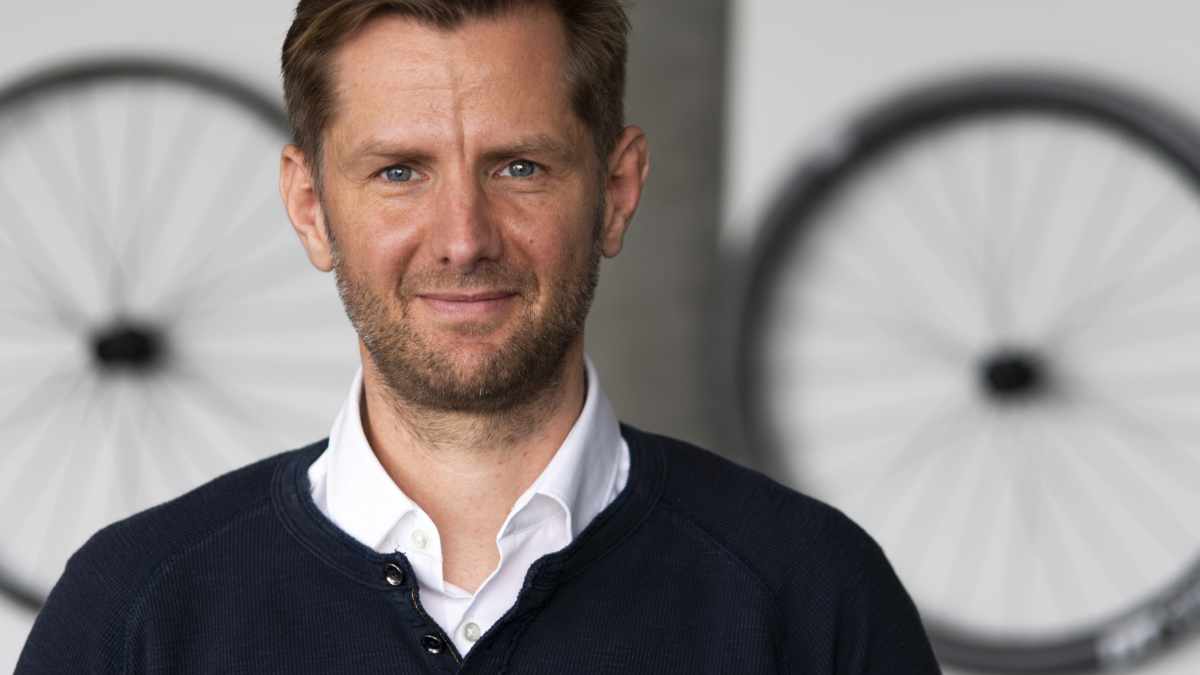
Roman opens the garden gate. Roman. A quiet figure, despite being just under two metres tall. Baggy trousers, pink T-shirt, a slightly too short checked shirt over it. On his head, a cap from his own label: "Hello, I'm Roman."
I immediately spot a photo motif: him standing in front of the entrance gate with the town villa behind him. I reach for the camera and explain the photo. "I like it inside, but not outside," says Roman. He says it quietly and in a monotone, just like he says everything else. He almost apologises. He doesn't want everyone to know where his private museum is. This place is his retreat. He sometimes spends many hours a day here, sometimes he doesn't come round for weeks at a time.
Then I'm allowed to take pictures behind the house. PR man Ben gestures to his boss to push his cap down a little - it looks better. Roman nods his thanks, as if it's not the first time he's been reminded of this.

Then Roman begins his tour. From the garage to the basement (very old racing bikes), to the ground floor (racing bikes), to the first floor (even more racing bikes), to the first floor (mountain bikes) and finally to the third floor (even more mountain bikes).
Around 80 bikes, many of them mountain bikes. That's surprising, because insiders used to say: If you wanted to make a career at Canyon back then, you had to ride a racing bike.
Each floor has a theme. Much of it concerns the company's history and how it all began - namely with the Arnold bike shop.
One room is furnished like his father's study: analogue telephone, cash register, original posters. It's as if his father had only stepped out for a moment. In another room, an old tube television switches on as you enter and a Eurosport programme from the 90s about the Downhill World Cup flickers on the screen. Sofa, couch, curtains: everything fits in with the early 90s. No detail has been left out.
And so it goes on. In another room, Roman has had a Poggenpohl kitchen built, just like the one his mother always wanted but could never afford. "Found it on Ebay classifieds," says Roman.
Roman uses the bikes to tell the bicycle story, but also the family story. "The Canyon", as he calls his company. A lot of company philosophy that you've read many times before: Freedom, life for the bike, pure cycling and things like that. That quickly sounds like PR-speak.
Other statements, however, are surprising and seem more authentic. They shed light on his motivation to return to the company as Executive Chairman after his prostate cancer - at over sixty. "My life is pretty narrow," says Roman.
By narrow, he means monothematic. Roman's life is centred around his bike, his company and his family. Neither hobbies nor extravagant interests, as long as they have nothing to do with bicycles.
His children tease him about it. Whenever a celebrity appears on television, Roman has no idea who they are. "You must know them," say his wife or children. Roman smiles at this. It seems strange to outsiders. Not to him.
"My life is narrow, but deep. Just like a Jan Frodeno, a Nino Schurter or a Julien Absalon," says Roman. It's similar for them.
Time is pressing. I have two hours for the audience. I want to have enough time for the interview and therefore try to shorten the tour. But Roman is undeterred and leads me further into the attic.
Here are bikes that make collectors' eyes pop out. Yeti models, Raleigh, Specialized's first Stumpi, other classics. His absolute favourite mountain bike is a Breezer. "That was the first bike that really looked like a mountain bike," says Roman. "Not like a bling bike."
The rumour that Arnold is only passionate about road bikes and less about mountain bikes is dispelled here at the latest. Roman can tell a story about every bike. Not only how he got hold of the respective bike, but also what was so important about the model at the time - right down to technical specifications and sometimes even geometry values.
Some say that Roman, the former road racer, lives in the past. And when you walk through his adventure museum here and hear him talk about the early days, you might well believe it. But Roman disagrees.
"The past fascinates me just as much as the future," he says. "But childhood shapes you like nothing else. And to understand things, you have to look back from time to time."
"Good cue for our interview," I say. "Sit down," he says.
The interview with Roman Arnold

How much of a road racer are you today?
One hundred per cent. I ride everything: road, gravel and mountain bikes. I do the most kilometres on my road bike. I still get that feeling from my childhood: Freedom, memories, just riding off.
Some claim that mountain bikes were just an afterthought at Canyon in the early years - you were mainly interested in racing bikes.
I see it differently. Of course, I don't deny my past in road cycling. Our roots lie in racing - in triathlon and road cycling. But for me, the fascination for a good bike, for the feeling of freedom on two wheels, is not limited to a single discipline. Mountain bikes may have come later in Canyon's portfolio, but I wouldn't describe them as mere accessories. Each category has its own appeal - and for me, this also applies explicitly to mountain bikes. Whether you believe me or not.
Canyon was around five years later with the e-mountainbike. Why?
When the first e-mountainbikes arrived, they were huge, had big motors and weighed almost 30 kilos. Many of us - Vincent Thoma, Michael Stab and others - rode them and said: That doesn't feel like a mountain bike. So we made a conscious decision: We're not going to do that. "Pure Cycling" is more than just PR-speak for us, it's our philosophy. It's about the pure joy of cycling, freedom and movement. That's not what those first e-bikes gave us.
You are considered an ambitious type. Innate or socialised?
Probably the latter. I grew up in a small Catholic village. My father was a Bessarabian German from what is now Moldova. He came to Germany, married my mother and had to assert himself. He had to do twice as much. And that's what he did. He was a salesman, always on the move, always keen to show that he could do something.
And he passed this on to his sons?
My father lived in Mannheim during the week and sold mechanical seals to BASF. We only saw him at the weekend. You can imagine how we brothers fought for his recognition in those rare moments. Everyone wanted to be seen. This desire to prove myself shaped me - and my brothers too.
(Editor's note. Roman's brother Franc is managing director of RTI Sports - Ergon Topeak etc. His brother Lothar made a career with energy giant RWE)
How did you score points with your father?
With sporting successes. My father was a sports fan. I played football at first, not bad at all. But cycling was something special. Unlike football, the chances of winning are rare. But when you win, it's indescribable. I was selected for the Rhineland-Palatinate team and was called up to the sports company. My father was proud of me - that meant a lot to me.
How often do you still think about your father?
Often, almost daily. You may have seen photos of him hanging on the wall here. Today I'm reconciled - I no longer have to please my father.
Road cycling is considered a tough sport.
Racing cyclists were certainly not among the cool ones at the parties that went down well with the girls. Maybe we lacked that relaxed attitude. My mum said at the time: "Roman, you used to play football, now you're racing bikes - you've become a completely different person." However, I quickly felt comfortable in this role - because you have to assert yourself differently in cycling races. If you want to ride at the front, you have to put your elbows out, show discipline in training and stay in the first third in the race. If you don't ride in the gap, you end up at the back. This mentality moulded me.
You don't seem like the elbow type at all. But others say you're a tough businessman.
Tough as nails? No. But as someone with the will to assert himself. You need that. Anyone who works with me quickly realises: I demand a lot - from others, but also from myself. Working with me can be exhausting. But with a tough managing director, money always comes first. For me, it's values. If you were to ask me: Roman, did you dream of getting rich back then, I would answer: No. That was never my goal - it was more of an accident.
When was the last time you had a choleric fit?
Never before. I'm not a choleric person, I don't shout at anyone. But there are moments when I clearly say: this far and no further. That's when I'm consistent.
Are you holding a grudge?
Maybe in the past. Today, I take a more relaxed view. It's important to me to be fair. If someone makes a mistake, there are consequences - but then the matter is settled.
Canyon has long been a heavyweight in the bike industry. Are there any friendships there?
Yes, there are. Of course, business is sometimes tough. But many people know that: Roman Arnold clearly says what he wants, but plays fair. And I can keep friendship and business separate.
How important is external perception to you?
It depends on what exactly you mean by that. I want to be seen as a reliable guy whose word is worth something. That also goes back to my roots. That's how I was brought up, I believe that.
If you're talking about vanity, on a scale of 1 to 10, I'm maybe 5/6. Definitely less as I get older. Time is more important to me than money.
Do you drive a sports car?
I used to have a Porsche, but I gave it up again. Not so long ago, I was driving a Fiat Panda. Now I drive a VW Touareg. My wife made the rule: Roman, you can get any car you want, but it has to be a VW and not a show-off car. That's fine with me. But you don't have to write that in the article now.
The Arnold brothers have all become successful. Where does this entrepreneurial spirit come from?
We played a game as children - it was called "Company". We used Lego to build companies, invent and sell products. We learnt to think early on: What does the other person need? If you know what the other person needs, you can offer them something. This way of thinking has stayed with me to this day - and has made Canyon strong.
How close are you brothers today?
Very close. Each of us has our own life, but if there's a problem, everyone knows that the others are there. We know that everything is finite and that brings us closer together.
You were brought up as a strict Catholic. Does faith still play a role?
Yes, for me the smell of a church is home, even if I don't go every Sunday. These things from childhood shape you. My mum passed that on to us. My father was more of a cosmopolitan - he travelled to Australia and the USA early on. This mixture was good.
Are you still in church?
Yes, believe me, I could save myself a lot of money, but it's worth it to me. I was suspicious of the Catholic Church for a while and felt more drawn to the Gospel. I did that for two years, but quickly realised: wait a minute, that's not me at all. So I went back to Catholicism.
You're 62 today, you've beaten cancer - why don't you just do what you feel like doing?
That's what I do! I like to work. It's my life. Canyon is more than just a company for me - it's a life's work. Of course, I also try to have time for my family. But building and developing this company fulfils me.
There must be other things on your bucket list.
Travelling, perhaps. My family democratically decides where I go - this year I'm travelling to Japan. Kitesurfing, diving ... none of that appeals to me. I am a cyclist - that is my life and will remain so. I recently spoke to Jan Frodeno, who recently gave up his active career. So I asked: So, what does your daily routine look like now? Do you know what he replied? Just like before, he said. He still trains, goes to the gym, regenerates and so on, just not as hard as before. I want to say: you can't send a guy like me, who has loved cycling all his life and dedicated his energy to the company, to the Caribbean to stretch his legs. Do you understand?
A 70-hour week still sounds excessive. Your cancer must have changed your outlook on life.
Yes, definitely. I no longer take everything for granted and try to live more consciously. When you get a diagnosis like that, you realise how fleeting everything is. You inevitably think about death. Since then. Nevertheless, work is part of my life. I'm very lucky to do something that I enjoy. Building bikes, realising ideas, developing a brand further - that's not a compulsion for me, it's a passion. My life is good.

Laurin Lehner
Editor