


Hardly any other factor has such a significant impact on e-bike transport as weight. Whilst a conventional trekking or mountain bike usually weighs between twelve and fifteen kilograms, modern e-bikes easily reach double that. SUV e-bikes, full-suspension e-bikes and e-cargo bikes often exceed the 25-kilogram mark.
This additional weight has a direct impact on the permissible combination of bike carrier, vehicle and tow bar. The decisive factor is not just the maximum load capacity of the towbar-mounted bike carrier, but always the vehicle’s permissible drawbar load. The carrier’s own weight must be fully taken into account. In practice, this often leaves less margin than the technical specifications might initially suggest.
Not every bike rack is suitable for e-bikes
Just because a bike rack can carry two or three bikes does not necessarily mean it is suitable for two or three e-bikes. Many systems reach their maximum permissible weight limit before the maximum number of bike spaces is reached.
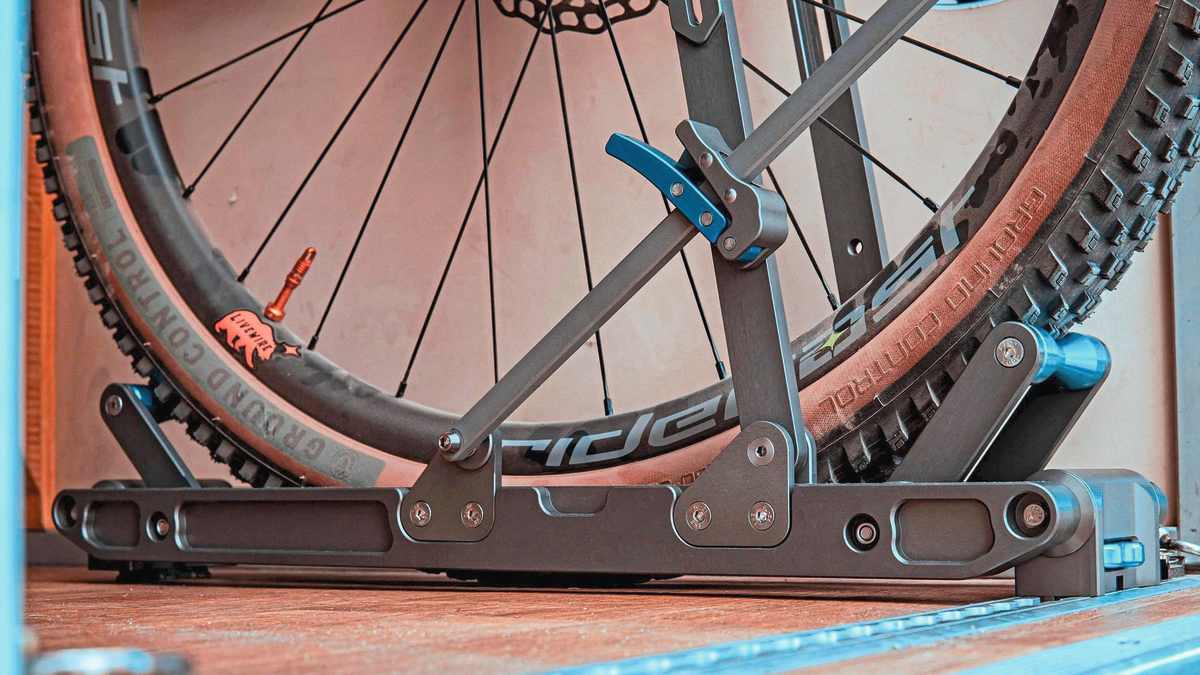
E-bike-compatible bike racks are characterised by sturdy base frames, heavy-duty rails and robust securing mechanisms. It is also important to have rails that are wide enough to accommodate bulky tyres, as well as ample space between the bikes to prevent them from touching. This is where the wheat is separated from the chaff – often reflected in the price, but even more clearly in practice.

Will I actually be able to transport my e-bikes?
- Is the maximum towing capacity of the tow bar sufficient?
- Is the maximum permissible weight of the carrier suitable for the weight of my e-bikes?
- Can the gripper arms handle even bulky pipes?
- Is the track width wide enough for wide frames or forks?
- Will fat tyres fit in bike racks?
Battery, display and accessories: remove them before you set off
A relatively simple but effective measure is to remove the battery before transport. This significantly reduces the weight, whilst also lowering the risk of damage or theft. Control units, displays and loose accessories such as bags should also be removed before setting off.
As well as the sheer weight saving and the possibility of perhaps still being able to fit a third bike onto the bike rack, this has another advantage: the material – and the clamping arms in particular – are subjected to less stress than is the case, for example, with bikes that have fully integrated batteries.
Loading heavy e-bikes: technology trumps strength
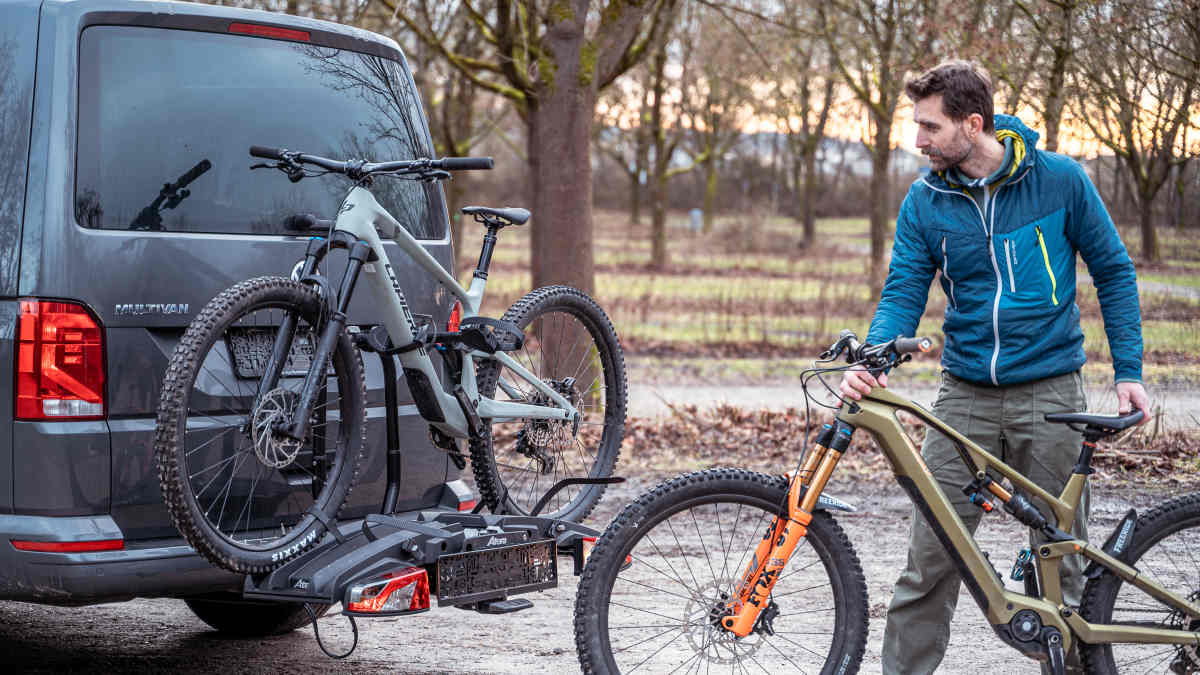
Even on a clutch-mounted bike carrier, lifting an e-bike onto it remains a challenge. A low loading height is therefore not merely a convenience feature, but a genuine safety feature. Modern bike carriers also aim to make loading easier with optional ramps.
Regardless of this, the following rule applies: the heaviest bike should always be placed on the rail closest to the vehicle. This reduces the leverage effect and makes optimum use of the load capacity. Anyone who regularly transports heavy e-bikes will also benefit from wide rails, sturdy bike holders and easily accessible securing points.
Securing delicate frames and components to the bike rack
E-bike frames are not only heavier, but often bulkier too. Integrated batteries, solid down tubes and complex suspension systems make them difficult to secure. This is where the quality of the mounting arms takes on particular importance. Models with ratchet straps that are as long as possible are preferable here to traditional clamps.
A secure clamping system must stabilise the bike without applying high forces at any single point. This is particularly important for carbon frames, which, whilst stiff, are sensitive to compressive stress. Well-designed systems hold the frame in place via a form-fit and allow for secure clamping with moderate pressure.
Handling when riding with e-bikes at the rear
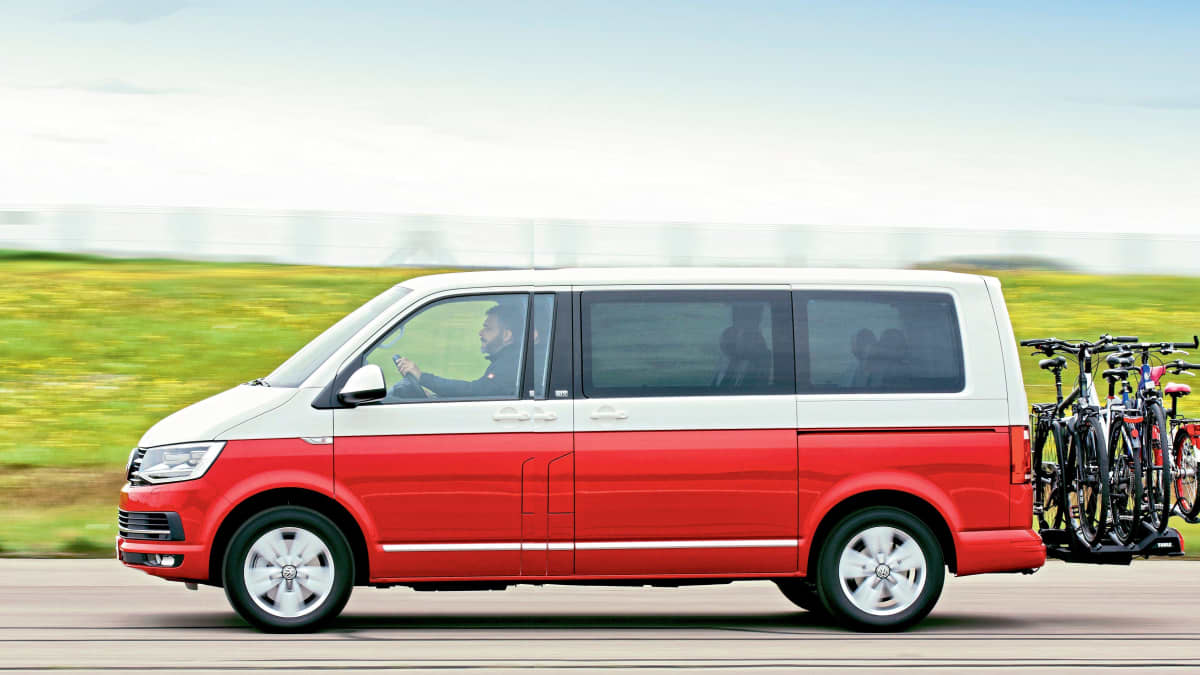
Two heavy e-bikes have a more noticeable effect on handling than two conventional bicycles. The increased rear-end weight affects braking distance, the responsiveness of the rear axle and the pitching motion during acceleration. The extra weight is particularly noticeable on poor road surfaces or when encountering bumps.
Defensive riding is not just a recommendation here, but a prerequisite. Moderate speed, anticipatory braking and regular checks on the bike’s securement are essential – especially on long journeys. Although there is no official speed limit for transporting bicycles in Germany, most manufacturers of bike racks recommend a speed limit of 120 to 130 km/h.
Common mistakes when transporting e-bikes
Many problems arise not because of the equipment itself, but because of misjudgement. Common mistakes include underestimating the total weight for the bike rack, failing to check the towbar load, or simply assuming that ‘it’ll be fine’. When transporting e-bikes in particular, there is less margin for error, yet the consequences are more serious.
Anyone who cuts corners or improvises at this stage risks not only causing damage to their bike and vehicle, but also, in the worst-case scenario, their own safety.

Stefan Frey
Editor