


In this article, we use so-called affiliate links. With every purchase through these links, we receive a commission from the merchant. All relevant referral links are marked with . Learn more.
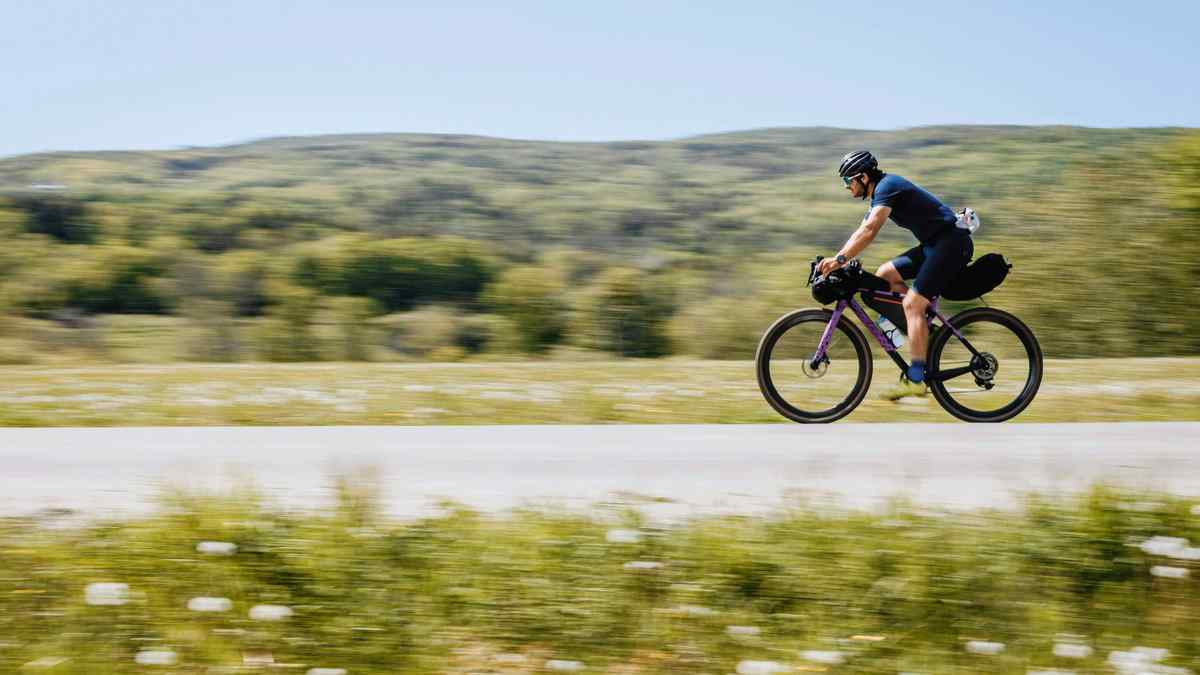
For a long time, the large saddle bag was considered the ultimate in bikepacking. No additional rack, minimal weight, quick to fit. But the more challenging the terrain becomes, the more the well-known weaknesses of the so-called ‘arse rocket’ become apparent. On rough terrain, many panniers bounce about like photo-tourists in a safari trailer; loading them is often fiddly, and on mountain bikes with telescopic seatposts, freedom usually ends where the pannier begins.
Is this the end of the ‘arse rocket’?
This is exactly where modern bikepacking racks come into their own. They shift the load lower and closer to the frame, ensuring greater riding stability and often allowing for much more versatile packing set-ups. Owners of the latest trail bikes benefit in particular: many of the systems tested work perfectly with dropper seatposts and, in some cases, even on full-suspension bikes.
The market has developed enormously in recent years. Instead of heavy trekking luggage racks, today’s market is dominated by lightweight aluminium designs, modular loading platforms and ingenious quick-release fastenings. Some systems can be fitted or removed in a matter of seconds, whilst others are designed more for long-term use.
We tested these six bikepacking racks:
You’ll find detailed reviews of the individual luggage racks via the links below.
Three ways to install it
The biggest challenge with bikepacking racks remains how to attach them to the bike. After all, many modern mountain bikes have neither rack mounting points nor traditional frame geometries.

Fitting via the thru-axle

The most elegant solution is to attach the carrier directly to the thru-axle. All the models in the test now offer this option, although each uses its own design.
The advantage is that the forces are transferred directly to the rear triangle. This ensures maximum stability and high load-carrying capacity. Systems such as the Restrap Switch Rack or the Tailfin Journey Pannier Rack are therefore among the stiffest designs in the test and can carry loads of up to 32 kilos.
Fitting to threaded eyelets

The traditional method is still to attach it using bolts to the existing frame eyelets. If you own a gravel bike, a trekking bike or a bikepacking hardtail, this usually provides the neatest and most durable solution. Old Man Mountain and Ortlieb, in particular, offer a wide range of options for this.
Fitting to seat stays

Owners of full-suspension bikes or bikes without mounting points can also opt for racks that attach to the seat stays. The Aeroe Spider Rack is the absolute specialist in this field: it does away with threaded eyelets and thru-axle adaptors entirely and is secured to the seat stays solely by means of brackets and fabric straps.
The main advantage is its universal compatibility. The downside is that the initial fitting usually requires a bit of patience, and it is rarely possible to switch bikes quickly.
Quick to put up, quick to take down
Whilst traditional luggage racks often remain permanently attached to the bike, modern bikepacking racks are increasingly featuring tool-free – or at least very quick – quick-release solutions.
The Tailfin is particularly impressive. The high-quality quick-release dropouts allow it to be fitted in a matter of seconds. The Ortlieb Quick-Rack L also performs very well, living up to its name once it has been fitted for the first time.

The Restrap Switch Rack is another contender for quick-release systems: once the special thru-axle is fitted, it takes just a few simple steps and a 4 mm Allen key to fit or remove the rack.
By contrast, the Aeroe Spider Rack and the Old Man Mountain Elkhorn are considerably less flexible. Both systems are clearly designed for permanent installation and are less suitable for riders who want to switch regularly between touring and trail riding.
Loading options for modern bikepacking racks
Another major advantage of modern bikepacking racks is their enormous versatility when it comes to loading. Whilst the classic ‘back-mounted rack’ practically always offers just a single carrying solution, most racks can be individually adapted to the length of the ride, the amount of luggage and the intended use.
The simplest option is to attach a drybag to the top deck. This is where systems such as the Restrap Switch Rack, Aeroe Spider Rack or Old Man Mountain Elkhorn really come into their own. Thanks to large platforms, integrated threading points and numerous lashing options, drybags sit much more securely than on many panniers. What’s more, you can choose the size and volume flexibly – from a small sleeping bag drybag right through to a full set of camping kit.
Things become even more versatile with classic panniers. Commuters and touring cyclists in particular benefit from the fact that many racks have a second loading level onto which side bags can be attached. The Ortlieb Quick-Rack L and the Tailfin Journey Pannier Rack are ideal for this purpose. The side-mounted position lowers the load’s centre of gravity and significantly improves handling compared to high, stacked panniers. At the same time, the upper platform remains free for additional luggage.
The numerous accessory and expansion options are particularly appealing to ambitious bike packers. Almost all modern systems now feature additional mounting points on the side struts. The 64-millimetre hole pattern, which originally comes from the ‘Anything Cages’ range, is particularly widespread.
These mounts can be used, for example, to
- Fitting a bottle holder for large water bottles
- Attaching cargo cages to dry bags
- Fitting the tool tray
- Screw on the additional pockets
- Install additional loading trays or transport trays
- Fitting the lock or pump bracket
Restrap, Tailfin, Old Man Mountain and Topeak, in particular, make full use of these options. This means that a simple luggage rack can quickly be transformed into a modular transport system for expeditions where every spare centimetre of storage space counts.
Why luggage racks are the better solution for dropper seatposts
There is hardly any detail that matters more to mountain bikers than the telescopic seatpost. After all, it allows for freedom of movement on technical trails and ensures greater safety on descents.
This is exactly where traditional bikepacking saddle bags often reach their limits. Large saddle bags take up space under the saddle and often significantly reduce the range of adjustment of the dropper post. Some systems even make it completely impossible to use one.
The luggage racks tested solve the problem in a far more elegant way: as the luggage is carried above the rear wheel, the seat post remains virtually unrestricted in its use – provided the load has been mounted correctly on the rack. Aeroe, Old Man Mountain and Tailfin in particular demonstrate just how well modern bikepacking racks complement today’s trail and enduro bikes.
An overview of the luggage racks
Tailfin Journey Pannier Rack – the test winner

The Journey Rack currently sets the standard in the premium segment. Excellent quick-release fastenings, an enormous load capacity of up to 32 kilograms, full compatibility and impressive stability make this British product the most versatile rack in the test. Anyone who frequently switches between different bikes or uses it for different purposes will struggle to find a better solution at present.
Restrap Switch Rack – the load carrier

The Restrap impresses with its clever aluminium loading plate, a load capacity of up to 30 kilograms and high rigidity. Ambitious bike packers and long-distance adventurers, in particular, will find this an extremely robust solution for heavy luggage.
Old Man Mountain Elkhorn – the all-rounder

Hardly any other system offers more mounting options. Front or rear, hardtail or full-suspension, thru-axle or threaded eyelets: the Elkhorn fits almost anywhere. However, the somewhat fiddly installation prevents it from being positioned even better >> available here.
Ortlieb Quick-Rack L – the everyday hero

Commuters and touring cyclists are sure to love the Quick-Rack. Once it’s been fitted for the first time, you can switch between a luggage rack and a minimalist bike in a matter of seconds. For tough off-road adventures, there are more robust alternatives >> available here.
Aeroe Spider Rear Rack – the full-suspension specialist

Where other luggage racks give up due to a lack of mounting points, that’s where the Aeroe comes into its own. The modular system impresses with its high level of compatibility and clever cradles, although it does carry the load relatively high above the rear wheel >> available here.
Topeak Zi:Rak Essential – the master of transformation

Hardly any other rack offers more adjustment options and accessory solutions. At the same time, under heavy loads and on challenging trails, the Topeak system shows slightly more flex than the top performers in the test >> available here.
Conclusion
Bikepacking racks have evolved from a niche product into a serious alternative for discerning touring cyclists. Compared to traditional saddle bags, they offer better weight distribution, greater stability and, above all, unrestricted compatibility with telescopic seatposts.
If you’re looking for maximum versatility, go for the Tailfin Journey Pannier Rack. The Restrap Switch Rack impresses with its stability and load capacity. The Aeroe Spider Rack remains the top choice for exotic frames and full-suspension bikes without mounting points. And for those who want to switch their bike between everyday use and adventure on a regular basis, the Ortlieb Quick-Rack L one of the smartest quick-change solutions on the market.

Stefan Frey
Editor