


Bicycle bell from Skoda: Overcomes active noise cancellation of headphones
Kristian Bauer
· 14.04.2026

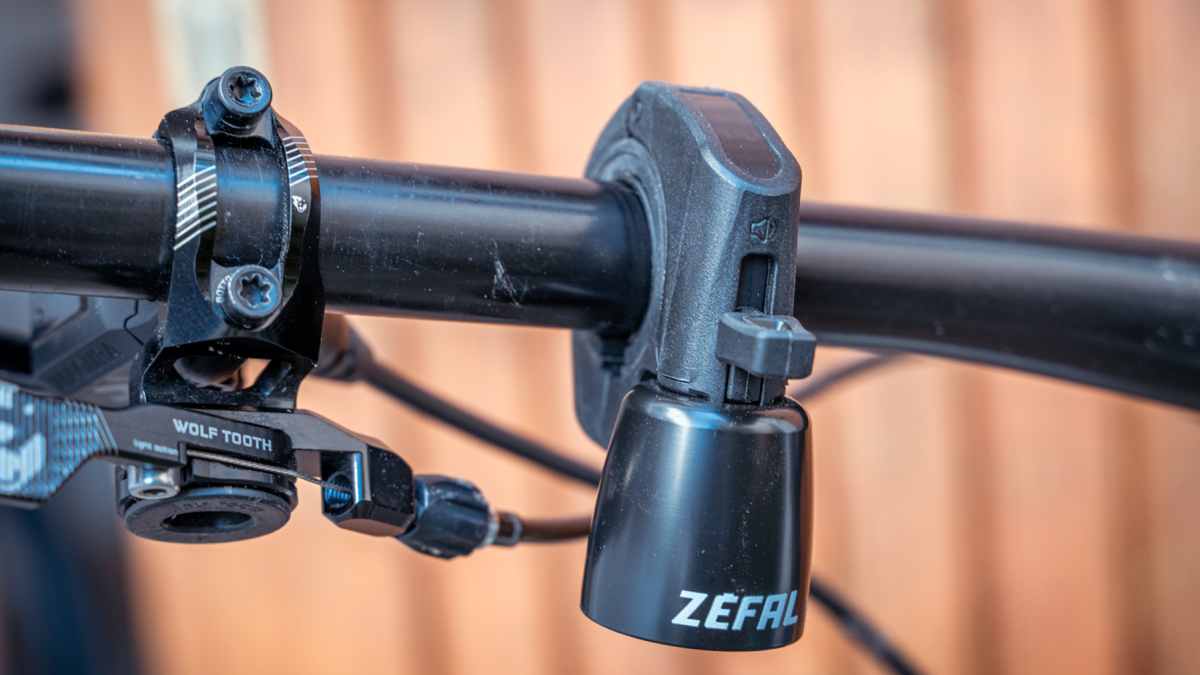
Auto developed the DuoBell in collaboration with researchers from the University of Salford. The scientists investigated how active noise cancellation affects the audibility of conventional bicycle bells. The development arose from the observation that conventional bells are often ineffective for pedestrians with active noise cancelling (ANC) headphones.
Increasing collision risk
The number of cyclists in metropolises is increasing worldwide. In London, the number of cyclists is expected to exceed the number of motorists for the first time in 2026. At the same time, the risk of collisions between cyclists and inattentive pedestrians is increasing. According to Škoda 2024, Transport for London recorded a 24 per cent increase in such incidents. On the streets of London, up to half of all pedestrians wear active noise cancelling (ANC) headphones. This technology reduces the ability to perceive and react to ambient noise. Many ANC systems work so effectively that even the ringing of a conventional bicycle bell does not penetrate.
The ideal frequency range
The scientists at the University of Salford carried out acoustic tests and identified a narrow frequency range that can pass through ANC filters. This safety gap lies between 750 and 780 Hz. The DuoBell emits sounds in this frequency range. An additional resonator operates at a higher frequency. The name DuoBell is derived from this second resonator. A specially designed hammer mechanism generates rapid and irregular beats. ANC algorithms cannot process and suppress these sound waves quickly enough.
Up to 22 metres more reaction distance
Measurements during the test phase showed that pedestrians with active noise-cancelling headphones gained up to 22 metres of additional reaction distance when the DuoBell bicycle bell was activated. This distance represents an important safety distance. In February, practical tests were carried out on London's streets in cooperation with Deliveroo couriers. The bell proved so effective that the couriers wanted to keep it. Ben Edwards from the AMV BBDO agency describes the DuoBell as an analogue trick that outwits the artificial intelligence algorithms in headphones. The PHD agency supported the concept and the production company Unit9 contributed to the development of the prototype. It is not yet clear whether the bell will actually go into mass production. The scientific background and the basic function of the bicycle bell have been made freely accessible - so interested manufacturers could be found.


Kristian Bauer
Editor
