


Upside-down forks used to be considered expensive, exotic stuff for tech nerds, the well-heeled and e-MTB fat bikes. Cane Creek is now changing that: With the Invert Enduro, the Americans from Asheville, North Carolina, are launching a USD fork with 38 mm stanchions that is around 30 per cent cheaper than the competition and compatible with both 15 and 20 mm thru-axles. The piece will be available from summer 2026 for 1,599.99 US dollars.
Conclusion on the Cane Creek Invert Enduro
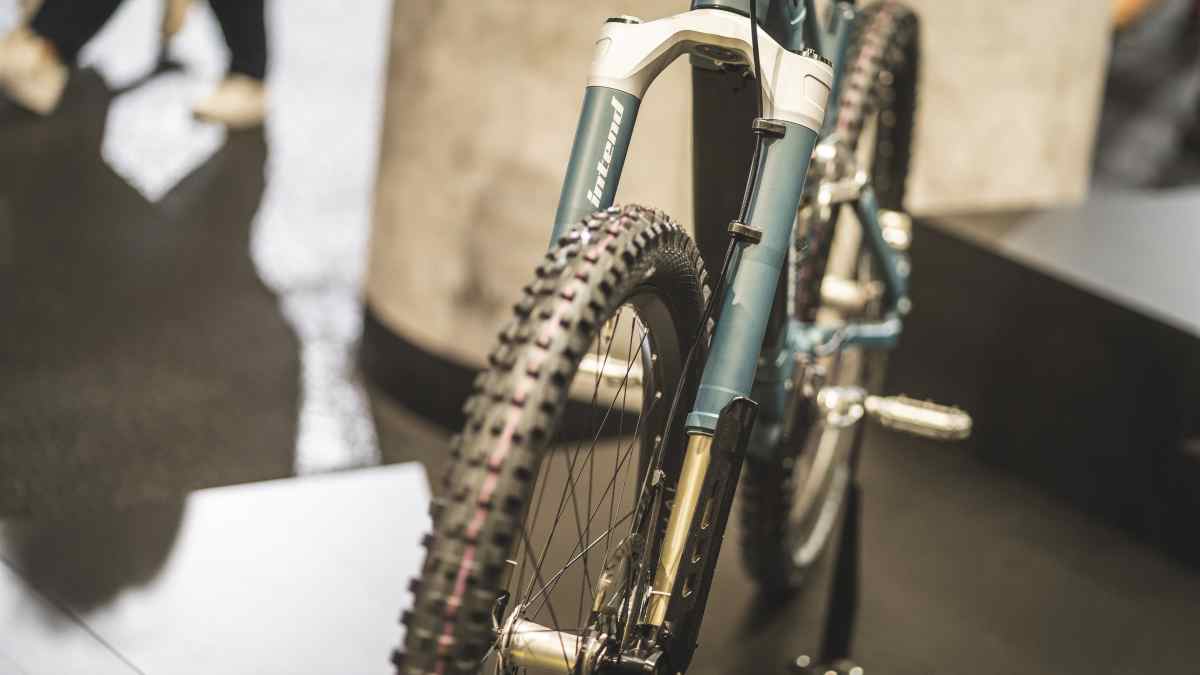
USD forks have been used in the motorbike sector for decades - more traction thanks to the lower torsional rigidity, more braking rigidity and better lubrication offer clear advantages over classic fork designs. Niche manufacturers such as Intend and Bright have been demonstrating for years that this principle also works on mountain bikes. But at the latest since Fox also jumped on the USD trend with its Podium fork, the overhead construction on mountain bikes has become completely acceptable. The only catch: the forks are all more expensive than classic models. With the bold calculation of the new Cane Creek Invert Enduro, this could finally change. - Max Fuchs, BIKE test editor
Why on the head?
The basic principle is simple: with an upside-down fork, the thicker, stiffer lower tubes are at the top and the bushes are close to the axle. This improves brake rigidity. This refers to the forward and backward bending of the fork tubes, which causes friction losses and fluttering in the direction of braking in conventional forks under load.
At the same time, the design achieves a significantly lower torsional rigidity, but this does not result in a disadvantage - on the contrary: the fork can follow the ground better, bounces less and thus generates more traction and comfort.
SquareLoc axle system: 15 or 20 mm - the choice is yours
However, less torsional rigidity only makes sense in moderation. Without the additional triple clamp, many models overshoot the mark, so that the lower torsional rigidity starts to feel spongy.
To prevent this, Cane Creek has introduced the SquareLoc axle system: The axle engages positively in the dropouts, four clamping bolts lock the package. This prevents the bars from rotating around the axle and provides the necessary torsional rigidity.

15 mm axis (series): Made from 17-4 pre-hardened stainless steel, the 15 mm axle is said by Cane Creek to deliver around 17 per cent more torsional stiffness than other single crown USD forks. Important: The 15 mm axle means that the fork is compatible with standard hubs.
20 mm axis (optional, surcharge: USD 89.99): Also made from 17-4 stainless steel, the 20 mm axle is said to offer up to 42 per cent more torsional stiffness than the competition, according to internal tests. Cane Creek recommends this option for heavier riders, e-bike riders and anyone who wants maximum precision on the front wheel. The conversion is possible without tools thanks to the adapter.
SideSwipe Guards: protection where it really happens
Classic motorbike forks have their mudguards at the front - to protect them from dirt whirled up by the rider in front. With MTBs, the problem is different: branches, stones and impacts come from the side. Cane Creek has therefore developed the SideSwipe Guards, which sit on the side of the downtubes - exactly where damage occurs in practice.
Dampers & air springs: tried and tested meets new
On the damper side, Cane Creek relies on the proven closed monotube cartridge design with independent high and low speed compression (HSC/LSC) and a single rebound adjuster (LSR).
The air spring is a different story: It is completely new. Instead of the previous manual positive/negative equalisation of the helmet models, pressure equalisation on the Invert Enduro is automatic. This simplifies the setup and should also enable a more sensitive response behaviour.
Cane Creek's onboard volume adjustment system is retained and allows fine-tuning of the end progression without additional volume spacers. Also good: there are sag markings on the stanchion protectors for orientation during setup.
ForkTuner app: setup with a click
To match the fork, Cane Creek is launching the free ForkTuner web app in summer 2026. It guides riders through the entire setup process - the same one used by OEM partners and professional riders.
Price & availability
The Invert Enduro costs USD 1,599.99 - including SideSwipe Guards and a 15 mm axle. According to the manufacturer, the attractive price point is achieved in part thanks to production in its own factory in Western North Carolina. The new fork will be available with 160, 170 or 180 millimetres of travel in summer 2026.


Max Fuchs
Editor