


Avinox M2 e-bike motor: Inexpensive DJI motor - innovation at a low price?
Florentin Vesenbeckh
· 11.04.2026


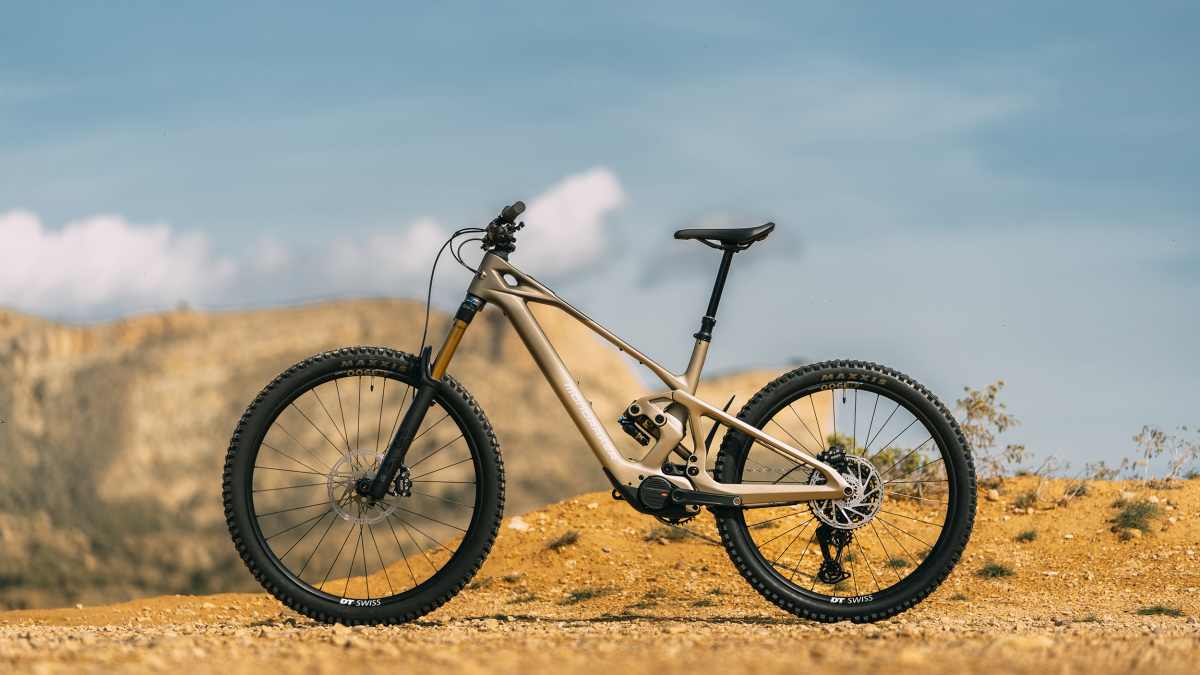
With the launch of the Avinox M2, the company is completing its second generation of engines and for the first time is offering an entry-level variant that boasts impressive performance data despite its lower price. As announced, the Chinese are clearly targeting the affordable price segment. DJI subsidiary Amflow itself provides a blatant example with the new PR Carbon: For 4499 euros, you can already get an E-Fully with a full carbon frame, M2 motor and removable battery. A benchmark against which the competition must be measured. It is also clear that more and more relevant brands, including Mondraker, Commencal, YT Industries, BH Bikes and Pivot, have already integrated the new Avinox systems into their model ranges.
Compact and powerful
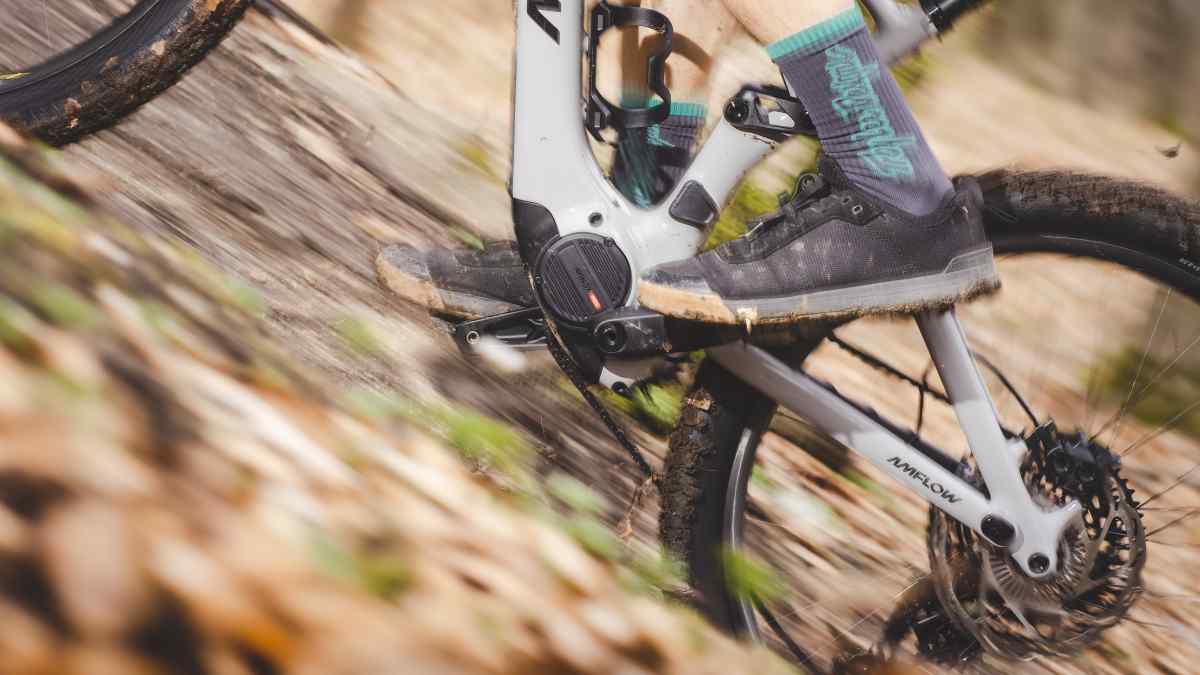
The Avinox M2 initially impresses with its compact design. Weighing just 2.65 kg, it retains the almost identical shape of its successful predecessor, the M1, thus enabling slim frame designs. Despite its compact dimensions, the motor delivers up to 1100 watts of peak power and a maximum torque of 125 Nm, making it more powerful than its predecessor. These are values that were unthinkable just a few years ago.
Compared to the first generation M1, the M2 increases the power density by 4.6 per cent. The motor thus positions itself as a solid basis for e-bikes in the mid and lower price segments, which are designed to impress both in urban environments and on tours. And it does so without sacrificing weight and performance compared to the competition. Quite the opposite, in fact.
The facts about the Avinox M2
- Peak power: 1100 watts
- Max. Torque: 110 Nm (125 Nm in short-term boost mode)
- Weight: 2.65 kg (manufacturer's specification)
- Available batteries: 600, 700 and 800 Wh (permanently installed)
- New interchangeable batteries: 600 or 800 Wh
- Wireless Avinox remote on the handlebars and touch display in the top tube
- Support levels can be customised via the app
The differences to the M2S
Anyone comparing the M2 with its big brother, the Avinox M2S, will quickly recognise the differences: with up to 1500 watts and 150 Nm peak torque, the M2S offers even more power reserves and is even a little lighter. However, the decisive difference lies in the technology: while the M2S relies on an elaborate dual gear design, integrated temperature sensors and special cooling fins, the M2 has a more conventional but proven design.
Battery options for every application
To match the new motors, Avinox is also presenting removable batteries for the first time: the RS800 and the RS600. Thanks to the quick-release function, the batteries can be easily removed and charged separately - practical for commuters who cannot take their e-bike to the power socket. Alternatively, the integrated FP700 with 700 Wh capacity is available, which supports GaN 3-fold fast charging and should be charged from 0 to 80 per cent in one hour and 16 minutes. The familiar Avinox batteries with 600 and 800 watt hours, which are usually permanently installed, are also compatible with the new system.
Opinion of the BIKE editorial team
With the M2, Avinox is expanding its portfolio with an attractive entry-level option that doesn't have to hide behind the competition. The combination of compact design, high performance and a fair price should be a step in exactly the right direction for many e-bikers: good e-mountainbikes at a fair price! We are excited to see what the bike manufacturers conjure up from the new motor and how the "small" Avinox performs in practical use.

Florentin Vesenbeckh
Editor CvD
