


Have you ever worked out how much a gram of your road bike costs? The new Hunt 5AM Limitless wheels cost 2 euros and 30 cents per gram - if you choose the version with ceramic bearings, with steel bearings it's 1.90 euros per gram. The aerodynamically optimised wheelset weighs 1212 grams and is certainly suitable for cycling at times other than five o'clock in the morning.
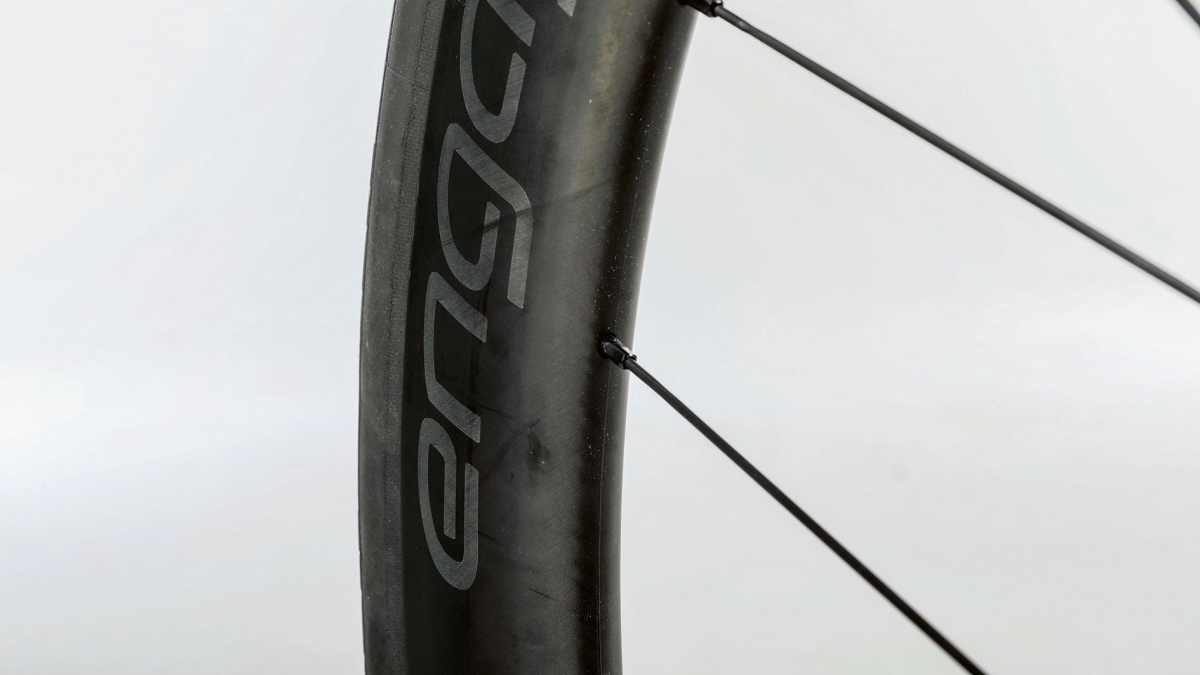
Hunt uses different rim profiles for the front and rear wheels. The 58 millimetre deep front wheel rim uses the patented Limitless Width Aero Technology. The outer width of the front wheel rim is 34.5 millimetres, the rear 30 millimetres and the inner width 23 millimetres.
The spoke configuration differs between the two wheels. The front wheel uses 15 Vonoa Ti_UD carbon spokes, the rear wheel 18 spokes. Each spoke weighs 1.7 grams and achieves a tensile strength of over 400 kgf. By comparison, high-quality steel spokes are 290 to 300 kgf. The unidirectional carbon fibre construction uses titanium Ti6-4AL-4V hardware. Internal spoke nipples reduce air resistance.
Five-stage development process
Hunt developed the wheel system over five test phases. The first stage uses computational fluid dynamics (CFD) to digitally analyse air flows around the rim, tyre and frame. Thousands of design variants can be tested in this phase.

Stage two isolates individual wheels in the wind tunnel. Hunt works with GST Wind Tunnel in Germany, which we at TOUR also use for our measurements, and Silverstone Sports Engineering in the UK. These tests measure precise differences between rim profiles, spoke layouts and tyre combinations.
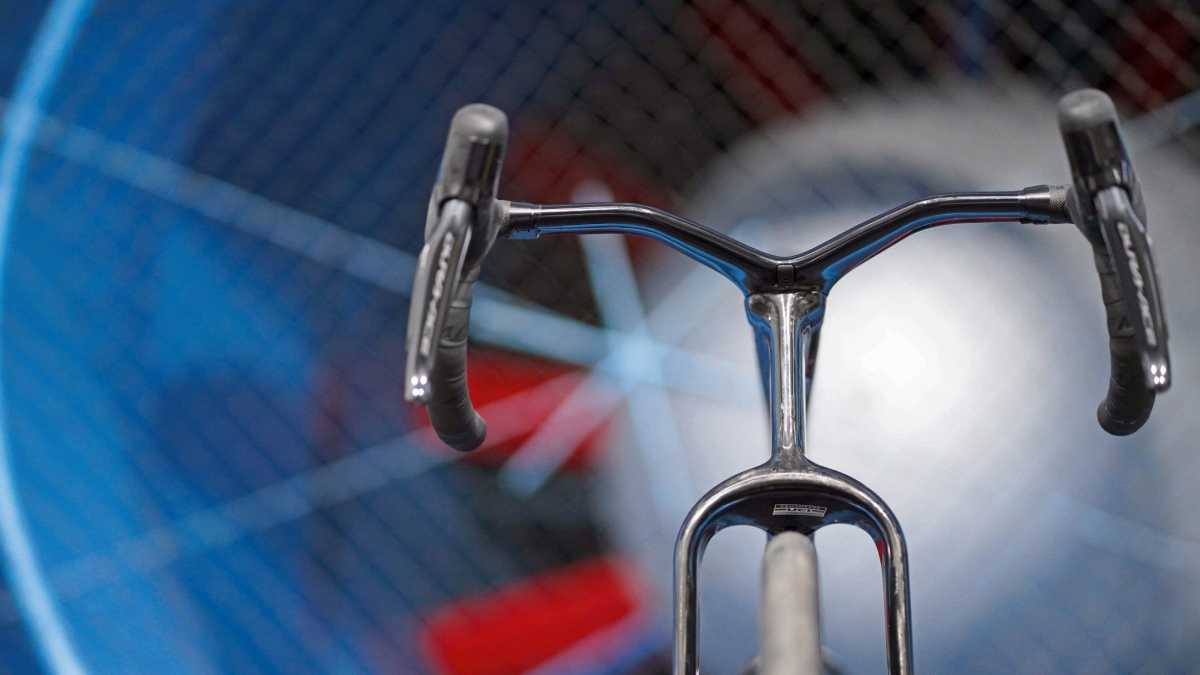
The third phase tests the complete bike-frame system. The frame changes the airflow considerably, especially around the fork, down tube and rear triangle. These interactions only become apparent during system tests.
Stage four adds a pedalling rider. Moving legs and feet create turbulence, which influences the aerodynamic behaviour. These findings explain why the front and rear wheels have different aerodynamic requirements.
The fifth phase validates all results under real-life conditions. Hunt works with Dr Barnaby Garrood from AeroSensor for sensor-based tests on velodromes, controlled road courses or runways. These outdoor tests capture the rotational drag of the entire system, which is difficult to measure in a wind tunnel.
Rim design and material
The rims use a mixture of T700, T800 and T1000 UD carbon fibres. In addition, there is highly modular Mitsubishi Pyrofil HR4012M, a material from aerospace and motorsport. This combination is designed to deliver lateral stiffness and sidewall strength at a low weight.
The front wheel rim utilises Limitless technology for a wider aerodynamic shape without any weight penalty. The wider, blunt rim profile is designed to maintain laminar airflow at higher wind angles. The high-gloss surface reduces dust accumulation.
The rear wheel works in turbulent air behind the front wheel, frame and rider movement. The focus here is on low weight and power transmission. The narrower rim with additional spokes is designed to enable direct power transmission.
Hubs and bearings
The Hunt Chase SLC hubs use CNC-machined 7075-T6 aluminium construction. The H_Ratchet DBL 48T drive system works with a 7.5 degree pressure angle. The slim hub shell is designed to reduce drag. Push-fit end caps allow for easy maintenance.
The bearings come from CeramicSpeed. The hybrid ceramic bearings use ceramic balls with stainless steel rings. Special light contact seals are designed to offer protection with low rolling resistance. The bearings are manufactured by hand in Denmark and come with a lifetime guarantee. Alternatively, sealed precision stainless steel bearings are available.
Tyre compatibility
The system is optimised for 28 to 30 millimetre tyres. The hooked rim complies with ETRTO standards and works with 28 to 50 millimetre tyres. Tubeless and clincher setups are supported.
Availability and prices
Pre-orders can be placed via huntbikewheels.com. Delivery will take place from the third week of May 2026 from the locations in West Sussex (UK), Boulder (Colorado, USA) and Dresden (Germany).
Technical specifications:
- Model: HUNT 5AM Limitless Ti_UD Carbon Spoke Wheelset
- Weight wheelset: 1212 g
- Rim depth front / rear: 58 mm / 55 mm
- Inside rim width: 23 mm (front and rear)
- External rim width: 34.5 mm front / 30 mm rear
- Spokes: 15 front / 18 rear (Vonoa Ti_UD Carbon)
- Hubs: HUNT Chase SLC, 7075-T6 aluminium
- Bearing: CeramicSpeed hybrid ceramic or stainless steel
- Tyre compatibility: 28-50 mm (optimised for 28-30 mm)
- Price: 2349 Euro (2899 Euro with CeramicSpeed bearings)
- Availability: May 2026 (week 3)

Sandra Schuberth
Editor