


DT Swiss expands its DF technology: Greater compatibility and flexibility for the suspension boost
Max Fuchs
· 26.09.2026

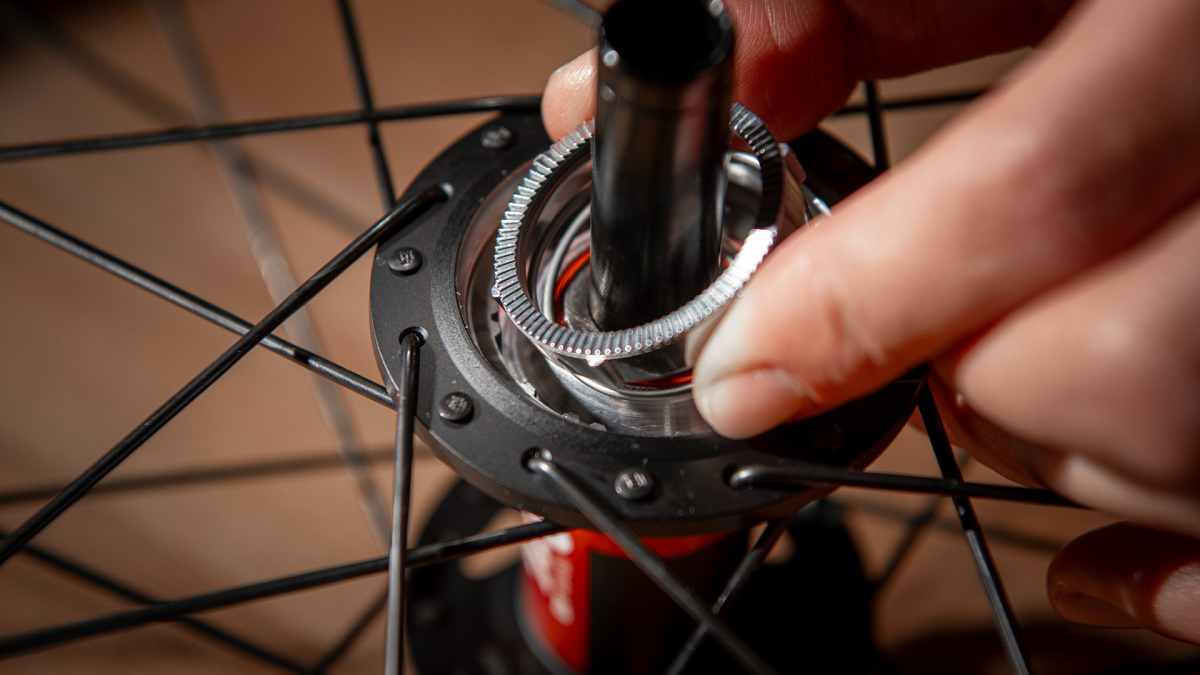
When we first DT Swiss DF system to prevent pedal kickback When they were tested in September 2025, the approach was as simple as it was exciting: a defined additional rotational travel or degree of freedom in the freehub is intended to reduce chain pull during compression. This allows the rear suspension to work more freely. Until now, however, this required a Ratchet-DEG hub. With the Ratchet DF Upgrade Kit, DT Swiss is now extending this technology to the much more widespread classic ratchet systems.
What does DF technology do?
On many full-suspension bikes, the distance between the bottom bracket and the rear axle changes as the suspension compresses. This puts the chain under tension and pulls the crank back as the suspension compresses. However, this so-called pedal kickback is not, in itself, a major problem. The bigger issue is that this interaction between the suspension and the drivetrain affects the rear end’s performance. This is because, if the chain is under tension as soon as the rear end compresses, the rear end cannot move freely. This compromises traction and responsiveness.
To resolve these issues, DT Swiss has focused directly on the freehub. Before the cogs engage, the freehub body is allowed to move freely through a defined angle, depending on the chosen setup. This decouples the drivetrain from the rear suspension to a certain extent. The so-called DF hubs (for ‘Degrees of Freedom’) operate without adding any extra weight, and the degree of freedom can be adjusted by hand. Our initial hands-on impression of the previous DEG-DF kit was clear: on descents, the rear suspension does indeed respond more sensitively.
Ratchet DF Upgrade Kit: 0 or 14 degrees for classic hubs
The most significant new product is the Ratchet-DF Upgrade Kit. According to DT Swiss, it is compatible with classic Ratchet and Ratchet-LN freehub systems. This means that owners of many older and current non-DEG DT Swiss hubs can, for the first time, experiment with the additional degrees of freedom without having to buy a new wheelset straight away.
| Setting | Performance according to DT Swiss | Useful for |
| 0 degrees | classic freewheel feel without any additional play | Drivers who prefer immediate traction |
| 14 degrees | greater freedom of movement before the procedure, less interference from the chain with the rear triangle | Trail and enduro riders who want to optimise their suspension |
DEG-DF Race Kits: 30 or 40 degrees for racing
For riders who already own a Ratchet DEG-DF hub, DT Swiss is launching two additional race kits. These do not extend compatibility, but rather expand the range of possible set-ups.
| Race Kit | Settings options | Intended use according to DT Swiss |
| 30 October | 10 or 30 degrees of freedom | Enduro |
| 0/40 | 0 or 40 degrees of freedom | Downhill |
The new Ratchet DF Upgrade Kit makes DF technology compatible with many classic DT Swiss hubs, making it a significant expansion of the system. Its e-bike approval broadens the customer base even further. The Race Kits for DEG DF, on the other hand, are a specialised offering for riders who want to tailor their setup very specifically to different route profiles – downhill, mind you.
For those who already ride their full-suspension bike without any noticeable pedal kickback, or who value direct power transfer above all else, the system remains of no interest. However, for riders who want to work on achieving a more responsive rear suspension, the upgrade offers a straightforward and cost-effective way to experiment.

Max Fuchs
Editor
