


Anti-pedal kickback 2.0: The E*thirteen sidekick hub is now lighter and cheaper
Max Fuchs
· 24.04.2026


Conclusion from Max Fuchs, BIKE editor
The predecessor already showed that the Sidekick hub system reduces pedal kickback. However, the price was already steep back then. Last year, DT Swiss also introduced a freehub-based system for just 150 euros, which hardly added any weight. This made the E*thirteen hub less competitive. With a cheaper, lighter and more versatile line-up, this could change again in the future.
The news in brief
- Prices: Sidekick HR hub from 250 euros, the predecessor was only available from 500 euros!
- Weight: From 275 g (Pro model as straight-pull version) - 38 % lighter than its predecessor
- 9° intervention option (new), 13° and 18° still available - adjustable without tools
- Friction loss: 30 % less than original Sidekick, 55 % less than DT Swiss 350 DEG (manufacturer test)
- Guarantee: 10 years + lifetime bearing guarantee (free bearing replacement for first-time buyers)
- Available: As of now
Technical data: E*thirteen Sidekick 2.0 at a glance
| Sidekick | Sidekick Pro | Sidekick GR | |
| Price (rear wheel) | 249,95 Euro | 349,95 Euro | 399,95 Euro |
| Field of application | Trail / All Mountain | Trail / All Mountain | Enduro / Gravity |
| Weight | 300 g | 275 g | 424 g |
| Intervention | 9° / 13° / 18° | 9° / 13° / 18° | 12° / 15° / 18° |
| Freewheel | XD, MS or HG | XD, MS or HG | XD, MS or HG |
| Centre distance | 148 mm / 157 mm | 148 mm / 157 mm | 148 mm / 157 mm |
| Bolt circle | 28H or 32H | 28H or 32H | 28H or 32H |
| Special feature | Anti-pedal kickback basic version | Nickel-plated pawls | Steel axle, reinforced bearing seat |
| Guarantee | 10 years + storage guarantee | 10 years + storage guarantee | 10 years + storage guarantee |
The basic principle: Why pedal kickback is annoying
On most full-suspension bikes, the distance between the bottom bracket and the rear wheel axle increases during compression. As the chainring and cassette are connected via the chain, there is an interaction that pulls the crank backwards during compression - the so-called pedal kickback. Depending on the kinematics, this phenomenon can vary in severity, preventing the rear triangle from compressing freely on full-suspension bikes and thus impairing suspension performance. The smaller the pressure angle, the more direct the engagement and the stronger the pedal kickback.

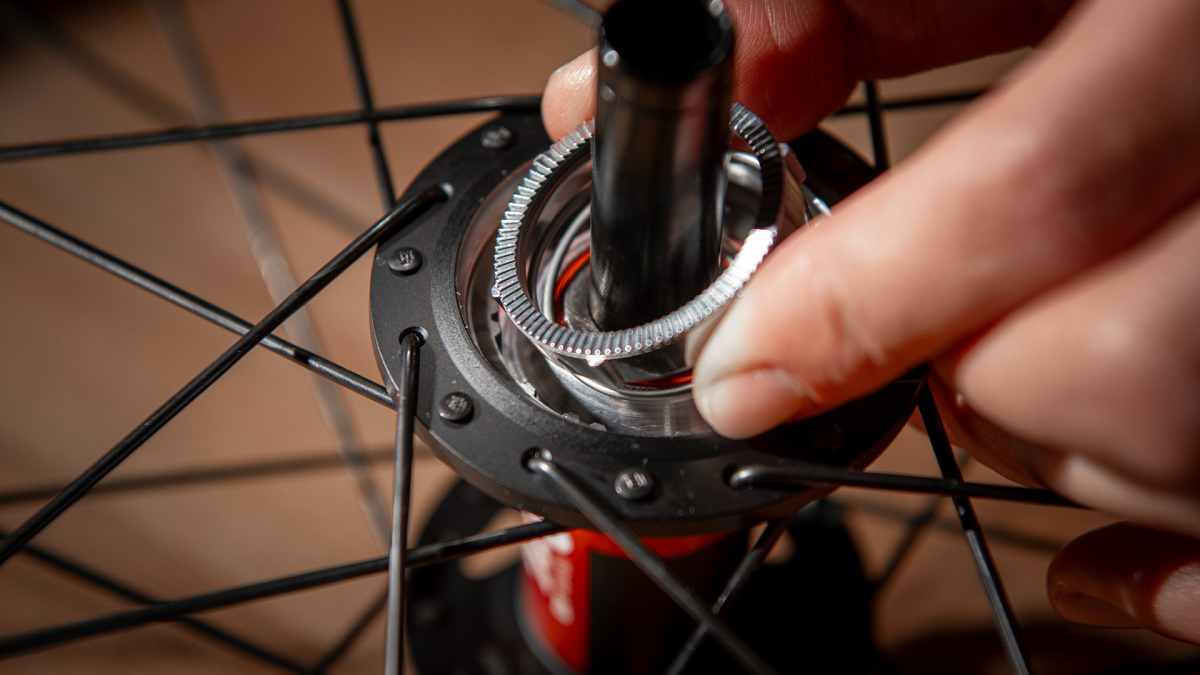
E*thirteen solves this problem with a patented push-pin ratchet system: When rolling downhill, when there is no pedalling input, the pawls retract and decouple the drivetrain from the chassis to a certain extent - depending on the setting. This allows the rear wheel to follow the ground better and the rear triangle to move more freely. So much for the Sidekick system itself. But what's new with the Sidekick 2.0?
9° engagement option
The biggest criticism of the original Sidekick: many trail riders found the minimum engagement angle of 12 degrees too sluggish. e*thirteen has addressed this criticism with the new 9° setting for more direct engagement. In this setting, the Sidekick 2.0 should feel more like a normal MTB freehub when pedalling - but still eliminate pedal kickback at the beginning of the suspension travel. Ideal for trail bikes with medium suspension travel.
The wider degrees of freedom are 13° and 18° - for all those who want maximum suspension performance downhill. Switching between the settings is still possible without tools.
Up to 38 % lighter
The Sidekick and Sidekick Pro hubs get oversized aluminium axles. As a result, the straight-pull version of the Pro version weighs just 275 grams, while the J-bend model weighs 300 grams. According to the manufacturer, this makes it up to 38 per cent lighter than the old Sidekick hub, depending on the version. The GR version is aimed at heavy enduro, DH and e-bikes. It weighs 424 grams and comes with a steel axle and reinforced bearing housing.
30 % less friction loss
Newly designed bearing press fits and revised seals are said to have reduced freehub resistance by 30% compared to the original Sidekick. In the manufacturer's own comparative tests against DT Swiss 350 DEG hubs, the Sidekick 2.0 showed 55 % less freehub resistance according to e*thirteen.
Three models, half the entry-level price
The Sidekick line-up now has three levels. There was only one model of the predecessor. The basic Sidekick rear hub starts at €250 - exactly half the price of its €500 predecessor. The Sidekick Pro comes with nickel-coated pawls and higher quality bearings for 345 euros. The Gravity model (GR) is designed for heavy Enduro, DH and E-MTBs with a steel axle, reinforced housing and larger outer bearing and costs €399.

Max Fuchs
Editor