


One bike, endless possibilities: The new Norco Fluid is perhaps the most sensible trail bike
Max Fuchs
· 15.07.2026


Review by Max Fuchs, BIKE editor
The cult brand from British Columbia is actually known for its outrageously expensive high-end bikes. With the Fluid, however, Norco is opening up its range to beginners and anyone who doesn’t want to spend a fortune on a new bike. The previous model already put this approach into practice convincingly. In our test, the previous Fluid impressed with its incredibly straightforward and confident handling. The popular motto ‘Just hop on and feel good’ really did sum it up. The suspension also impressed with plenty of traction and more comfort than one would expect given the nominal travel.
We haven’t had the chance to ride the new Fluid – the successor model – yet. However, the key specifications look promising and give us hope that Norco can build on the strengths of its predecessor. The redesigned frame now also offers the option of combining different wheel sizes, whilst the chassis has been slightly slimmed down. With prices likely to range between 2,500 and 4,000 euros, Fluid models could once again prove a safe bet for anyone looking for an uncomplicated all-rounder – without breaking the bank.

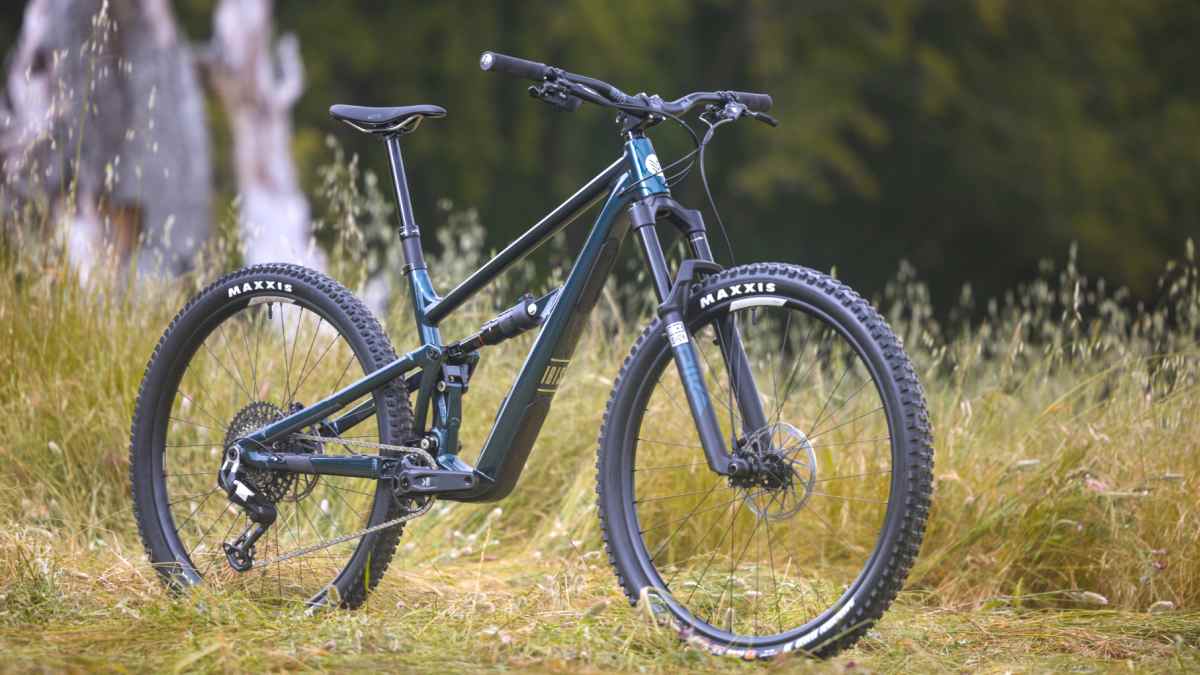
At the heart of the new generation is a completely redesigned frame made from 6066 aluminium. According to Norco, it weighs less than its predecessor – although the manufacturer does not give a specific weight for the frame. The 140/130 millimetre suspension travel typical of the Fluid model remains unchanged. The cables run inside the frame through nylon tubes from the head tube to the chainstay. This is designed to simplify assembly. A UDH derailleur hanger, a flip chip for switching to mullet tyres, and size-specific geometry round off the overall package.
The facts about the new Norco Fluid
- Intended use: Trail
- Suspension travel: 140 mm (front fork) / 130 mm (rear)
- Wheels: 29", convertible to Mullet (29"/27.5") via a flip chip
- Frame material: aluminium (6066)
- Frame sizes: five (S1–S5), for people approximately 152–198 cm tall
- Steering angle: 65°, Reach: 432–512 mm (S1–S5)
- Weight (S3): from 16.0 kg
- Price: from 2,299 US dollars (prices in euros to be confirmed)
- Special features: Flip-Chip for Mullet, internal cable routing, UDH derailleur hanger, Ride-Aligned setup, ‘No Other Way’ lifetime guarantee
VPS rear triangle, flip-chip and geometry
At the rear, Norco continues to rely on a simple Horst-Link design based on the VPS (Virtual Pivot Suspension) principle, offering 130 mm of travel. Norco uses a bespoke shock tune for each model. A flip chip in the pivot lever switches the setup from a pure 29er to a mullet setup (29" at the front, 27.5" at the rear) – according to Norco, without altering the geometry or kinematics.
Norco specifies the geometry for all five sizes as having a 65° head angle, 44 mm fork offset and an effective seat tube angle range of 76.5° to 77.5°. The reach increases from 432 mm (S1) to 512 mm (S5), whilst the chainstays increase in length with frame size (428 to 444 mm in the 29-inch setup). The wheelbase ranges from 1,178 to 1,289 mm.
Three trim levels: A1, A2 and A3
The new Fluid range launches with three trim levels. The top-of-the-range A1 model combines RockShox Select+ suspension components with a Shimano XT groupset; the A2 features a Psylo Gold fork and Shimano Deore drivetrain; and the entry-level A3 comes with a RockShox Recon fork, a DVO Opal shock and a Shimano CUES drivetrain. The A3 is available in two colours (black and pistachio green), the A1 in blue and the A2 in Raw Alloy silver.
| A1 | RockShox Lyrik Select+ 140 mm | RockShox Super Deluxe Select+ 130 mm | Shimano XT, 12-speed | 16.2 kg |
| A2 | RockShox Psylo Gold RC 140 mm | RockShox Super Deluxe Select 130 mm | Shimano Deore, 12-speed | 16.0 kg |
| A3 | RockShox Recon RL 140 mm | DVO Opal 130 mm | Shimano CUES, 10-speed | from 16.8 kg |
Review by Max Fuchs, BIKE editor
The cult brand from British Columbia is actually known for its outrageously expensive high-end bikes. With the Fluid, however, Norco is opening up its range to beginners and anyone who doesn’t want to spend a fortune on a new bike. The previous model had already put this approach into practice to great effect. In our test, the previous Fluid impressed with its incredibly straightforward and confident handling. The popular motto ‘Just hop on and feel good’ really did sum it up. The suspension also impressed with plenty of traction and more comfort than one might expect given the nominal travel.
We haven’t had the chance to ride the new Fluid – the successor model – yet. However, the key specifications look promising and give us hope that Norco can build on the strengths of its predecessor. The redesigned frame now also offers the option of combining different wheel sizes, whilst the chassis has been slimmed down slightly. With prices likely to range between 2,500 and 4,000 euros, Fluid models could once again prove a safe bet for anyone looking for an uncomplicated all-rounder – without breaking the bank.

Max Fuchs
Editor